



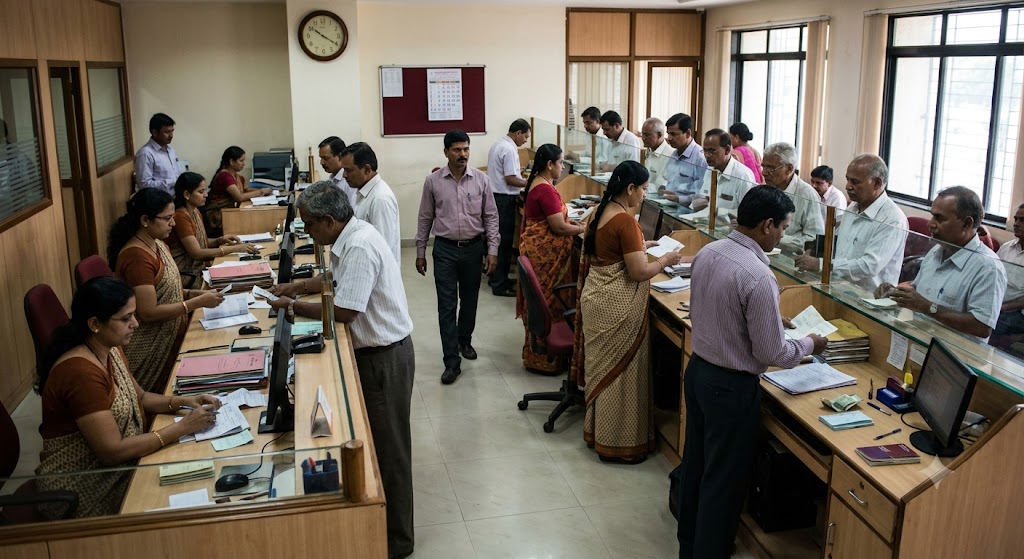
A Sunday trip to the bank may not sound like a plan anyone wants. But this Sunday could be different.
Banks are opening their doors on September 27, even though it is a Sunday. The reason is simple: a three-day nationwide bank strike is scheduled from September 28 to 30, and the government wants customers to get an extra day to complete important banking work.
The Finance Ministry has said that all Public Sector Banks and Regional Rural Banks will function normally on September 27. The Reserve Bank of India has also approved the operation of bank branches, offices, ATM-linked branches and currency chests on that day.
Why is this important? September 26 is the fourth Saturday and September 27 is normally a Sunday. If the strike goes ahead from September 28 to 30, customers could face five consecutive days of disruption in branch-based banking services.
The strike has been called by the United Forum of Bank Unions, or UFBU. The unions are primarily demanding the introduction of a five-day banking week. They are also seeking pension-related changes, a uniform dearness allowance formula for pensioners and an option for employees covered under the National Pension System to move to the old pension scheme.
The government and bank managements have appealed to the unions to defer the strike, but the UFBU has decided to continue with its September 28–30 plan after talks failed to produce a concrete development on the five-day banking demand.
For customers, the practical message is more important than the dispute itself.
If you need to visit a branch for an urgent transaction, Sunday, September 27, could be the extra opportunity to get it done before the strike begins. Banks have also advised customers to make use of digital services such as mobile banking, internet banking, ATMs, UPI and Business Correspondent points during the disruption.
But not every banking activity can be shifted to a phone. Cash-related branch services, cheque processing and other physical transactions can be affected when employees are on strike. The impact of the earlier September 11 strike varied across regions, with disruptions reported particularly in some smaller cities and towns.
There is another reason this particular strike is attracting attention. September 30 is the half-yearly closing date for banks, making it important for activities such as reconciliation, provisioning and treasury and market operations. The timing therefore makes the disruption more significant for banks, businesses and government transactions.
For an ordinary customer, the safest approach is simple: do not wait until the last minute for important branch work.
A Sunday that normally means a closed bank may instead become the one extra working day before a potentially difficult stretch.
This time, the bank holiday is not really a holiday. It is an extra chance to get your banking done.
Subscribe Deshwale on YouTube
