



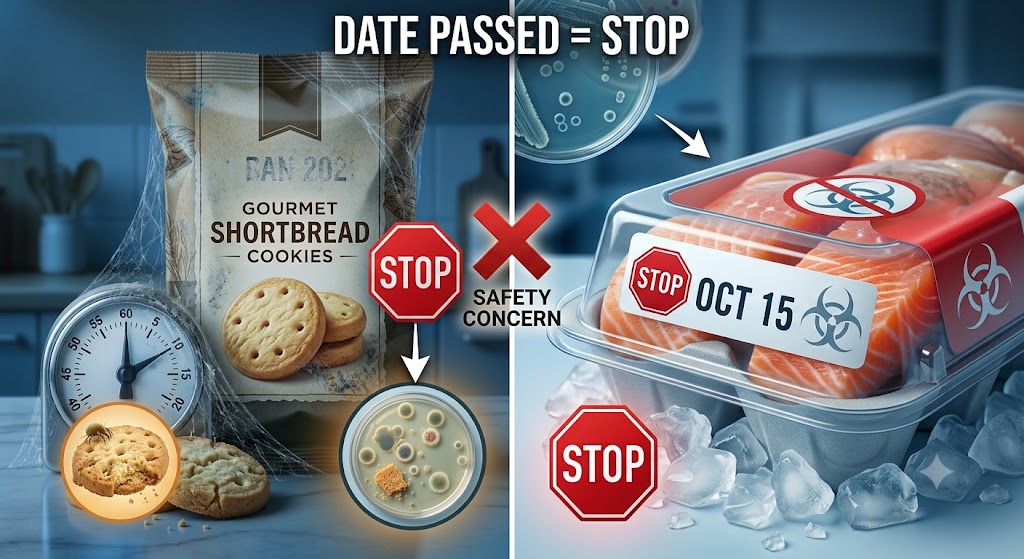
That little date printed on your biscuit packet, milk carton or ready-to-eat food may tell you more than you think. But “Best Before” and “Use By” do not mean the same thing.
When we pick up packaged food from a supermarket or order it online, most of us look at the price, brand and sometimes the expiry date. But food labels can contain different terms such as “Best Before”, “Use By” and “Date of Manufacture”, and knowing the difference can help consumers make safer choices.
The issue has gained attention amid recent food-safety complaints and inspections involving packaged and delivered food. Reports of consumers receiving spoiled, damaged or allegedly expired products have also put greater focus on how food is stored, labelled and sold.
So, what exactly do these dates mean?
According to the Food Safety and Standards Authority of India (FSSAI), “Best Before” refers to the period during which a food is expected to remain fully marketable and retain the qualities for which it is sold, when stored under the stated conditions. Food may still be safe after this date in some cases, but its quality may have reduced. However, it cannot be sold if it becomes unsafe.
“Use By”, “Recommended Last Consumption Date” or “Expiry Date” is more serious. FSSAI defines it as the date marking the end of the estimated period after which the food may no longer have the expected quality and safety attributes. Food carrying a Use By or expiry date should not be sold after that date.
This is why simply seeing a date on a packet is not enough. Consumers also need to understand what that date represents and whether the product has been stored properly.
The manufacturing or packaging date matters too. FSSAI’s labelling rules require relevant date information to be declared on food packages. For products with a short shelf life, the day, month and year are required, while different formats apply depending on the shelf life.
There is another issue that consumers may not notice. If a food product is stored for a long period and later repacked into smaller packets, the date printed on the new packet can become important in understanding how old the product actually is. Recent reports from Uttar Pradesh highlighted concerns over such practices, with food-safety officials stressing the importance of correctly declaring manufacturing or processing dates.
For consumers, the simple rule is: do not look at only one date. Check the manufacturing or packaging date, the “Best Before” or “Use By” date, storage instructions and the condition of the packet.
And if the packet is damaged, leaking, swollen, smells unusual or the food looks spoiled, the date alone should not convince you that it is safe.
A few seconds spent reading the label can be more valuable than the few seconds saved by simply putting the packet in your shopping basket.
In an age when groceries can reach our doorstep within minutes, understanding the label has become just as important as choosing the product itself.
Subscribe Deshwale on YouTube
