



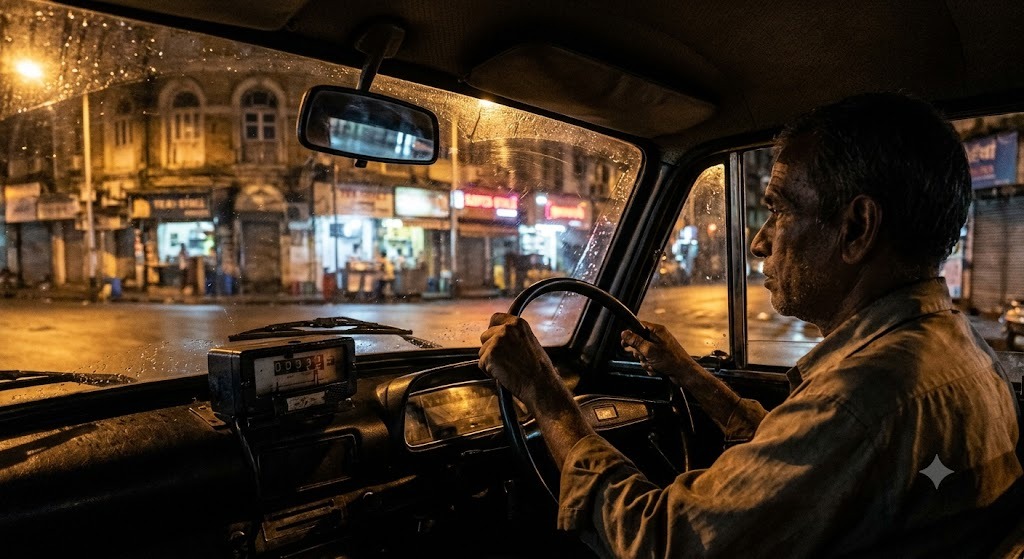
At 2 am, Mumbai tells a different story. The roads that remain crowded during the day begin to open up, the noise of traffic fades in some neighbourhoods, and the city’s familiar rush gives way to an unusual calm. Yet, while many people are asleep, a taxi moves through the streets, carrying someone home, towards a hospital or to catch an early-morning train.
For the passenger, it may be just another ride. For the driver, it is another journey in a working night that may have started hours ago.
A City Seen Through the Windscreen
A night-shift taxi driver sees parts of Mumbai that many residents rarely notice. Railway stations remain active, hospital entrances welcome visitors, and roadside tea stalls offer brief pauses to people working through the night. At traffic signals, the driver may encounter security guards finishing their shifts, hotel staff heading home and workers preparing for another long day.
Every passenger has a destination and a reason to travel. The driver, meanwhile, has a different destination in mind: completing enough trips to make the night worthwhile.
Between bookings, there can be long stretches of waiting. An app may connect a driver with a passenger, but it cannot guarantee that the next request will arrive quickly. A quiet period can mean lost time, even as the expenses of running a vehicle continue.
The Fare Is Not the Whole Story
A taxi fare may look straightforward on a phone screen, but the driver’s earnings involve a different calculation.
Fuel consumes a share of the income. Vehicle maintenance, repairs and other operating expenses add to the cost of keeping the taxi on the road. Drivers must also consider the time spent waiting for passengers and travelling between bookings.
For those supporting families, the pressure extends beyond the shift. Household bills, children’s education, groceries and rent do not wait for a busy night or a good week.
The challenge is not simply to earn money, but to make the hours spent working translate into a dependable living.
The Cost of Staying Awake
Night driving demands patience and concentration. A driver must watch for pedestrians, judge the movements of other vehicles and navigate roads that may be poorly lit or unfamiliar. Rain, fatigue and unexpected changes in traffic can make the journey more demanding.
Taking a break is important, but finding the right time and a safe place to stop is not always convenient. Drivers must balance their need for rest with the uncertainty of the next booking.
There is also an emotional side to the work. Spending long hours alone behind the wheel can mean missing family dinners, celebrations and the ordinary moments that bring people together. When the driver finally returns home, the rest of the household may already be preparing for the day.
When Mumbai Opens Its Eyes
Towards dawn, the city begins to change again. Tea stalls grow busier, newspapers arrive, local trains fill with commuters and shopkeepers prepare to open their doors. A night-shift driver may be heading home just as thousands of others begin their journeys.
This is the quiet contrast at the heart of Mumbai’s working life: one person’s morning can be another person’s bedtime.
The next time a taxi arrives in the early hours, look beyond the destination displayed on the phone. Behind the wheel is someone managing expenses, time, tiredness and responsibilities, one booking at a time.
Mumbai’s story is not written only in its skyscrapers, crowded trains or famous landmarks. It is also written on its roads after midnight, by the people who keep the city moving while much of it sleeps.
Subscribe Deshwale on YouTube
