









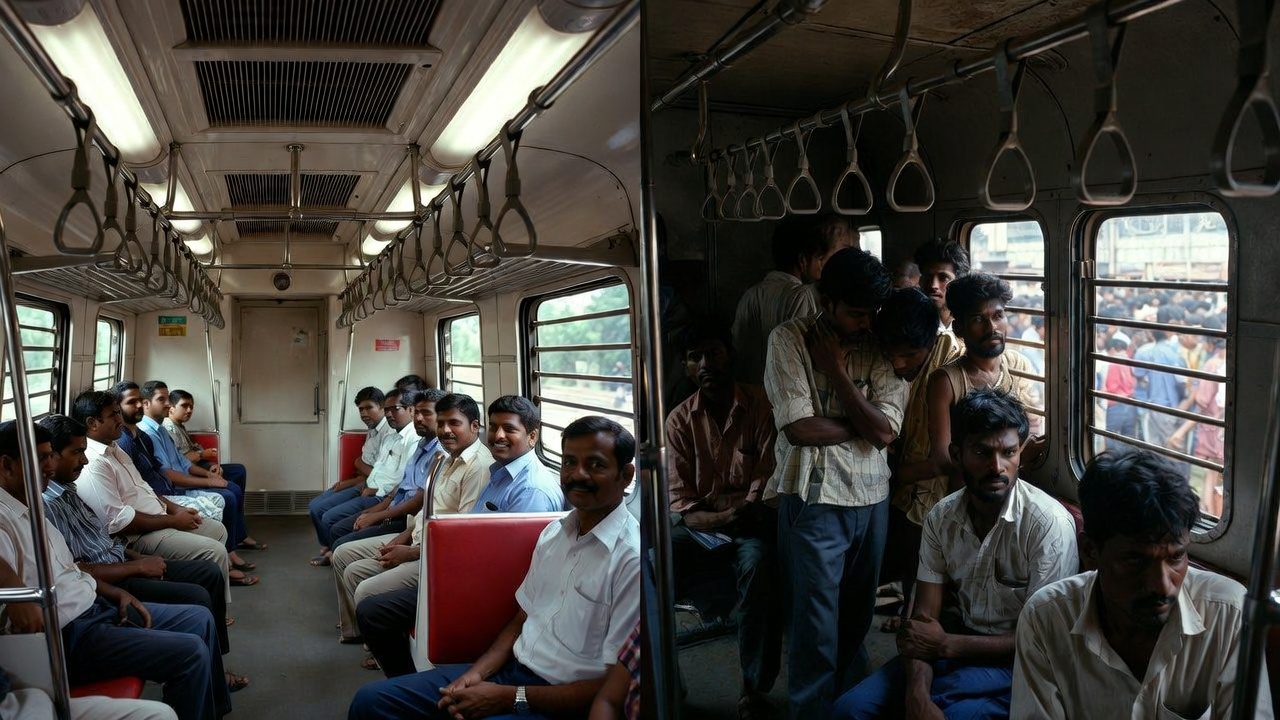
Mumbai is a city that never truly escapes the heat. For almost ten months of the year, the weather is hot and humid, making daily commutes on local trains exhausting. Even during the monsoon, when rains bring some respite, the humidity remains stifling. For millions of Mumbaikars, travelling on non-AC local trains has long been a test of endurance. The sweltering conditions make journeys uncomfortable, stressful, and at times, unsafe.
In recent years, the introduction of AC local trains in Mumbai has shown that commuters can travel in far more comfort. AC trains provide a controlled environment, protecting passengers from heat, humidity, and the stifling crush of crowded compartments. Many experts argue that these trains are not just a matter of comfort but of safety. Non-AC trains often witness alarming numbers of deaths every year due to overcrowding, fainting in extreme heat, and accidents on platforms and doors. AC compartments, with their regulated climate and better crowd management, are likely to reduce such risks and save lives.
Making all local trains in Mumbai air-conditioned would also be a judicious use of taxpayers’ money. Mumbai’s commuters are the backbone of the city, and facilitating safer and more comfortable travel is a long-term investment in public welfare. By modernising the entire suburban train network, authorities can improve daily life for millions, while also encouraging more people to use public transport rather than private vehicles, easing traffic congestion and reducing pollution.
However, the proposal is not without its critics. One major concern is the fare hike associated with AC local trains in Mumbai. Currently, air-conditioned compartments charge higher tickets, which worries some residents, particularly those who travel long distances daily. For many, the price difference could strain household budgets. Critics also argue that making all local trains AC might be an elitist measure, catering primarily to those who can afford higher fares and ignoring the needs of low-income commuters. They worry that public transport, which has historically been accessible to all sections of society, could become less inclusive.
Supporters, however, counter that increased fares are a natural outcome of improved services. With enhanced safety, better seating, cleaner interiors, and climate control, the additional cost is a reasonable trade-off. Moreover, higher fares could help fund the maintenance and expansion of AC services, making the network sustainable in the long term. Authorities could also explore subsidised tickets or tiered pricing to ensure that low-income passengers are not left behind.
Some non-AC local trains with lower fares may also be retained by the authorities, preserved as a nod to the past. These trains could serve as a living reminder of Mumbai’s rich railway history, allowing commuters to experience the city’s transit heritage while enjoying the benefits of modern, AC-equipped trains elsewhere.
Balancing comfort, safety, and inclusivity is the key challenge. While opponents highlight elitism and cost concerns, the benefits of a fully AC local train system—in terms of commuter health, safety, and quality of life—are undeniable. Mumbai is a city that keeps moving, and its trains are its lifeline. Ensuring that millions of daily travellers can commute safely and comfortably should be a priority for policymakers.
Modernising Mumbai’s suburban trains to make all compartments air-conditioned is not merely a matter of luxury. It is about human dignity, commuter safety, and efficient use of public funds. With careful planning, equitable pricing, and strong governmental commitment, Mumbai can set a global standard for urban transit while respecting the needs of all its citizens.
Subscribe Deshwale on YouTube


