



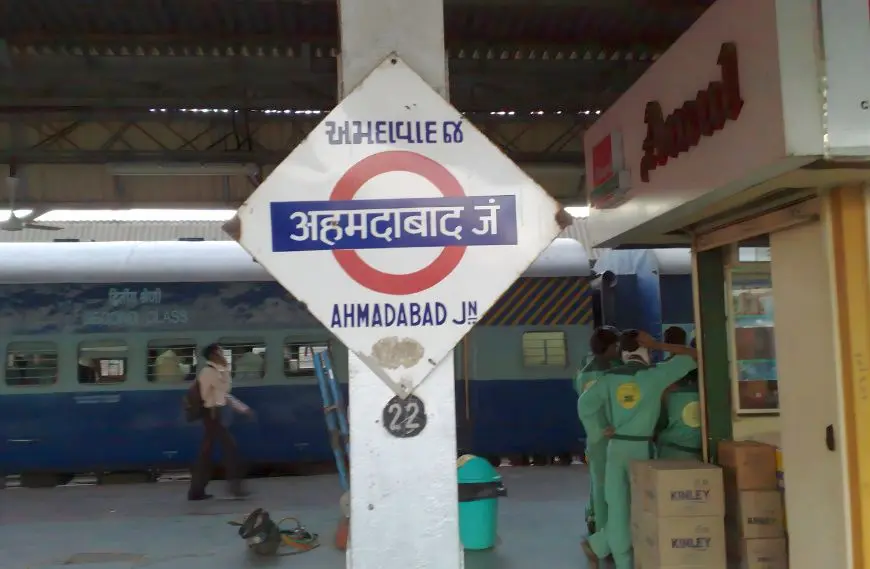
Ahmedabad is preparing to welcome a transformative addition to the country’s transport landscape, India’s first 16-storey railway station, a multimodal facility expected to be ready by July 2027. Designed as a future-facing mobility hub, the landmark complex will merge bullet train services, metro connectivity, existing rail operations and bus transit under a single roof, positioning the city at the forefront of next-generation travel.
The terminal is set to become a pivotal stop along the 508-kilometre Mumbai–Ahmedabad High-Speed Rail corridor, the nation’s first bullet train route developed with Japanese collaboration. Once operational, Shinkansen-style services powered by Japan’s advanced E5 Series technology will run at speeds of 320 km/h, cutting travel time dramatically between the two economic powerhouses.
A city symbol reimagined in steel and glass
Architecturally, the station has been envisioned as a visual landmark that reflects Ahmedabad’s cultural identity. A sweeping roof inspired by soaring kites from the city’s beloved Uttarayan festival and a façade echoing the celebrated Sidi Saiyyed Jaali motif pay tribute to the city’s heritage while embracing contemporary engineering. Rising above Western Railway platforms 10, 11 and 12, the tower will provide direct internal access to Kalupur Metro Station, enabling seamless transit for commuters.
A full urban mobility and lifestyle centre
Unlike traditional Indian railway terminals, the 16-storey development has been planned as a complete urban mobility and commercial zone. The structure will accommodate:
- Bullet train terminal
- Metro interchange
- Long-distance and local rail services
- Integrated bus connectivity
To support rising commuter volumes, the station will also include multi-level parking, retail space, lounges, modern waiting zones, workspaces and food and shopping areas, transforming the facility into a destination for travellers, professionals and city residents alike.
Capacity built for the next generation of travellers
Railway officials have indicated that the project is being engineered around long-term demand rather than present-day usage. The surrounding neighbourhood is planned for wider access roads, stronger last-mile links and improved public transport, ensuring that passenger flow around the station remains smooth even as traffic scales up in the coming decades.
Economic and tourism upside for Ahmedabad
The mega-terminal is expected to significantly boost Ahmedabad’s economy by driving footfall to nearby markets, enhancing commercial viability in the region and strengthening tourism prospects through improved domestic and international connectivity. Urban planners view the project as a turning point that positions the city as a central mobility hub for western India.
New travel experience for India
With cutting-edge architecture, multimodal access and high-speed rail integration, the upcoming Ahmedabad station is on course to become one of the most technologically advanced and commuter-centric transport hubs in the country, setting a new standard for railway infrastructure and reshaping the way millions travel across the region.
Subscribe Deshwale on YouTube
