



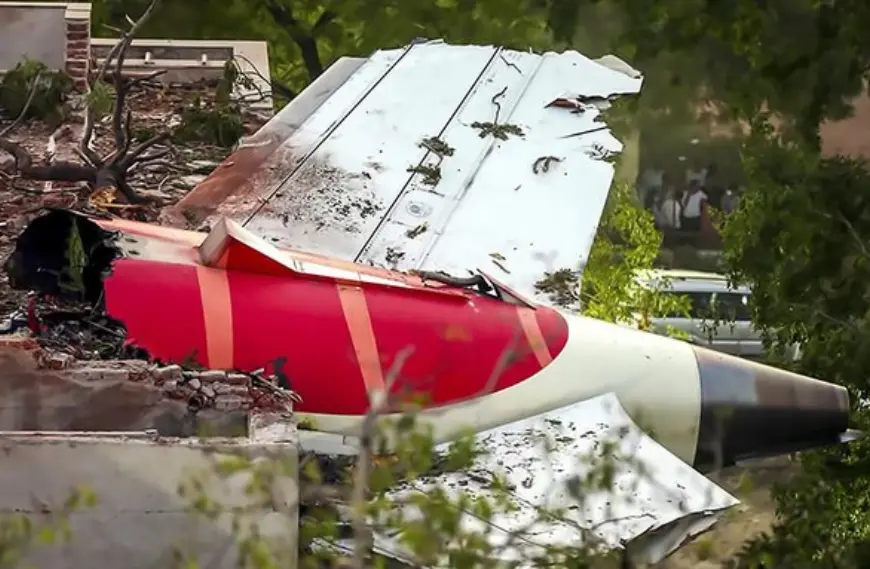
On 12 June 2025, Air India Flight AI-171 crashed shortly after takeoff from Ahmedabad. The tragedy claimed the lives of 260 people and left many others grieving. What began as an aviation accident has now turned into a constitutional debate before the Supreme Court.
From tragedy to the courtroom
A Public Interest Litigation (PIL) was filed by the Safety Matters Foundation, an NGO working on aviation safety. The petition does not only question the technical findings of the crash investigation but also raises a bigger issue: whether air safety in India should be treated as a matter of constitutional rights.
The petitioners argue that the right to life under Article 21 of the Constitution is meaningless if citizens cannot trust that air travel and public service is safe. They say that when safety lapses put lives at risk, it is not just a regulatory failure but also a violation of fundamental rights.
The issue of independence
The government’s Aircraft Accident Investigation Bureau (AAIB) and the Directorate General of Civil Aviation (DGCA) are leading the probe. However, the petition points out a conflict of interest. The DGCA is the regulator responsible for overseeing flight safety. If its own officers are part of the investigation, public confidence in the process may weaken.
The PIL asks for a court-monitored, independent investigation, so that findings are free of bias and trusted by families of victims and the larger public.
The problem of leaks
A preliminary report blamed the pilots for moving the fuel cutoff switches, suggesting human error. But only parts of the report were made public through media leaks. The Supreme Court criticised this selective release, calling it ‘unfortunate.’ The Court stressed that premature leaks shape public opinion unfairly, especially when the final report is not yet complete.
Why this is about rights
The petition connects aviation safety to three key constitutional guarantees:
- Article 14 – equality before law, meaning investigations must be fair and not tilted towards protecting authorities.
- Article 19(1)(a) – freedom of speech and access to information, which includes the right of citizens to know the truth about a tragedy.
- Article 21 – the right to life, which includes the duty of the state to ensure safe public transport.
The core argument is simple: if citizens cannot rely on safe skies, their fundamental rights are at risk.
What the court said
The Supreme Court has issued notice to the Union of India, asking for a response. It said the investigation must be “free, fair, impartial, expeditious and independent.” This strong language shows that the Court sees the issue as more than just a technical matter; it is a constitutional responsibility.
This case could set an important precedent. If the Court rules in favour of a court-monitored or independent probe, it will strengthen accountability in aviation and may influence how all future accidents are handled. More importantly, it will confirm that air safety is not just about machines and pilots, but about protecting the fundamental rights of citizens.
