







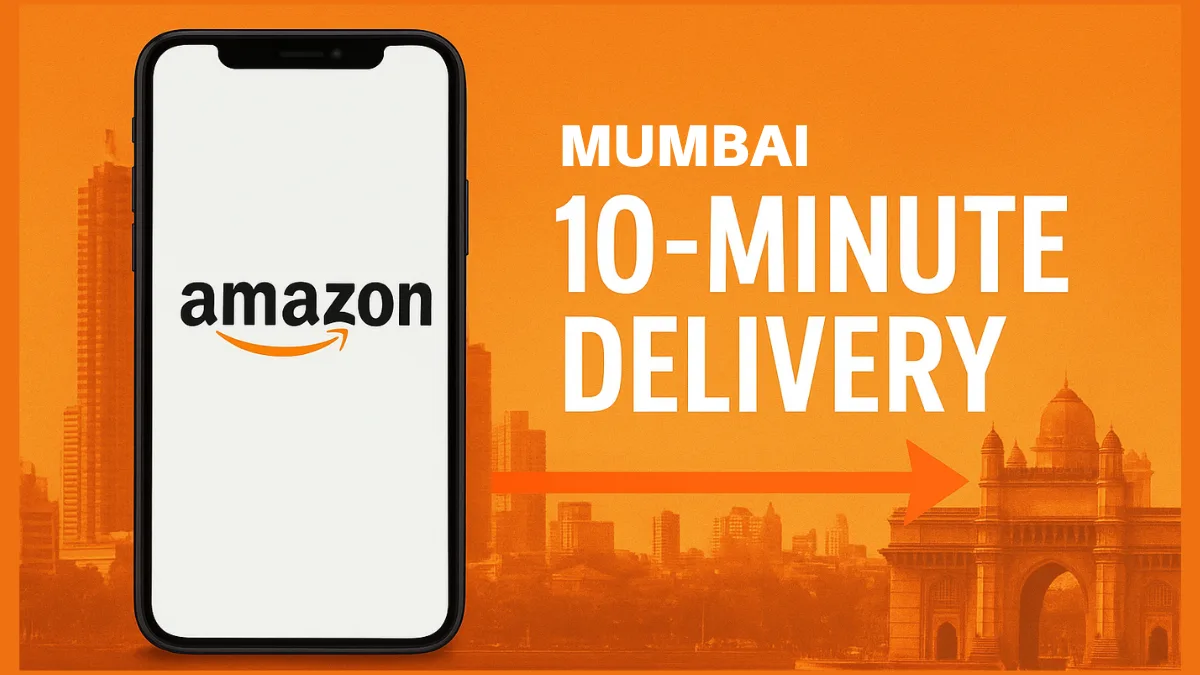
The quick commerce battle in India just got more intense. Amazon has officially rolled out its Amazon Now 10-minute delivery service in select neighborhoods of Mumbai, expanding beyond Bengaluru and Delhi. With this move, the e-commerce giant has stepped directly into the turf dominated by Blinkit, Swiggy Instamart, and Zepto, adding a new layer of competition to one of India’s fastest-growing segments.
Why Amazon’s Entry Matters
Amazon is not a newcomer experimenting with speed. Unlike most rivals, it brings the weight of its established logistics network, trusted Prime ecosystem, and a consumer base that already relies on it for everything from books to electronics. To support its 10-minute delivery promise, Amazon has already set up over 100 micro-fulfillment centers across its operational cities and plans to expand this network significantly by year-end.
This combination of infrastructure and brand trust gives Amazon a strong edge. Where new entrants must fight to gain credibility, Amazon already enjoys a reputation for reliability and service consistency. For consumers, this could mean not just speed, but also confidence in the delivery experience.
The Changing Consumer Mindset
Shoppers in metros are shifting rapidly toward an “instant everything” mindset. Groceries, fashion, personal care, gadgets – convenience is no longer measured in days, but in minutes. Amazon’s entry signals that ultra-fast delivery is no longer a niche play but is becoming a mainstream expectation.
Myntra is also pushing boundaries with its M-Now service, which promises 30-minute fashion delivery. Already active in Bengaluru, Mumbai, Delhi-NCR, and now Hyderabad, Myntra is offering 90,000+ products from 600+ brands under this model. The inclusion of a fashion player shows that speed is no longer limited to groceries but is shaping every corner of retail.
Why Mumbai First
Amazon’s decision to expand to Mumbai is strategic. The city’s dense population, high consumer demand, and existing network of dark stores make it ideal for testing and scaling such a high-pressure model. It also mirrors the quick commerce strategies of Zepto and Blinkit, both of which grew fastest in Mumbai before spreading to other regions.
Pressure on Delivery Partners
While 10-minute delivery sounds like a consumer dream, it also raises important questions about worker safety and operational pressure. Delivery executives often bear the brunt of meeting these aggressive timelines. Although Amazon and other players say they design routes and store networks to minimize risk, concerns around balancing speed with rider safety remain in the public conversation.
Looking Five Years Ahead
The 10-minute race is not just about instant noodles or cold drinks. It is reshaping how consumers think about shopping itself. In the next five years, this could influence everything from how households plan their weekly groceries to how quickly people expect medicines, electronics, or even fashion to arrive at their doorstep. For Amazon, the move could deepen customer loyalty by setting new benchmarks for convenience.
The Bigger Picture
Amazon’s model stands out because of three key differentiators:
- Logistics strength: Years of investment in warehouses, last-mile delivery, and Prime Now services.
- Prime ecosystem: A ready base of subscribers who value speed and convenience.
- Consumer trust: A reputation for reliability that smaller rivals still need to earn.
At the same time, the model’s sustainability will depend on economics. Quick commerce is known for thin margins, high operational costs, and fierce price competition. While Amazon’s deep pockets and infrastructure allow it to play the long game, the industry still needs to find balance between speed, safety, and profitability.
The launch of Amazon’s 10-minute delivery service in Mumbai marks a significant chapter in India’s quick commerce story. It signals that instant delivery is moving from a competitive experiment to an industry standard. Yet, as the race accelerates, the challenges—worker safety, profitability, and long-term sustainability must be addressed.
For now, Indian consumers can expect their shopping baskets to arrive faster than ever, while the industry braces for a future where speed may define loyalty.


