



By: Hiren Gandhi
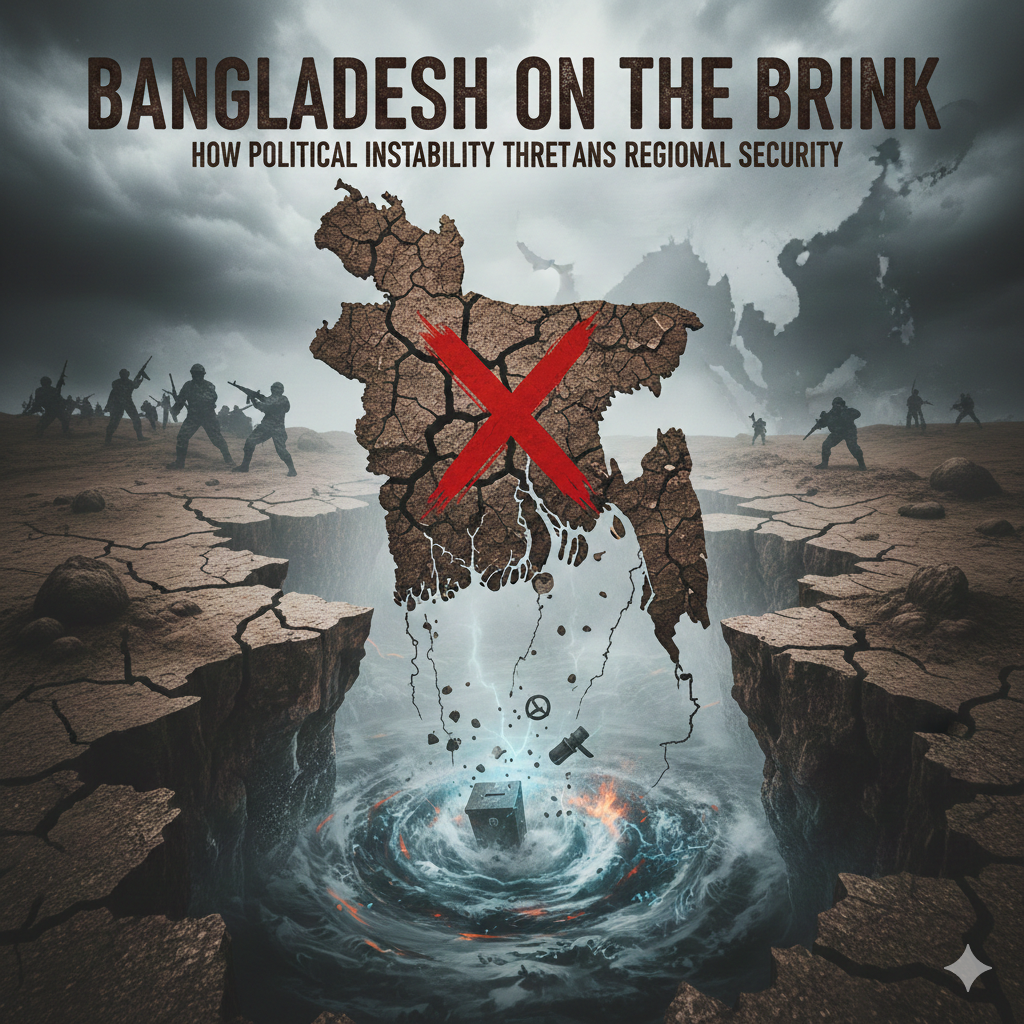
Bangladesh is far more than just a neighboring country to India. It is a critical strategic partner, serving as the eastern security buffer for India, a gateway to the Northeastern states, and a vital trade route connecting the Bay of Bengal to Southeast Asia. This geopolitical importance has kept Bangladesh under the watchful eyes of global powers for decades. However, events unfolding since 2024 reveal a grim reality: Bangladesh is not only grappling with internal political crises but is steadily sliding toward engineered instability and self-destruction.
The fall of former Prime Minister Sheikh Hasina marked the beginning of a turbulent era. She faced mounting opposition, student protests, and international pressure, eventually forcing her to leave the country. Yet, the questions remain: if Hasina was the root cause of unrest, why has peace not returned even after her departure? Why do violence, religious strife, and political fear still grip the streets? History teaches us that if the problem is one person, peace follows when that person leaves. But Bangladesh tells a different story.
Muhammad Yunus, who assumed power without a clear election, has become the de facto leader, but without public mandate or a scheduled vote. The prolonged delay of elections under his regime exposes a desire to cling to power indefinitely. The government insists that the situation remains too unstable for elections, yet it is clear that the unrest is deliberately kept alive through the tacit allowance of extremist Islamic groups, targeted attacks on minorities, and a climate of political fear designed to justify the extension of power.
A worrying new phenomenon has emerged: “hidden gunmen” targeting anti-India voices, with attackers remaining unidentified, investigations stalled, and the government silent. This is not random violence but a deliberate “Fear Creation Model” aimed at spreading terror, showcasing instability, and delaying democratic processes.
Religious extremism has escalated alarmingly, with repeated attacks on Hindus, destruction of temples, and lynching reminiscent of medieval barbarism. Media voices and dissenters are suppressed. The silence of the state raises critical questions is it an inability or tacit approval?
It is crucial to understand the role of Pakistan’s Inter-Services Intelligence (ISI) and the Pakistan Army, which have deepened ties with Bangladesh’s extremist factions. The visit of Pakistani military officials to Bangladesh was far from ceremonial. Wherever ISI operates, anti-India agendas escalate, minorities face insecurity, and democracy weakens. This pattern is glaringly visible in Bangladesh today.
The dangerous triangle of China, Pakistan, and radical Islam is becoming Bangladesh’s reality. Joint infrastructure projects and land leases with China, growing proximity to Pakistan and its intelligence, and calls for a “Greater Bangladesh” hostile to India pose a direct strategic threat to India’s Northeast.
India’s response remains measured but firm. It continues to monitor every political, economic, and security development closely. India possesses the diplomatic, strategic, and economic tools to protect its interests. It seeks peace but will not compromise on security.
Economically, Bangladesh’s crisis runs deep. Despite official figures showing a slight increase in exports, the reality is starkly different. Key markets like China have seen declining orders, inflation is rising, political uncertainty is rampant, and the crucial Ready-Made Garments (RMG) sector is shrinking. Factory closures have left hundreds of thousands unemployed, fueling social unrest.
India remains Bangladesh’s indispensable trade partner, with bilateral trade valued at $13.46 billion in 2024-25. India accounts for 12% of Bangladesh’s exports and is its second-largest export market. Despite anti-India rhetoric, Bangladesh’s economy remains deeply intertwined with India’s, especially through geographic proximity and vital corridors for energy and logistics.
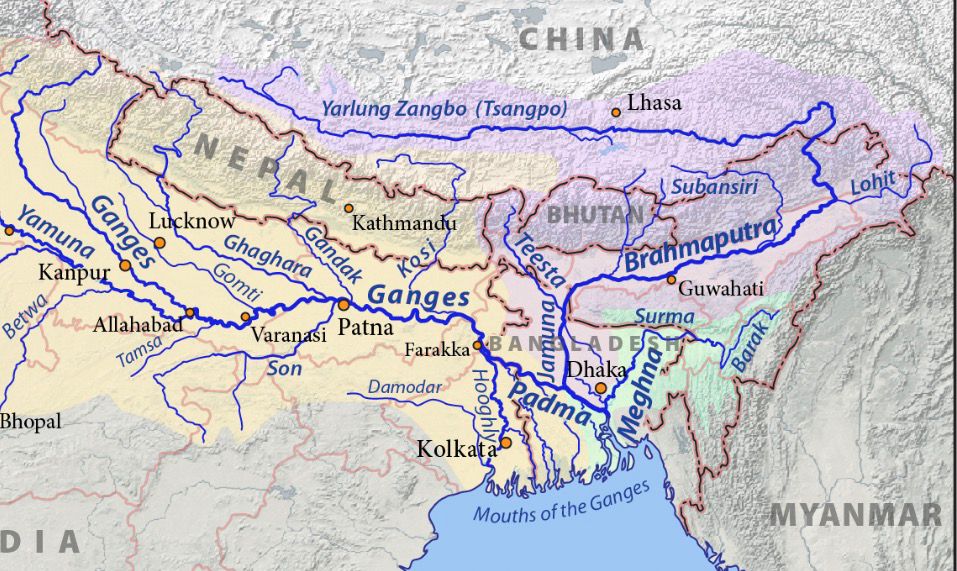
The looming expiration of the Ganges Water Sharing Treaty in 2026 adds further strain. Water scarcity could devastate Bangladesh’s agriculture, industry, and drinking water supplies, sparking widespread social unrest and political turmoil. India’s stance on water sharing will thus significantly impact Bangladesh’s future stability.
Without democratic renewal, economic reform, and balanced foreign relations, Bangladesh’s crisis will deepen, threatening regional security. Its descent into chaos will not remain confined within its borders but will ripple across South Asia.
The only viable solution lies in timely elections, rule of law, and respect for democratic governance. Otherwise, history warns that extremism first consumes the country itself and then spreads to its neighbors.
Bangladesh today stands on the edge of self-destruction, but there is still a narrow path to peace if bold steps are taken. The world, especially India, must remain vigilant and proactive to ensure that this neighbor does not become a source of regional instability.
Secretary — InGlobal Business Foundation (IBF)
Director — ReNis Agro International LLP, Ahmedabad, India
Subscribe Deshwale on YouTube
