



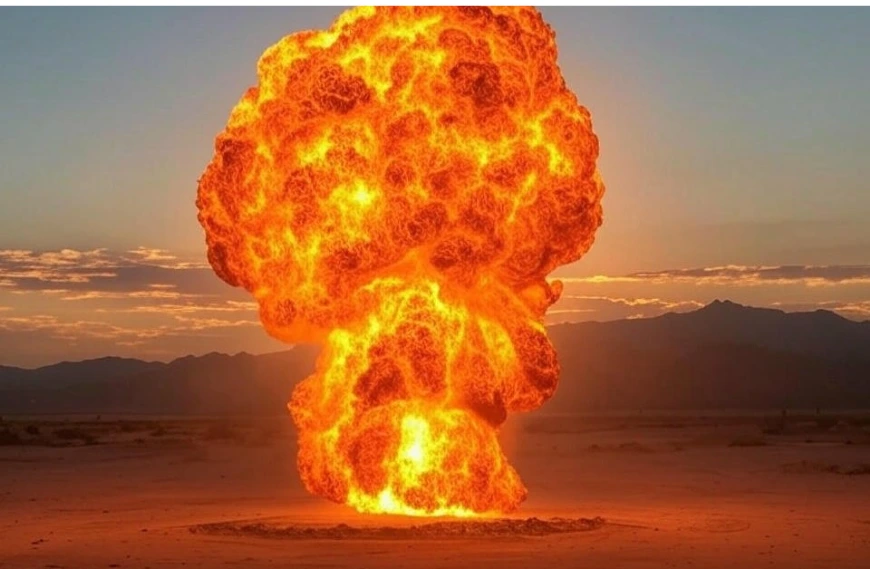
China’s scientists have just tested something wild. It’s a new kind of bomb that doesn’t use nukes, but still packs a terrifying punch. This isn’t just another military toy—it’s being called a non-nuclear hydrogen bomb, and it’s left experts scratching their heads.
Let’s get into it.
Usually, when we talk about hydrogen bombs, we mean serious business. Nuclear triggers, radioactive fallout, big mushroom clouds—the works. But what China’s tested is something smarter, cleaner, and possibly more dangerous in a weird way. It skips the whole nuclear trigger drama and goes straight for mass destruction using advanced thermobaric tech.
Thermo-what? Basically, it’s a bomb that sucks up the oxygen around it to fuel a massive fireball. That’s what makes it so destructive. You don’t need radioactive material or uranium to make it deadly. The heat and pressure alone are enough to wipe out anything in its path. The shockwave is so intense it can crush bunkers, collapse tunnels, and flatten anything above or below ground.
Now here’s the twist—this isn’t technically a nuclear weapon. So, in theory, it doesn’t break international treaties or wave any red flags like nukes usually do. But the power it carries? Easily comparable to some nuclear strikes.
This test was pulled off by China’s Northwest Institute of Nuclear Technology, and reports say they’ve managed to simulate this high-powered bomb using advanced calculations and field trials. It’s part of a bigger push to boost China’s high-end war arsenal without crossing the nuke line.
The term “non-nuclear hydrogen bomb” might sound like a marketing spin, but it’s being taken seriously. Even the US and Russian militaries have used similar thermobaric bombs—Russia once dubbed theirs the “father of all bombs.” China’s new version might be even more advanced.
So, should we panic?
Not quite, but this definitely ups the stakes in global defence circles. Having a bomb this powerful, minus the political baggage of nuclear weapons, is a tactical game-changer. It could give China a strong hand in any potential conflict, especially where conventional bombs just don’t cut it.
And let’s not forget—the world is watching. India, the US, NATO—they’ll all be reading between the lines. Because this kind of weapon? It makes warfare faster, more brutal, and strangely “cleaner” in the absence of radiation. That’s scary in itself.
For now, it’s a test. But if China puts this into regular use, it could shift how wars are fought—and how peace is maintained. It’s not just about bombs anymore. It’s about smart destruction.
