



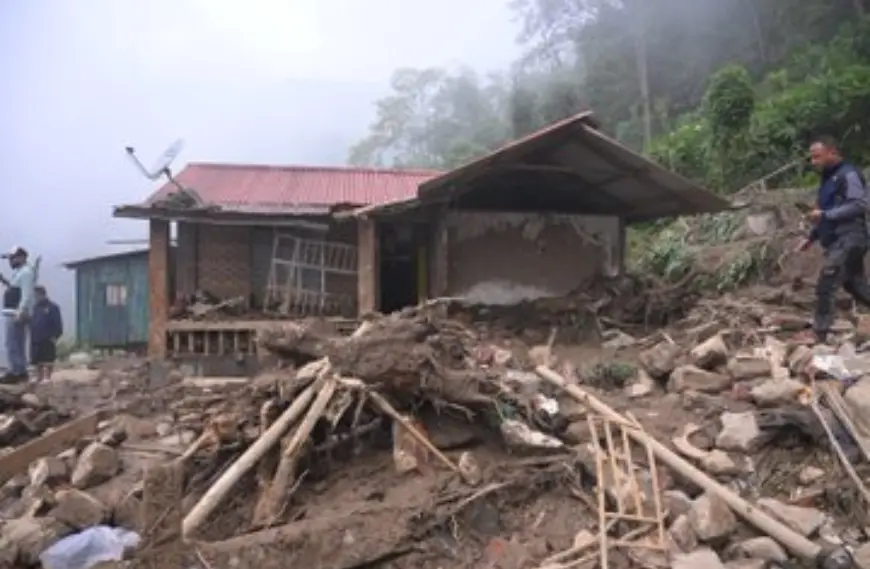
The hill came down in a single, terrible breath.
By dawn, areas near Mirik lake were scarred by mud and stone. Houses were buried. Roads were gone. Families were missing.
Residents said it happened in minutes. One man described it as “a wave of earth”. The landslide tore away bridges and cut off Mirik from the plains. Vehicles could go no further, leaving rescuers to push in on foot.
Fear and waiting
Families spent the night on damp verandas and inside school buildings turned into shelters. Phones often did not work. In the rain and fog, voices for help carried only in fragments. Some clung to hope that neighbours under the mud might still be alive. Others marked the ground where homes once stood, so that if rescuers came, they could search at the right place.
The official toll rose through the day. Reports confirmed at least 28 dead across Darjeeling district, with Mirik alone accounting for 13. But officials warned that the number could rise as many villages higher up remained cut off from any communication.
The men and women who go in
The National Disaster Response Force sent teams from Darjeeling, Siliguri and Alipurduar. Officers said personnel were locating missing people and helping stranded villagers, while more teams were being mobilised from other districts. But the heavy machines needed to clear debris cannot reach the worst-hit spots because bridges and roads lie broken.
In the upper ridges, rescuers moved slowly over unstable ground. Each step risked triggering another slide. They worked with rain gear, shovels and bare hands. Where jeeps could still pass, soldiers ferried the injured. In other places, volunteers carried survivors on stretchers down narrow paths.
Agony of the missing
For families of the missing, hours stretched into agony. Some last saw relatives heading into the hills for a holiday. Others had families living close to the river, where swollen waters could split a village in two. Local reports said a tourist from Kolkata was among those still unaccounted for. Newsrooms and control rooms tried to match names with bodies and with those still stranded.
A race against water and time
Rescue work faced another danger. Bhutan’s Tala hydropower dam began overflowing after a reported gate malfunction. Bhutan’s agencies warned West Bengal of possible rises in downstream water levels. For rescuers, that meant two fronts digging through mudslides in the hills and preparing for sudden floods in the plains.
Logistics and limits
With roads fractured, relief had to move by makeshift routes. Fuel, medicines and food were ferried in limited quantities. Heavy equipment was staged at safe points and moved manually where possible. In mountain rescues, officials say even short delays can cost lives.
Community courage
Villagers did not wait. Neighbours, tourists and temple volunteers joined the work of digging and clearing. In one account, elephants were used to help ferry stranded tourists out of cut-off areas. Local knowledge and improvisation shaped survival.
What rescuers say
Rescue officers admitted the risk remains high. Darjeeling recorded 261 mm of rain in just 24 hours — classed as extremely heavy. With rain still falling, fresh landslides remain a threat. Teams said they must balance speed with safety, racing to find survivors while ensuring rescuers are not caught in another slide.
Beyond numbers
Every washed-away bridge means a school closed, a market empty, a family’s income gone. For now, rescuers measure success in lives saved and dignity restored to the dead. But the longer task of rebuilding homes and livelihoods lies ahead.
At the end of each day, rescuers return to tents soaked with rain. They check their equipment. They re-read lists of the missing. They prepare to go again at first light.
For villagers, the waiting is heavy but active clearing terraces, marking graves, and keeping watch for the sound of an approaching engine or a rescue team’s call.
Access for heavy machines, faster warnings in known danger zones, steady supplies to isolated pockets, and coordination across borders.
This is more than an operation. It is a story of a mountain that moved, of people caught in its path, and of small teams who enter the mud and rain to pull them back.
