







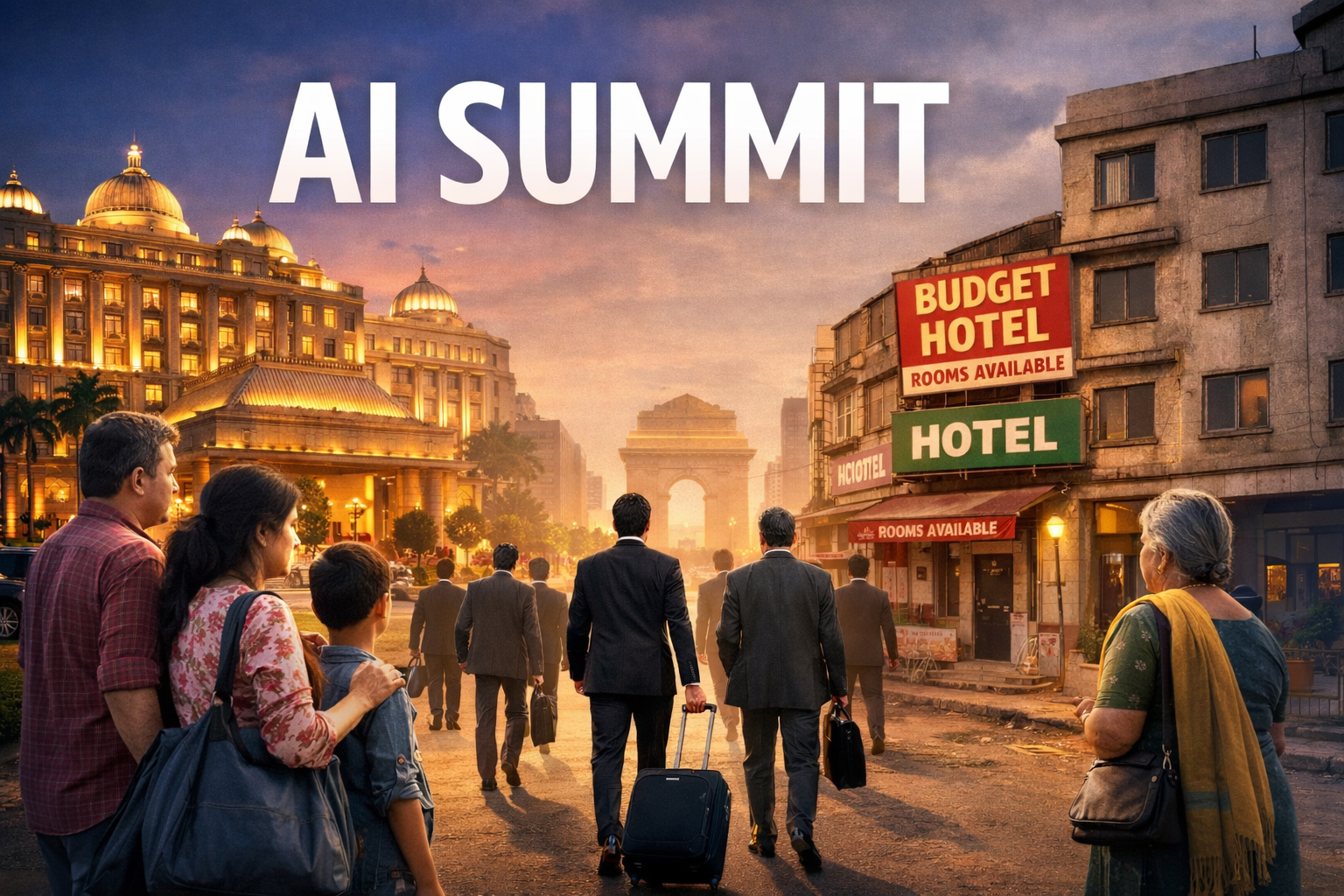
As Delhi prepares to host a high profile Artificial Intelligence summit, hotel rates in Delhi have climbed to extraordinary levels. Rooms that would ordinarily cost a few tens of thousands of rupees per night are reportedly being quoted anywhere between Rs 2 lakh and Rs 30 lakh for select dates. The Delhi hotel rates’ spike has drawn attention not only for its scale but also for what it reveals about the economics of mega events and their social consequences.
From a purely market perspective, the surge is a classic case of demand outstripping supply. International summits bring heads of state, corporate leaders, technology executives, security personnel and media teams, all of whom require accommodation that meets strict standards of comfort and security. In many cases, entire floors or even entire hotels are block booked by delegations. This reduces available inventory for other travellers and allows premium properties to raise rates sharply.
Luxury hotels, particularly those located in central Delhi and diplomatic enclaves, are positioned to benefit the most. For them, such events represent a rare opportunity to capture revenue that can significantly boost quarterly earnings. The hospitality sector has endured disruptions in recent years, from pandemic lockdowns to fluctuating travel demand. A global summit can therefore act as a windfall, strengthening balance sheets and supporting allied sectors such as catering, logistics and transport.
There is also a broader economic argument in favour of such pricing. Major events generate temporary employment, increase demand for local services and project the city as a global hub. High spending visitors often contribute far more to the local economy than regular tourists. In that sense, elevated tariffs are seen by some industry insiders as a reflection of international demand and Delhi’s rising stature in the global conference circuit.
Yet the other side of the story is harder to ignore. When rates climb from lakhs into the tens of lakhs, access becomes sharply restricted. Corporate delegations backed by multinational budgets may absorb these costs without difficulty, but ordinary domestic travellers are effectively priced out. Families visiting for weddings, patients travelling for medical treatment, students appearing for examinations and small business owners attending meetings may find themselves scrambling for affordable accommodation far from the city centre.
The optics also matter. Extreme surge pricing can create the impression that global events turn parts of the city into exclusive zones accessible only to the wealthy and the powerful. While market forces are legitimate, perceptions of profiteering can damage the hospitality sector’s reputation and raise uncomfortable questions about inclusivity.
It is important, however, not to paint the entire industry with a single brush. Not all hotels command astronomical tariffs. Mid range and budget properties often continue to serve price sensitive travellers, albeit with higher occupancy levels. Moreover, pricing decisions are influenced by contracts, security arrangements and operational constraints that are not always visible to the public.
Ultimately, the AI summit hotel surge highlights a familiar tension between economic opportunity and social access. Mega events bring investment, visibility and business growth. At the same time, they test a city’s capacity to remain accessible to its own residents and ordinary visitors. As Delhi cements its place on the global events map, balancing commercial freedom with broader public interest will remain an ongoing challenge.
Subscribe Deshwale on YouTube


