



When Dhurandhar hit theatres in December 2025, it did more than dominate the box office, it redefined what a Hindi spy thriller could be. The film’s success is not just about patriotism or star power; it is a case study in how grand filmmaking, narrative timing, and audience psychology can converge to create a cinematic storm.
From the very first frame, you know this is not a standard Bollywood action flick. The camera sweeps over sprawling sets, meticulously recreating Karachi’s Lyari neighbourhood, though shot thousands of miles away in Bangkok. The attention to detail is staggering… Graffiti on walls, neon lights, street vendors, and narrow alleys… All lending a sense of lived-in realism that draws the viewer into a tense, high-stakes world. You feel every chase, every whispered instruction, and every sudden ambush as if you are on the ground with the characters.
At the heart of Dhurandhar is Ranveer Singh, delivering what is arguably his most electrifying performance in years. Watching him transform into an undercover agent with a fractured past and razor-sharp instincts is to witness the resurrection of star power. It is not just bravado; it is subtle, intelligent, and physically commanding. The film’s pacing, with long stretches of tension punctuated by explosive action, gives Ranveer the canvas to oscillate between vulnerability and lethal efficiency, and he does it with panache.
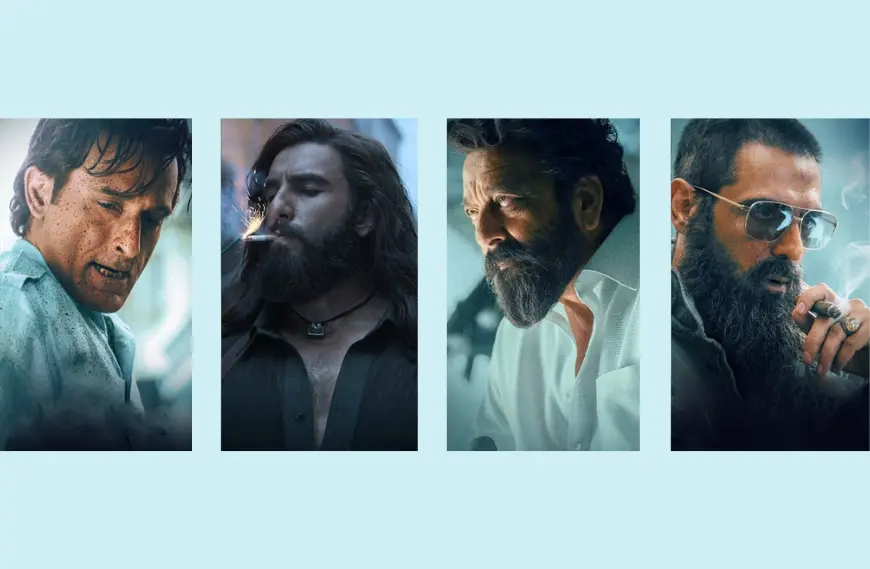
Alongside Ranveer Singh, the ensemble cast added significant heft to the film. Akshaye Khanna delivered a brooding and intense performance as Rehman Dakait, a gangster whose intelligence and ruthlessness make him a formidable counterpoint to Ranveer’s character. Khanna’s layered portrayal, equal parts charm and menace, has been praised as one of his career highlights in recent years. Sanjay Dutt lent gravitas to the role of a senior intelligence officer, balancing mentorship and moral ambiguity with his trademark presence. Veteran actors R. Madhavan and Arjun Rampal contributed with understated yet impactful performances, ensuring that every scene of strategy, dialogue, or confrontation carried weight.
What truly lifted the emotional stakes of Dhurandhar was the performance of Sara Arjun, who steps into a prominent lead role with remarkable assurance. Far from being a first‑timer in front of the camera, Sara has been part of Indian cinema almost all her life. She began as a toddler in television commercials and, by age six, was already delivering critically praised work in films such as the Tamil drama Deiva Thirumagal and later in Hindi films like Ek Thi Daayan and multilingual projects including Saivam, Saand Ki Aankh, and Ponniyin Selvan where she played the young Nandini. Over the past decade, she has built a reputation as one of the most talented actors of her generation across languages, and Dhurandhar marks her transition into a full‑fledged leading role opposite Ranveer Singh, chosen after reportedly nearly 1,300 auditions, a testament to both her craft and screen presence.
In a film that could have easily been dominated by a constellation of seasoned stars, veteran actor Rakesh Bedi delivered one of his most memorable screen performances in years. Known in earlier decades for his impeccable comic timing in television and family films, Bedi took on the role of Jameel Jamali, a complex Pakistani political figure whose presence adds significant narrative weight. To prepare, Bedi studied the speeches, diction, and body language of real political leaders to embody the character convincingly, an effort that shows on screen in scenes that are as intense as they are nuanced. His performance, understated yet impactful, became one of the unexpected highlights of the film.
The production itself is unprecedented. Originally conceived as a single film, the shooting schedule stretched over months, with complex set pieces and logistical challenges forcing the creators to split it into two parts. Rather than feeling overstretched, the film benefits from this breathing room, allowing subplots and character arcs to develop organically. Every explosion, chase, and hand-to-hand sequence has space to resonate – the spectacle is measured, not chaotic, which is a rare feat in high-budget Bollywood cinema.
The film’s scale is reflected in numbers: shot across six major sets replicating Karachi’s Lyari, with over 500 crew members and 1,000 extras, the production reportedly consumed nearly ₹280–300 crore, making it one of the highest-budget non-franchise Bollywood films in 2025. On its opening weekend, Dhurandhar grossed over ₹110 crore domestically, eventually crossing the ₹430 crore mark in India and ₹500 crore worldwide within two weeks, a testament to both its star power and audience engagement. These figures underscore that the film’s appeal extends beyond controversy; audiences were drawn to its combination of spectacle, narrative ambition, and carefully calibrated performances.
And yes, Dhurandhar is unapologetically patriotic. Scenes of India’s intelligence operations, daring covert missions, and morally fraught decisions resonate with a domestic audience attuned to national pride. The portrayal of Pakistan as the antagonist is direct, yet it is the craft of storytelling, not merely the political messaging, that keeps viewers hooked. The film sparked controversy, including bans in several GCC countries, yet this only fueled curiosity and conversation at home. Controversy, in this case, became a form of organic publicity, reinforcing the film’s cultural impact.
Yet it is not only the spectacle or the politics that drive Dhurandhar’s success, it is precision in audience engagement. Strategic marketing campaigns, calculated reveals of plot elements and characters, and leveraging social media buzz ensured that anticipation never flagged. Word-of-mouth, particularly around Ranveer’s performance and the film’s meticulous production design, created a momentum that even critics had to acknowledge.
The narrative itself is tightly woven. While action dominates, moments of quiet strategy, character reflection, and moral complexity punctuate the film. We see the cost of espionage, trust fractured, sacrifices made, and blurred lines between heroism and obsession. It is this interplay between high-octane action and emotional realism that elevates the film beyond mere spectacle.
What makes Dhurandhar remarkable is how it balances all elements: star power, political undertone, production scale, and human drama. Even if one considers it propagandist, it is propaganda done with intelligence, craft, and entertainment-first sensibility. The film does not lecture; it immerses, thrills, and, at times, surprises. It is a cinematic machine operating at full power, yet calibrated to human engagement.
Ultimately, Dhurandhar’s success is a reminder that Bollywood audiences are discerning, unpredictable, and deeply responsive to quality craft. Patriotism, star charisma, and controversy may have opened the doors, but it is the film’s careful construction, attention to detail, and emotional resonance that kept viewers inside the theatre. It proves that in modern Indian cinema, audacious ideas, when executed with discipline and artistry, can create cultural phenomena.
Subscribe Deshwale on YouTube
