



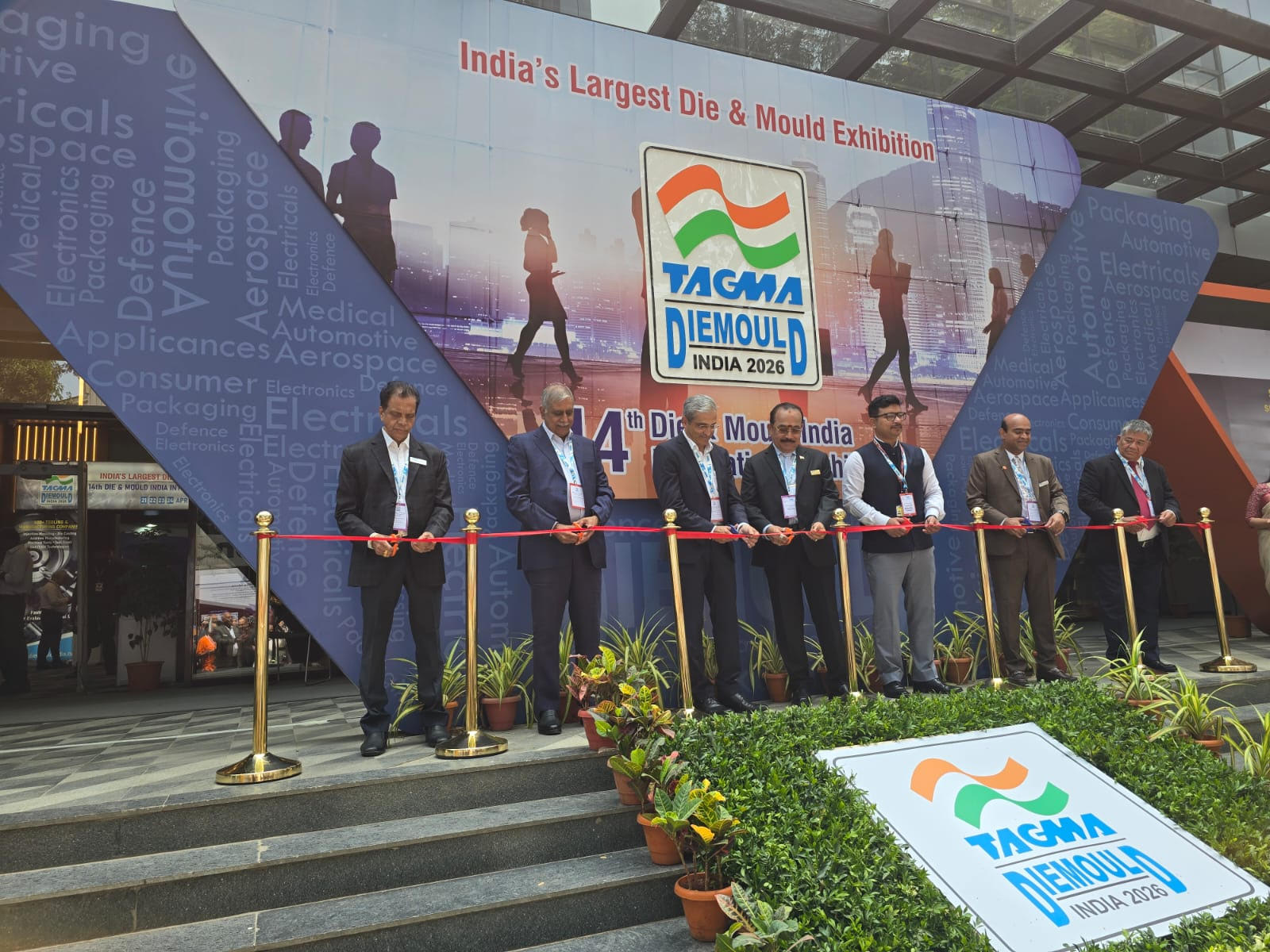
The Die & Mould India International Exhibition 2026 currently underway at the Bombay Exhibition Centre is offering a powerful glimpse into the future of India’s tooling and manufacturing sector. Organised by TAGMA India, the exhibition has brought together more than 350 exhibitors from across the country and abroad, highlighting cutting-edge advancements in industrial technology.
The event is not merely a showcase of machines and tools. Instead, it reflects a broader shift in India’s manufacturing ambitions. Technologies such as CNC machining, automation systems, and additive manufacturing are taking centre stage, indicating how the industry is evolving towards precision, efficiency, and innovation. These advancements are crucial as India positions itself as a competitive global manufacturing destination.
Speaking at the event, TAGMA India President Devaraya M. Sheregar described the exhibition as more than a business platform. He noted that it serves as a space where ideas, collaborations, and future strategies come together to shape the direction of the industry. His remarks underline the growing importance of such forums in driving both innovation and industry partnerships.
Industry expert Manoj Kolhatkar highlighted the opportunities within the sector, particularly in the context of the automotive industry. He pointed out that despite India’s expanding manufacturing capabilities, nearly 35 percent of tooling requirements are still met through imports. This gap, he suggested, presents a major opportunity for domestic manufacturers to scale up production and reduce dependency on foreign markets.
Another key theme at the exhibition is the role of skilled manpower. F.R. Singhvi emphasised that human capital remains the backbone of the tooling industry. According to him, investment in skill development is essential to ensure that India can fully leverage its technological advancements and meet global standards.
DMI 2026 also aligns closely with the government’s Make in India vision. By encouraging innovation, fostering collaboration, and promoting indigenous manufacturing, the exhibition is helping strengthen India’s position in the global supply chain.
As the event continues to attract industry leaders, innovators, and policymakers, it is becoming clear that India’s tooling sector is entering a new phase of growth. With the right mix of technology adoption, skill development, and strategic partnerships, the country is steadily moving towards becoming a global hub for tooling and precision manufacturing.
Subscribe Deshwale on YouTube
