









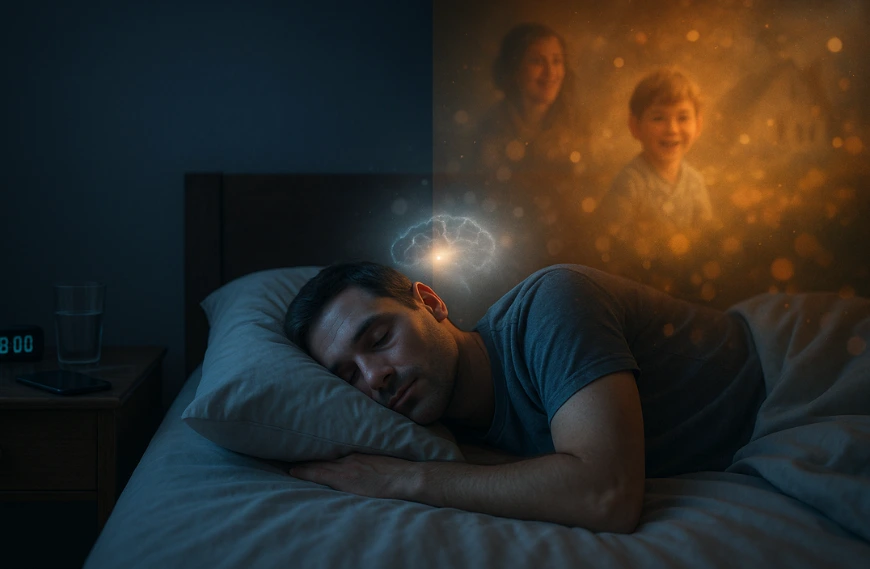
Have you ever woken from a dream so vivid it felt more real than reality? Or had a nightmare you couldn’t shake for days? Our ability to tell dreams from waking life is one of the brain’s most astonishing, and sometimes fragile, feats.
What Happens in the Brain During Dreams?
During REM sleep, your brain becomes highly active, resembling a waking state. The prefrontal cortex, responsible for logic and self-awareness, quiets down, while emotion centers like the amygdala light up. This combination creates surreal, emotional, and often illogical dreams.
Dreams blend memories, imagination, and fragments of daily life. Research shows people incorporate recent events into dreams, especially emotionally charged experiences.
How Do We Distinguish Dream from Reality?
The brain uses reality monitoring to compare memories against sensory input. When awake, consistent sensory details (light, gravity, pain) reinforce reality. But during dreams, sensory input is internally generated, yet feels real because it activates the same brain areas.
Most people instantly recognize a dream upon waking. But in disorders like narcolepsy or certain psychoses, dream-reality boundaries blur.
Lucid Dreaming: Knowing You’re Dreaming
Lucid dreaming occurs when you become aware you’re dreaming while still asleep. Experienced lucid dreamers can influence dream events, flying or altering scenarios. Studies show lucid dreamers have increased activity in the prefrontal cortex during REM.
Lucid dreaming techniques are used in therapy to overcome nightmares and improve creativity.
Sleep Disorders and Dream Confusion
Sleep paralysis, where you wake up unable to move, can come with dreamlike hallucinations. Hypnagogic (falling asleep) or hypnopompic (waking up) hallucinations can also cause dream fragments to spill into waking life.
These experiences highlight how fragile our sense of reality can be at the boundaries of sleep.
Dreams and Memory
Dreams may help process and consolidate memories. Studies show people who dream about a task after learning it often perform better later. Dreams also allow emotional processing, helping us make sense of stressful events.
Dreams as Cultural Mirrors
Throughout history, dreams were seen as messages from gods or omens. Ancient Egyptians recorded dream symbols; indigenous cultures used dreams for guidance. Even today, many believe dreams reveal unconscious desires.
The Mystery Remains
Despite decades of research, why we dream, and how the brain constructs such immersive alternate realities, remains a mystery. But understanding the thin line between dreams and waking life gives us insight into consciousness itself.


