



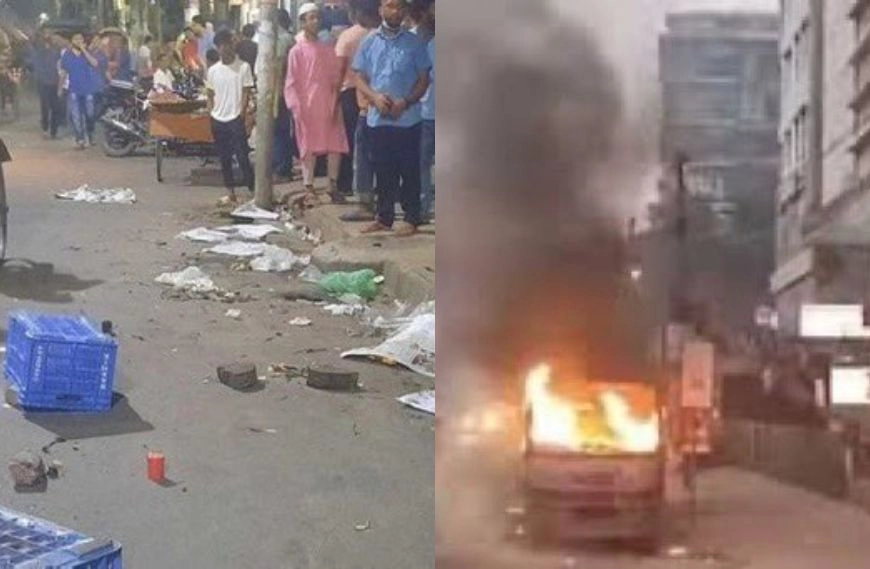
Dhaka, the bustling capital of Bangladesh, has turned tense and heavily guarded as the city faces a wave of violence and fear not seen in months. Over the past week, several crude bombs have exploded and multiple vehicles, including buses, were set on fire across different parts of the city such as Mirpur, Dhanmondi, and Khilgaon. The attacks, though causing limited physical damage, have shaken public confidence and prompted an extraordinary security response. Roads that were once packed with cars and rickshaws now appear unusually empty, as residents stay indoors and businesses close early, creating an eerie calm over the usually noisy city.
The unrest comes just as the International Crimes Tribunal (ICT) has fixed November 17 as the date for its long-awaited verdict in a case involving former Prime Minister Sheikh Hasina. Authorities suspect that the timing of these incidents is no coincidence, fearing attempts to create unrest ahead of the decision. As a result, Dhaka has been effectively divided into 54 security zones, with heavy police, Rapid Action Battalion (RAB), and Border Guard Bangladesh (BGB) deployments across the capital. Checkpoints have been set up at nearly every major road and entry point, with officers searching vehicles and questioning commuters. This extensive security net has given the city the look and feel of a fortress under watch.
For ordinary citizens, the impact has been immediate and unsettling. Daily commuters are facing delays as buses are fewer and public transport is restricted after several vehicles were torched. Students are avoiding campuses following reports of bombs found near university areas, and markets that usually stay open until midnight are closing before dusk. Officials have urged people to stay calm, assuring that law enforcement agencies are in control. However, fear and uncertainty linger in the air, as the capital’s usual chaos has been replaced by anxious silence.
Analysts note that the violence reflects deep political divisions that continue to haunt Bangladesh even after Sheikh Hasina’s ouster from power last year. While the current government has managed to avoid large-scale casualties, the use of crude bombs and arson attacks is seen as an attempt to spread panic rather than inflict direct harm. Yet, the psychological toll is enormous. Many residents describe feeling trapped inside their own city, where movement is restricted and every sound of sirens stirs anxiety.
For now, Dhaka remains on high alert, with law enforcement agencies maintaining round-the-clock patrols. The government insists normalcy will return soon, but residents remain sceptical as long as political uncertainty persists. Once a symbol of Bangladesh’s growing urban energy, the capital today feels tense and watchful a fortress city waiting for calm to return.
Subscribe Deshwale on YouTube
