








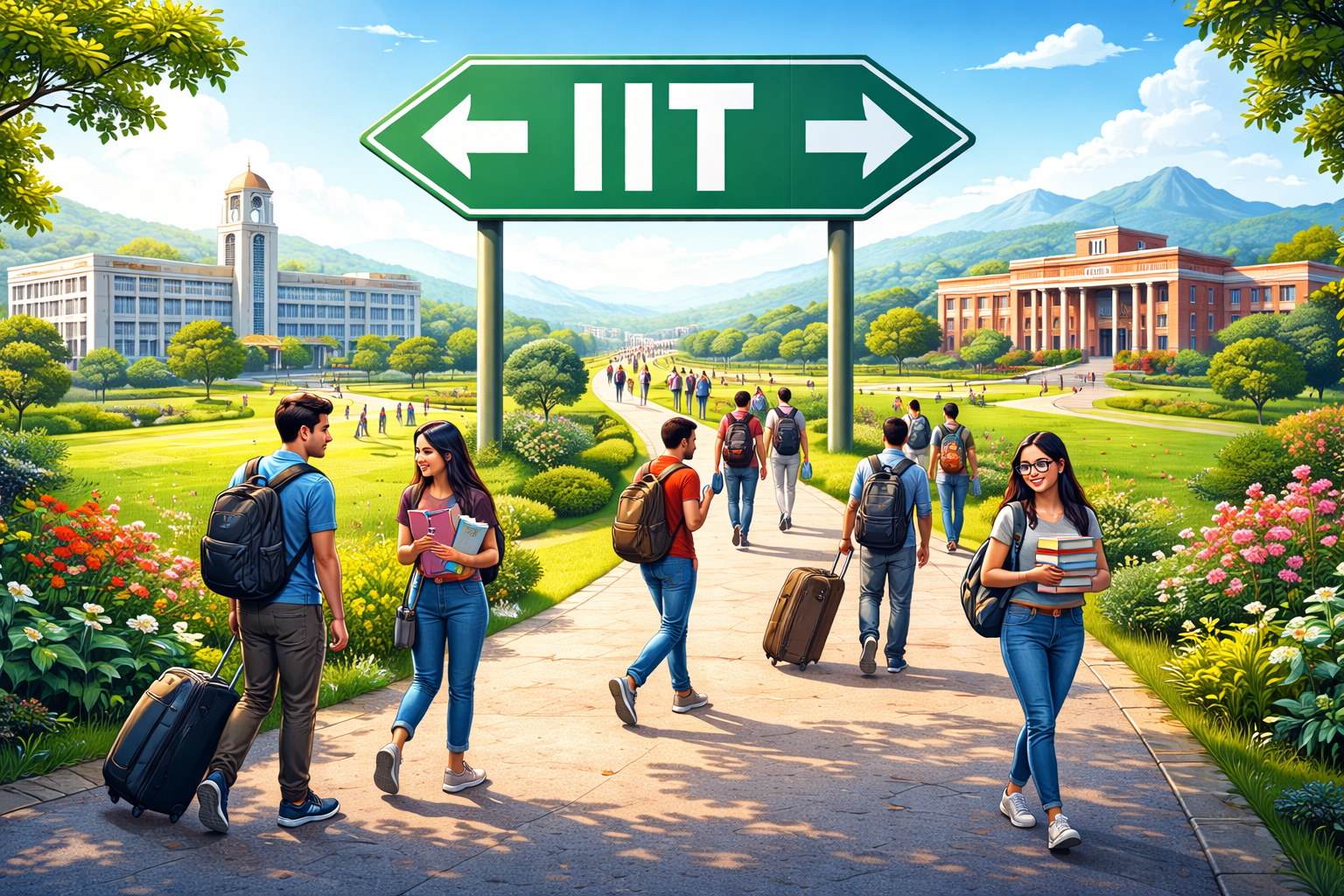
For the first time, the Indian Institutes of Technology will allow students to take courses at other IIT campuses and spend a semester away from their home institute. The change will begin from the upcoming academic year. It marks a significant shift in the structure of India’s premier technical education system.
Until now, IIT students have largely completed their entire degree at the campus where they secured admission. The new arrangement introduces academic mobility within the IIT network. Students will be able to access specialised courses, research facilities and faculty expertise that may not be available at their parent campus.
Supporters believe the inter-campus study move will broaden academic exposure. Each IIT has developed strengths in specific disciplines. Greater flexibility could allow students to benefit from these varied strengths. A student specialising in artificial intelligence, for example, may choose to study for a semester at a campus known for advanced computing research. This could deepen learning and encourage cross disciplinary collaboration.
The intercampus-study initiative may also promote stronger institutional ties within the IIT system. Increased student movement can create shared academic culture and encourage joint research projects. Students may build wider professional networks across campuses. Exposure to different teaching styles and peer groups can enhance adaptability and intellectual growth.
Such academic mobility is not new globally. Many foreign universities allow students to move across campuses or partner institutions. In Europe, programmes under initiatives such as Campus Europae have enabled students to spend time at multiple universities across different countries. Participants often report broader academic perspectives and stronger intercultural understanding. Mobility programmes in the United States and parts of Asia have also promoted credit transfers within university systems. These models suggest that well structured exchange systems can enrich higher education.
However, the IIT initiative also raises practical concerns.
One major challenge is administrative coordination. Academic calendars, evaluation systems and credit structures must align across campuses. Without careful planning, students may face confusion in credit transfers or grading standards. Ensuring fairness and uniformity will be essential.
Infrastructure constraints present another concern. Some IITs, particularly newer campuses, may not have the same capacity as older institutions. Hostel accommodation and classroom space are already under pressure in several campuses. An influx of visiting students could strain facilities unless expansion plans are in place.
Financial implications also merit attention. Students shifting campuses for a semester may incur additional travel and relocation costs. While academic opportunity is valuable, equitable access must be ensured so that mobility does not favour only those who can afford it.
There is also the question of academic continuity. Many students benefit from sustained mentorship and stable academic environments. Moving between campuses could disrupt long term research supervision or project work. Clear guidelines will be necessary to prevent such disruptions.
Despite these concerns, the decision reflects a willingness to modernise India’s technical education framework. Higher education globally is moving towards flexibility and interdisciplinary learning. The IIT system appears ready to experiment with a more fluid academic structure.
The success of this initiative will depend on careful implementation. Transparent rules, logistical preparedness and student support mechanisms will be critical. If managed effectively, inter campus study could enhance the IIT brand and enrich student learning. If not, it may expose coordination gaps within a complex system.
Either way, this reform signals a notable evolution in how India’s top engineering institutions view academic mobility and collaboration.
Subscribe Deshwale on YouTube


