



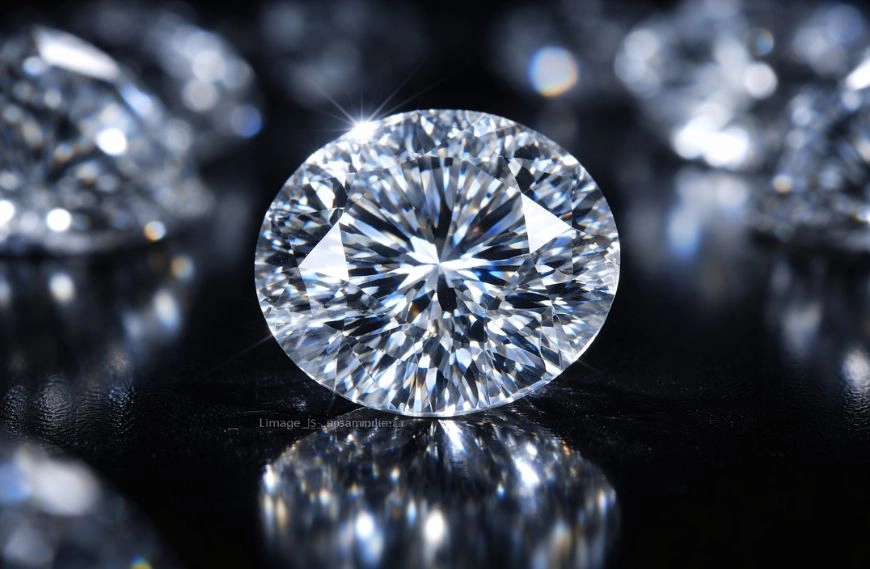
The Indian diamond and jewellery industry has long faced challenges due to inconsistent and confusing terminology, particularly on e-commerce platforms. Buyers often struggled to distinguish between natural diamonds and their laboratory-grown counterparts, creating uncertainty and undermining trust.
To address this, the Bureau of Indian Standards (BIS) has introduced IS 19469:2025, a modified adoption of ISO 18323:2015 – Jewellery: Consumer Confidence in the Diamond Industry. The new framework provides clear, enforceable rules on diamond terminology, drawing a strict distinction between natural diamonds and laboratory-grown diamonds.
Under the new guidelines:
- Defining ‘Diamond’: The term ‘diamond’ now applies exclusively to natural diamonds. Sellers may use descriptors such as ‘natural,’ ‘real,’ ‘genuine,’ or ‘precious,’ but the base term must refer only to stones formed naturally.
- Laboratory-Grown Disclosure: Man-made diamonds must be explicitly labelled as ‘laboratory-grown diamond’ or ‘laboratory-created diamond.’ Abbreviations such as ‘LGD,’ ‘lab-grown,’ or ‘lab-diamond’ are no longer permitted in formal disclosure.
- Banned Misleading Language: Words like ‘nature’s,’ ‘pure,’ ‘earth-friendly,’ or ‘cultured’ cannot be used to describe laboratory-grown diamonds. Using brand names without the proper ‘laboratory-grown’ qualifier is also prohibited.
Commenting on the new standard, Richa Singh, Managing Director of the Natural Diamond Council (NDC), said: “Consumers deserve complete clarity when buying a diamond. Defining what can truly be called a diamond strengthens trust and protects the value of natural stones.”
The guidelines have been welcomed by jewellery retailers nationwide. Sunil Datwani, Director of Gehna Jewellers, remarked: “Transparency is a responsibility. The BIS framework gives the industry clear guidance, helping us build trust with customers while safeguarding the integrity of natural diamonds.”
The initiative reflects a collective effort to protect both the emotional and financial value of diamond purchases. By clearly distinguishing natural diamonds from laboratory-grown alternatives, the industry moves toward greater accountability, transparency, and consumer confidence.
The Natural Diamond Council, a global not-for-profit organisation, continues to support the BIS and Indian authorities in implementing the framework effectively. Operating in India, the US, China, UAE, and Europe, NDC works closely with stakeholders to promote ethical practices, provide credible education, and help consumers make informed decisions about diamonds.
Subscribe Deshwale on YouTube
