



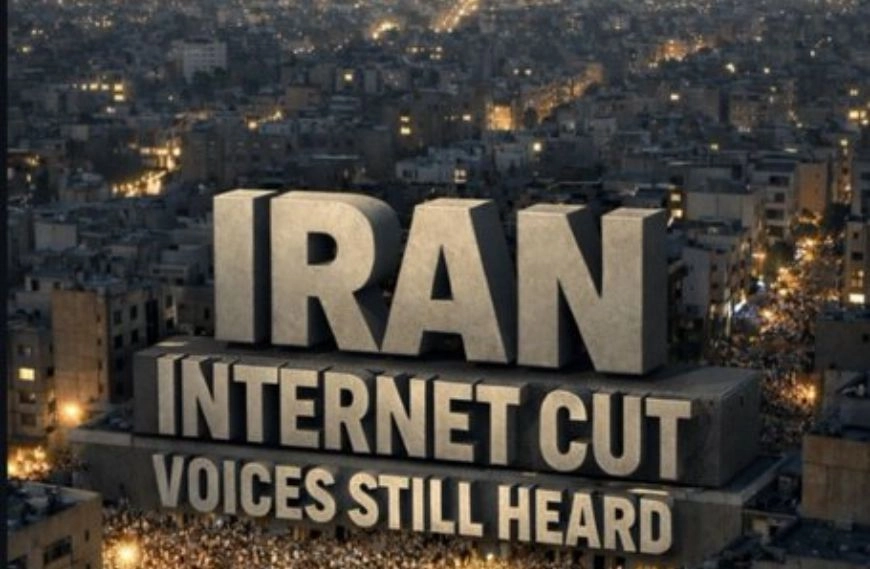
Iran has shut down much of its internet and phone services as protests continue to spread across the country. The blackout has left millions of people unable to communicate freely or share information with the outside world during a critical period of unrest.
The internet restrictions began as demonstrations expanded to several major cities, including Tehran, Mashhad, and Isfahan. Mobile internet services were heavily disrupted, and access to popular social media platforms and messaging apps became extremely limited. Many residents reported that even basic online services were difficult or impossible to use.
While Iranian authorities have not issued a detailed public explanation, analysts and digital rights groups believe the shutdown is intended to slow the spread of protests. By cutting off online communication, the government can make it harder for people to organise demonstrations and prevent images and videos from reaching international audiences.
This approach is not new. Iran has used internet restrictions during previous periods of unrest. In such moments, authorities have either slowed internet speeds or blocked access entirely. Critics argue that these measures are designed to control information rather than address security concerns.
Internet monitoring organisations observed a sharp drop in online traffic across the country shortly after the blackout began. Mobile data networks were among the worst affected. Experts say the scale and timing of the disruption suggest a deliberate decision rather than a technical failure.
For ordinary citizens, the impact goes beyond protests. Many people rely on the internet for work, education, banking, and staying in touch with family members. The blackout has disrupted daily life and added to the sense of uncertainty and fear during the unrest.
Some Iranians have attempted to bypass the restrictions using virtual private networks, or VPNs, and other alternative tools. However, access to these services is often unreliable, and many people remain cut off from global communication.
International human rights organisations have criticised the internet shutdown, saying it limits freedom of expression and the public’s right to information. They argue that cutting access during protests prevents transparency and increases the risk of abuses going unseen.
As demonstrations continue, the lack of reliable internet access makes it difficult to fully understand what is happening inside Iran. With much of the country offline, information emerges slowly, highlighting how control over digital communication has become a powerful tool during times of political crisis.
Subscribe Deshwale on YouTube
