



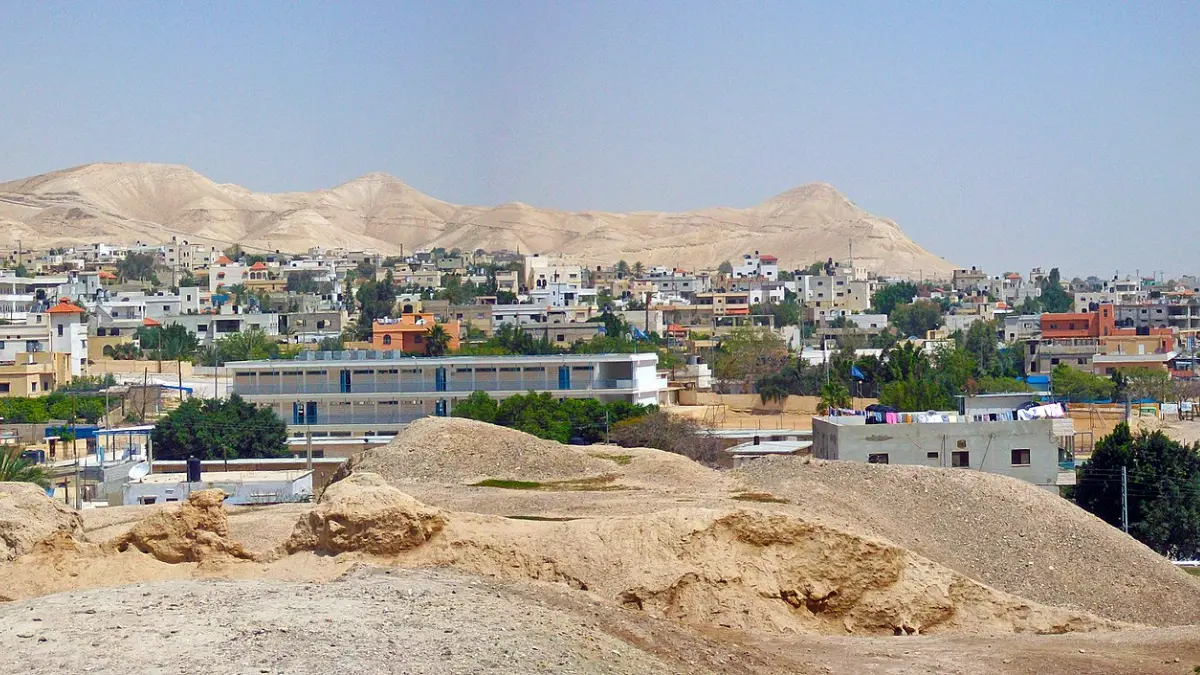
The Dawn of Urbanity
In the Levant’s sun-scorched Jordan Rift Valley, Jericho rises as the world’s oldest city. Known to archaeologists as Tell es-Sultan, it dates back to 9000–8000 BCE. Excavations reveal Neolithic stone towers and walls, proof of early urban life. One 7-metre stone tower, built around 8000 BCE, remains a mystery. It shows how early builders dared to shape permanence in a shifting world.
Here, near the perennial springs of Ein es-Sultan, people learned to grow wheat and barley. They domesticated goats and formed lasting communities. Jericho was not just an oasis of water. It became an oasis of ideas, where rituals, farming, and traditions rooted the first seeds of civilization.
The City of Walls and Whispers
Jericho’s early walls protected its settlers from danger and marked political awareness. These fortifications hinted at governance and control. Its story also lives in scripture. The biblical tale of Joshua’s trumpets toppling Jericho’s walls gave the city mythical fame.
However, its true marvel lies in its survival. Across ages of Egyptian, Assyrian, Babylonian, Persian, Greek, and Roman rule, Jericho endured. Empires fell, but Jericho’s orchards thrived. Traders crossed continents, filling its markets with distant goods and voices.
A Green Jewel in the Desert
Today, Jericho stands vibrant amid desert sands. Its fertile groves produce citrus, bananas, and dates. Visitors see remnants of the world’s oldest synagogue and farms that still flourish. Despite the arid surroundings, the city pulses with life, proof of human persistence.
A Living Link to Humanity’s Past
To stand in Jericho is to stand at history’s edge. Its stones echo with 10,000 years of survival and innovation. Here, humankind first claimed permanence over wilderness. Jericho was not only a city. It was the bold leap that placed us on the path to civilization.
