



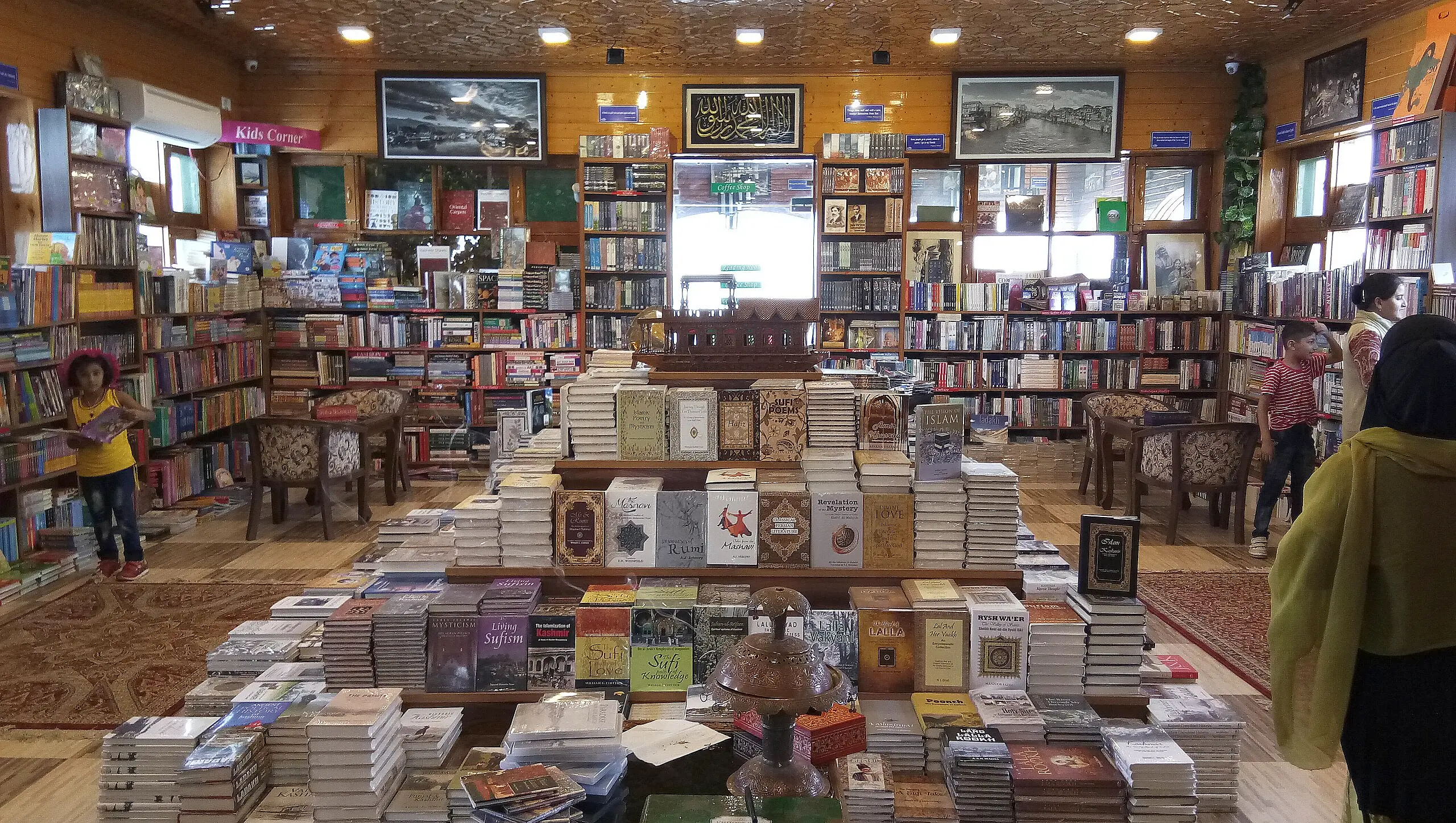
Police in Srinagar, Jammu and Kashmir, have raided multiple bookstores last week, seizing hundreds of books allegedly promoting the ideology of the banned organisation Jamaat-e-Islami (JeI). The operation, carried out in various parts of the city, is part of an ongoing crackdown on material deemed a security concern.

According to officials, 668 books were confiscated from several bookstores and publishing houses suspected of circulating content linked to Jamaat-e-Islami, an organisation banned in India under the Unlawful Activities (Prevention) Act (UAPA). Among the seized books were those authored by Abul A’la Maududi, the founder of Jamaat-e-Islami, whose works are known for their ideological influence.
Authorities state that the move is aimed at preventing the spread of extremist narratives and ensuring that educational spaces remain free from radical ideologies. A senior police official confirmed that the raids were intelligence driven and aligned with ongoing efforts to curb separatist influences in Jammu and Kashmir.
The crackdown has sparked mixed reactions, with some viewing it as a necessary security measure, while others argue that banning ideological books could stifle intellectual discourse. Various civil society groups and academics have raised concerns over freedom of expression and the availability of religious literature, questioning whether such actions could lead to a broader suppression of academic material.
However, government sources clarify that the ban on Jamaat-e-Islami remains in force, and any literature propagating its ideology is subject to scrutiny. Officials reiterated that the raids targeted specific publications associated with the banned group, not general Islamic literature.
The Indian government has maintained a strong stance on curbing extremist narratives, particularly in sensitive regions like Jammu and Kashmir. The seizure of books is part of a larger security strategy aimed at countering radicalisation and ensuring peace in the region. Authorities have indicated that similar actions may continue if bookstores or publishers are found circulating content that violates Indian laws.
The situation remains tense, with security agencies monitoring further developments. Meanwhile, legal experts debate the broader implications of such actions on free speech and religious expression, a topic likely to remain in public discourse in the coming days.
Featured image – Representative, by Nckumbhkar on Wikimedia Commons
