



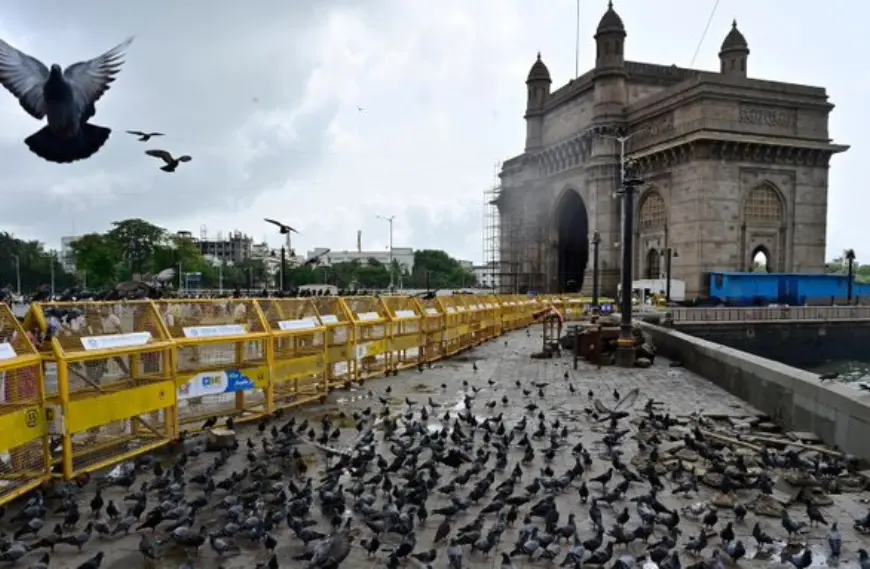
Mumbai has been placed on high alert following a chilling WhatsApp message received on the official Traffic Police helpline. The sender identifying as “Lashkar-e-Jihadi” claimed that 34 vehicles loaded with “human bombs” and 400 kg of RDX were strategically positioned throughout the city. The message also asserted that 14 Pakistani terrorists had entered India, hinting at a large-scale coordinated attack during the upcoming Ganesh Visarjan celebrations. Security forces escalated their operations citywide.
The Echo of Lashkar-e-Tayyiba
Although “Lashkar-e-Jihadi” is not a formally recognised group, the invocation of this name unmistakably recalls Lashkar-e-Tayyiba (LeT) a Pakistan-based militant organisation behind major attacks on Indian soil. The LeT’s notoriety dates back to the 2008 Mumbai attacks, which resulted in over 170 deaths and were executed using RDX explosives, small arms, and coordinated tactics.
Political and Security Implications
By invoking a name closely associated with LeT, the message deepens existing anxieties regarding cross-border terrorism. This raises geopolitical tensions, suggesting that militant networks may be active or at least perceiving themselves to operate within India, especially around symbolic cultural events. Strategic analysts and security experts must interpret such threats within the broader context of India Pakistan relations and regional proxy conflicts.
The Challenge of Attribution
The anonymity of the message complicates both attribution and credibility assessment. Whether this is the work of a sophisticated terror cell or merely a hoax designed to sow fear, authorities must employ robust intelligence, forensic tracing of digital footprints, and inter-agency coordination to ascertain veracity and establish deterrence.
Public Impact Amid Celebration
The timing immediately preceding the Ganesh Visarjan, a major civic festival, amplifies possible fallout. Escalating security in densely packed public spaces puts immense pressure on urban infrastructure, law enforcement, and civil liberties. Authorities must balance immediate threat response with maintaining public calm and ensuring festival continuity.
This terror threat, laced with cross-border implications, is more than a regional scare it rekindles the spectre of international militancy and underscores the fragile intersection between festivity and security. For foreign policy analysts and security scholars, the incident serves as a critical case study: it highlights the evolving nature of terror narratives online, the necessity of credible institutional response, and the delicate geopolitical balance that underwrites public safety in India.
