



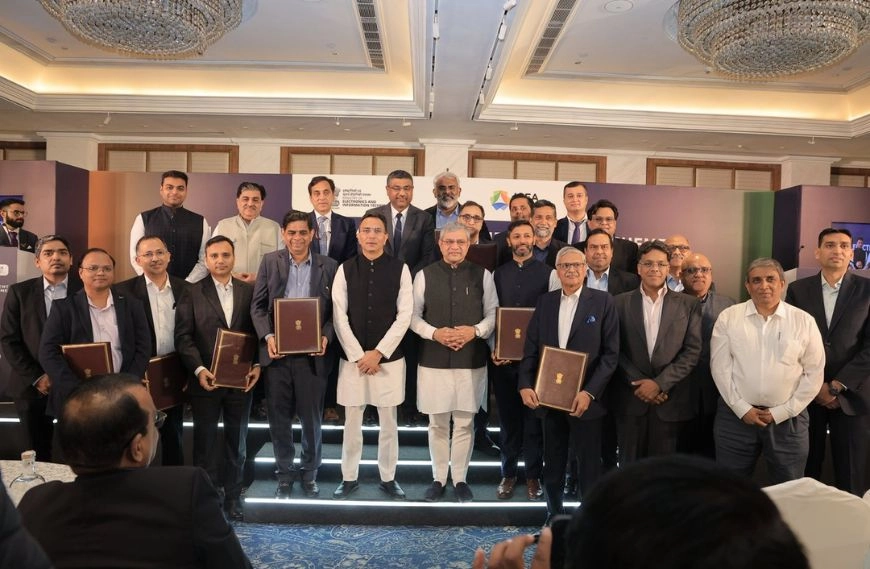
India has taken another major step toward strengthening its electronics manufacturing base. The government has cleared seventeen new projects worth ₹7,172 crore under the Electronics Component Manufacturing Scheme. These projects are not just investments on paper. They represent a deeper push to build essential components within the country and reduce India’s dependence on imports.
The newly approved units cover a wide range of high-value components that go into devices we use every day. These include camera modules, multilayer printed circuit boards, optical transceivers, connectors, enclosures, and other parts that form the backbone of modern electronics. By expanding capacity in these areas, India hopes to move beyond simple assembly and take on more complex, value-added manufacturing.
One of the strongest outcomes expected from these projects is a significant rise in domestic production. Together, the seventeen units are projected to generate more than ₹65,000 crore worth of components in the coming years. Along with this growth, the projects are estimated to create nearly twelve thousand direct jobs, which will further support local economies and skilled workforce development.
A wide mix of companies is part of this new wave. Established manufacturers as well as newer players will operate units across nine states, including Karnataka, Maharashtra, Tamil Nadu, Uttar Pradesh, Goa, Jammu and Kashmir, Gujarat, Madhya Pradesh, and Andhra Pradesh. This geographical spread shows how electronics manufacturing is no longer limited to a few hubs. It is becoming a nationwide opportunity.
A key part of the government’s focus is building long-term capability. This includes stronger design teams, higher manufacturing standards, and deeper relationships with local suppliers. Quality control and supply chain resilience are being treated as essential for India to compete globally. The government also plans to introduce specialised training programmes for workers so that the industry has the skilled talent it needs.
Some components that India has traditionally imported, such as high-layer PCBs and optical transceivers, may now begin to see domestic production. This shift is important because these are complex products that require advanced engineering and precision. Producing them within India marks a move into higher levels of manufacturing, which can benefit the entire electronics ecosystem.
Overall, the approval of these projects reflects India’s ambition to climb up the global electronics value chain. The goal is not only to assemble finished devices but to build the crucial components that power them. With this investment, India is positioning itself for a future where innovation, design, and advanced manufacturing grow hand in hand.
Subscribe Deshwale on YouTube
