






India’s residential real estate landscape is witnessing a generational shift, with Millennials emerging as a key force in shaping the future of home buying. Once seen as a generation favouring rentals and flexible living, Millennials are now driving a strong trend towards property ownership, influencing how homes are designed, marketed, and delivered.
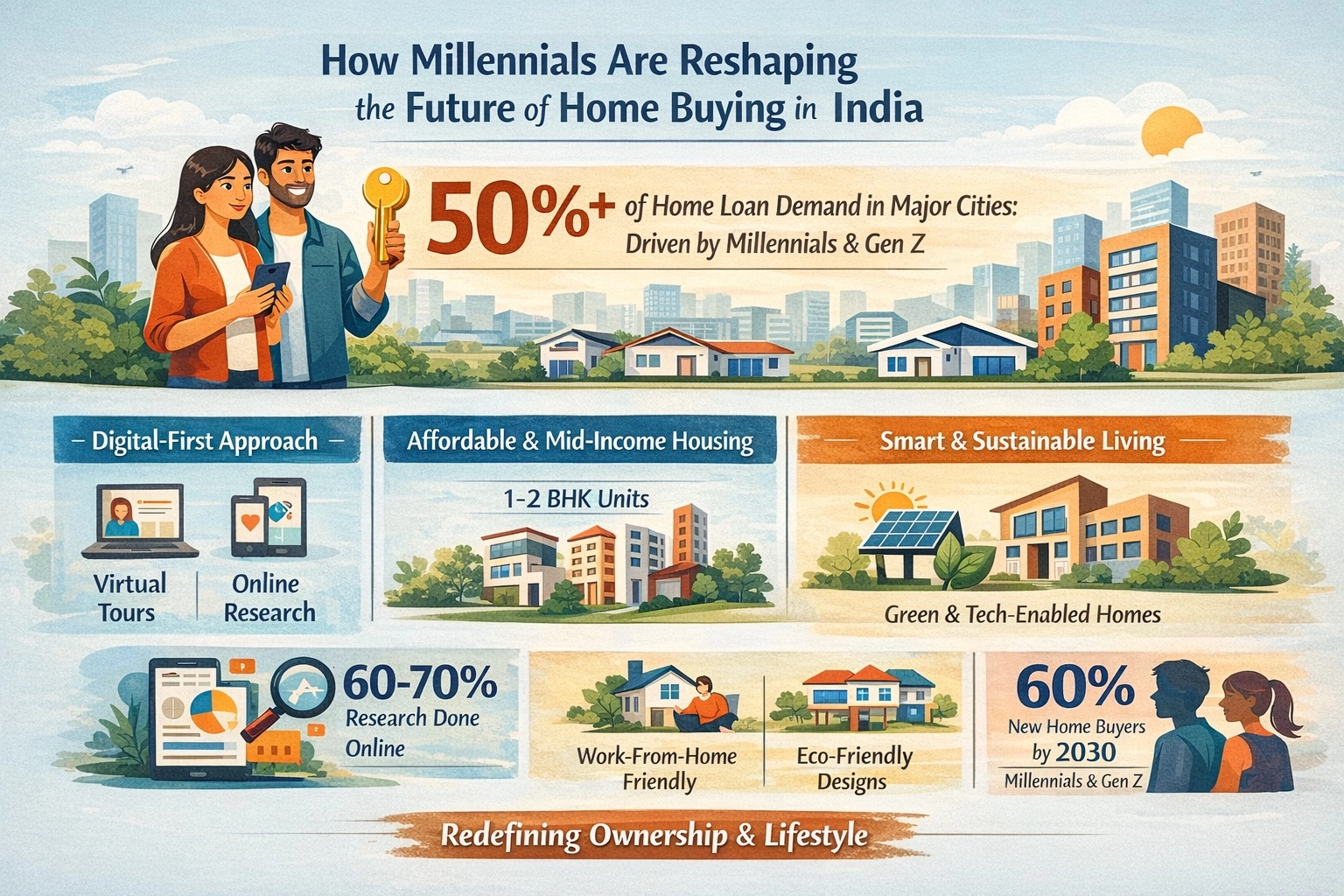
Recent trends highlight the rise of first-time buyers in their late 20s and early 30s. Post-pandemic priorities, increased income stability, hybrid work models, and the need for long-term security have accelerated this shift. Industry data shows that Millennials and Gen Z now account for over 50% of total home-loan demand in major Indian cities, including Mumbai, Bengaluru, and the NCR region. Much of this demand is focused on affordable and mid-income housing, reflecting a balance between financial prudence and lifestyle aspirations.
Mr. Jayesh Rathod, Co-Founder & Director of The Guardians Real Estate Advisory, observes, “Millennials are displaying unprecedented confidence in property ownership. They know exactly what they want: flexible layouts, smart-home features, and wellness-centric spaces and developers are adapting accordingly.”
Digital-first research is another defining feature of this generation. Prospective buyers extensively compare projects, review virtual walkthroughs, assess neighbourhood infrastructure, and track price trends online before visiting any site. Surveys suggest that 60–70% of a Millennial buyer’s decision-making process now happens digitally, compelling developers to increase transparency, adopt advanced technology tools, and communicate more efficiently.
Ms. Shraddha Kedia-Agarwal, Director at Transcon Developers, adds, “Millennials arrive at sales offices already informed about pricing, location, and project details. Developers who cater to this digital-savvy generation with data-backed, transparent communication gain a competitive edge.”
Practicality, efficiency, and lifestyle alignment are top priorities. One- and two-bedroom configurations dominate demand, reflecting a preference for usable space over sheer size. Smart-home solutions, energy-efficient systems, and integrated security are increasingly expected, while sustainable, green-certified housing is rising in popularity. Industry reports predict that such eco-conscious developments could make up nearly 30% of new launches in the coming years.
For Millennials, a home is more than a financial asset; it is an extension of identity and lifestyle. Community-focused developments, wellness amenities, and intelligent layouts now rank alongside location and price. By 2030, Millennials and Gen Z are projected to constitute nearly 60% of new homebuyers in India, solidifying their influence on the country’s real estate future.
As Millennials embrace ownership, India’s housing market is evolving toward sustainability, smart design, and community-centric living, setting new benchmarks for the next decade.
Subscribe Deshwale on YouTube