



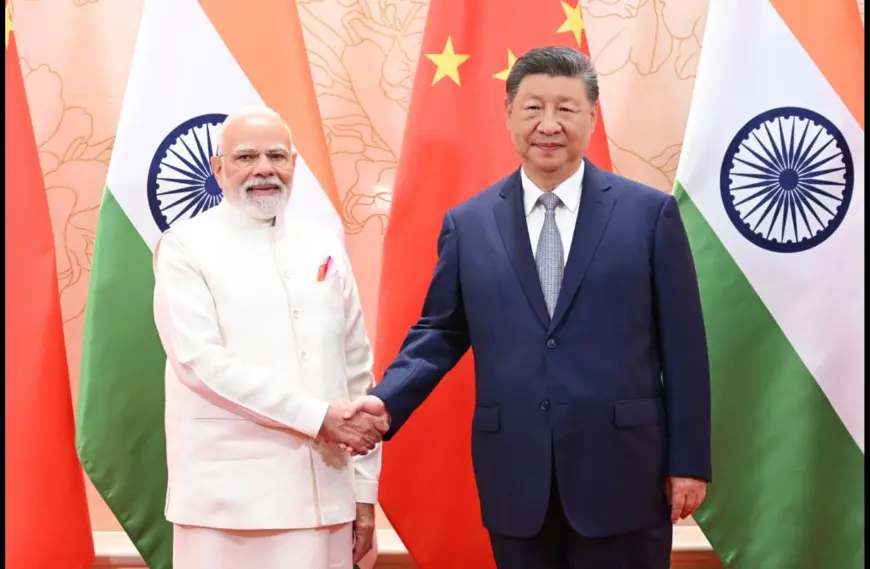
When Indian Prime Minister Narendra Modi met Chinese President Xi Jinping, the meeting attracted wide attention both in India and across the world. The reason is that clear relations between the two countries are not simple. On one side, India and China depend on each other for trade, while on the other, they face serious security challenges, including tensions on the border and concerns about terrorism. This creates a dual situation where economics and security often pull the two countries in different directions. At the same time, India also has to balance its relations with its other neighbours while responding to China’s growing influence in the region.
Economic vs. Security Dualism
India and China are two of the biggest economies in Asia, and trade between them has grown rapidly in recent years. Chinese products from electronics to machinery are widely used in India, and Indian companies also depend on exports to China for certain industries. This trade relationship creates strong economic interdependence, and many experts believe that cooperation in this field could bring benefits to both countries.
However, security concerns cannot be ignored. The two nations share a long and disputed border, where tensions have often risen, including the violent clash in Galwan Valley in 2020. India also has concerns about China’s ties with Pakistan and the possibility of terrorism threats being indirectly supported through these connections. This dualism where trade pushes for cooperation but security issues demand caution makes the relationship very complex. The Modi–Xi meeting reflected this reality, as both leaders had to balance economic dialogue with strong security concerns.
Neighbourhood Balancing Act
India is not only dealing with China but also with the wider South Asian region. As the largest country in the neighbourhood, India has always tried to maintain close ties with countries like Nepal, Bhutan, Bangladesh, and Sri Lanka. At the same time, China has been increasing its presence in the region through investments, infrastructure projects, and loans as part of its Belt and Road Initiative (BRI).
For India, this creates a balancing challenge. On one hand, it must strengthen its traditional ties with its neighbours to prevent them from moving too close to China. On the other hand, it cannot ignore China’s growing economic and political influence in the same region. The Modi–Xi meeting was important in this sense, as it showed how India is managing its own neighbourhood diplomacy while facing China’s regional ambitions.
Key Discussion between Modi and Xi meeting
During their meeting, Prime Minister Modi and President Xi discussed both opportunities and challenges in the relationship. Trade was one of the main topics, as both sides are aware of the benefits of economic cooperation. At the same time, Modi raised India’s concerns about the trade imbalance, where Chinese exports to India are much higher than Indian exports to China.
Security issues were also a key part of the conversation. Modi emphasised the importance of maintaining peace on the border and reducing tensions in disputed areas. Terrorism and regional stability were also discussed, as India made it clear that cooperation against such threats is essential. The meeting did not solve all problems, but it helped keep the dialogue open, which is necessary for future progress.
The Modi and Xi meeting highlights the complex nature of India–China relations. Both countries cannot ignore each other because of their size, population, and influence in the world. Economic ties will continue to grow, but security concerns will always remain in the background. At the same time, India has to carefully balance its role in South Asia while China continues to expand its reach.
In simple words, the meeting showed both the hope and the difficulty of this relationship. Dialogue is necessary, but trust needs to be built step by step. For policymakers, business leaders, and regional watchers, the Modi and Xi discussions are a reminder that Asia’s future will depend greatly on how India and China manage this mix of cooperation and competition.
