



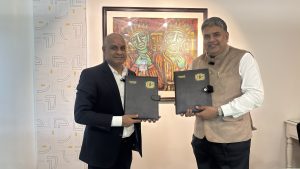




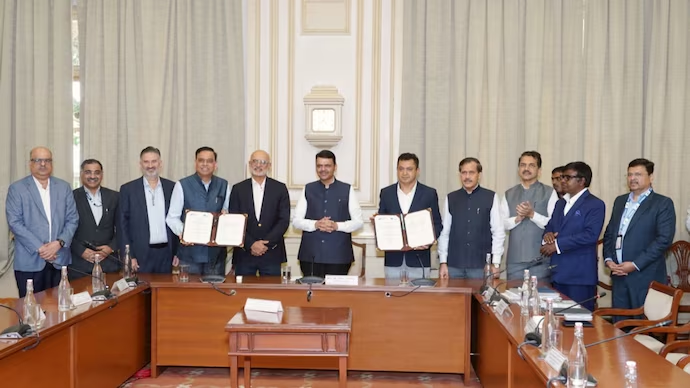
Maharashtra has taken a significant step towards building Mumbai 3.0, an ambitious urban development project that aims to create a new economic and residential hub outside Mumbai. The Mumbai Metropolitan Region Development Authority (MMRDA) has appointed Singapore-based Surbana Jurong Infrastructure Pte Ltd to prepare the vision document, master plan and comprehensive planning framework for the proposed city, marking the beginning of its detailed planning phase.
The project, officially known as the Karnala-Sai-Chirner (KSC) New Town, will be developed across 323.44 square kilometres in Raigad district, covering 124 villages spread across Uran, Panvel and Pen talukas. Maharashtra is positioning the project as a major growth centre for the Mumbai Metropolitan Region (MMR), with the goal of creating a modern urban destination that can support future population growth and economic expansion.
The proposed city is expected to become a key development corridor between Mumbai and Navi Mumbai, offering improved infrastructure, employment opportunities and planned urban development.
Modern urban hub with world-class connectivity
Mumbai 3.0 is being planned as more than just a residential township. According to the proposed vision, the new city will feature modern residential neighbourhoods, commercial districts, logistics parks, employment hubs and business centres. The government also plans to develop institutions dedicated to education, healthcare, technology, innovation and commerce, making the region a self-sustained urban ecosystem.
One of the biggest strengths of the project is its strategic location. Mumbai 3.0 falls within the influence zones of the Atal Setu (Mumbai Trans Harbour Link) and the upcoming Navi Mumbai International Airport, two major infrastructure projects expected to transform connectivity in the region.
Apart from these landmarks, the proposed city will benefit from an integrated transport network that includes road, metro, rail, airport and logistics connectivity. The Maharashtra government believes these infrastructure links will help establish Mumbai 3.0 as one of the country’s leading urban and economic centres while attracting investments from multiple sectors.
The appointment of Surbana Jurong is expected to shape the long-term vision of the project, with the global planning firm responsible for preparing a comprehensive development blueprint that will guide the city’s future growth.
Land acquisition begins as state plans international-scale city
The MMRDA officially began the land acquisition process for Mumbai 3.0 in April 2026. To ensure flexibility for landowners, the authority has introduced multiple compensation options, including direct monetary compensation, Floor Space Index (FSI), Transferable Development Rights (TDR) and a land pooling model.
Under the land pooling model, eligible landowners can contribute their land for the project and receive a portion of the developed land in return. The government believes this approach will provide long-term benefits while encouraging participation from local landowners.
Mumbai 3.0 forms a key part of Maharashtra’s broader strategy to expand the Mumbai Metropolitan Region by creating new centres of employment, business and economic activity. The project is also expected to reduce the increasing population and infrastructure pressure on Mumbai and Navi Mumbai by offering a planned alternative for residential, commercial and industrial development.
With the Atal Setu and Navi Mumbai International Airport expected to boost regional connectivity, the area between Mumbai and the airport is likely to emerge as one of Maharashtra’s most important development corridors over the coming years.
The Maharashtra government has already outlined its vision of transforming Mumbai 3.0 into an international-scale urban and economic centre. With the preparation of the vision document and master plan now underway, the project has entered its first major stage of development and is expected to play a crucial role in shaping the future growth of the Mumbai Metropolitan Region.
Subscribe Deshwale on YouTube


