









By: Pratyush Bardoliwala
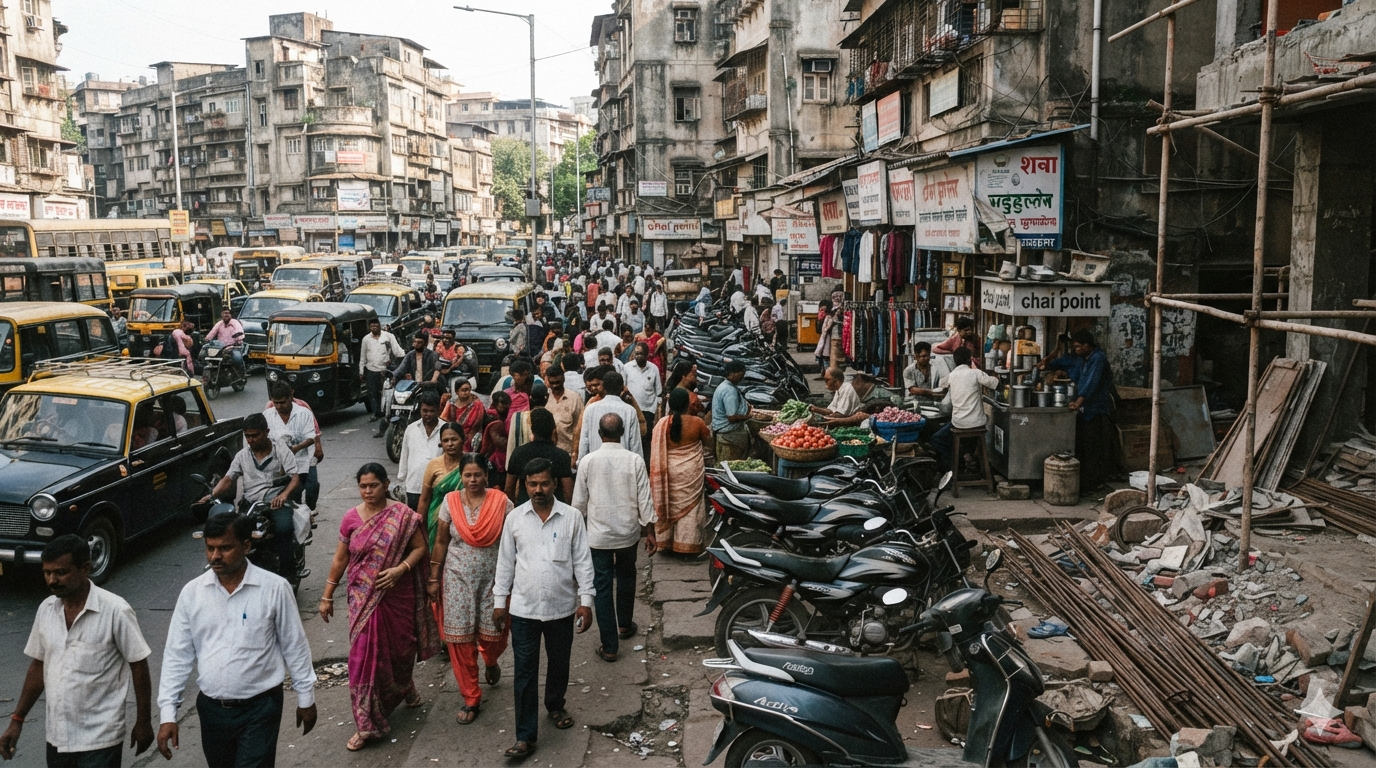
It is not surprising to see citizens in Mumbai walking along busy main roads to get to their destinations. But once we realise that they do not do so because of a lack of civic sense, a bigger problem comes to light: they simply have nowhere else to walk.
Footpaths across Mumbai are slowly losing their purpose. Instead of serving as safe spaces for pedestrians, they now have markets, parked vehicles, construction materials and business extensions. For pedestrians, walking has become less about convenience and more about finding a way through whatever space remains.
So, let’s take a closer look at the various factors affecting Mumbai’s footpaths. We will also understand how they make life more difficult and risky for pedestrians like us.
1. Shops and Businesses Taking Over Footpaths
The major reason footpaths have become an adventure instead of a simple walk is the way shops and businesses have expanded onto them. Many shops keep their products, goods, equipment and other items outside on the footpath without thinking much about it. Using public footpaths for commercial purposes can also be illegal.
But for pedestrians, this creates a completely different experience. They often have to squeeze through narrow gaps or walk around obstacles. In some cases, they even have to step onto the main road to get past the obstruction. On a busy Mumbai road, this can put pedestrians at risk from passing vehicles. Children, senior citizens and people with mobility difficulties face an even greater challenge.
2. Street Vendors
Street vendors are a familiar part of Mumbai’s streets, and many depend on these spaces for their livelihood. However, problems arise when vendors use most or all of the footpath to run their businesses and display their goods.
When stalls and goods take up most of the walking space, pedestrians often have to squeeze through narrow gaps. Some have to find another way around. Crowds around popular vendors can make the footpath even harder to cross. At times, pedestrians may have to step onto the road and move closer to traffic. What should be a simple walk can quickly become stressful and risky.
3. Vehicles Parked on Footpaths
There has to be a day when you are simply walking through a footpath and suddenly find a car parked right in front of you. For a moment, you may wonder why a car or bike sits in a place meant for pedestrians. But most of us simply walk around it and move on without giving it much thought.
The problem is that this has become so common that we have started treating it as normal. Cars, motorcycles and scooters regularly occupy spaces meant for pedestrians. This leaves people with little choice but to step onto the road and continue walking. On a busy road, this can put pedestrians dangerously close to moving traffic. It can turn an ordinary walk into a risky one.
4. Construction and Road Work
Mumbai is a rapidly developing city, and new construction projects are a regular part of its landscape. New buildings, offices and redevelopment projects continue to come up across the city. But the problem begins when these sites start affecting nearby footpaths.
Construction materials, equipment and debris often remain on or around footpaths. They make the area dirty, difficult and sometimes impossible to use. Poorly managed construction sites can also put pedestrians at risk of falling debris.
When construction sites fail to follow basic safety and pedestrian guidelines, people walking past them face the consequences. Instead of using a clear and safe path, pedestrians often have to move onto the road. They then have to navigate around construction-related obstacles.
5. Broken and Damaged Footpaths
You may have noticed that some footpaths are technically available for pedestrians but remain difficult to use because of their poor condition. Broken tiles, uneven surfaces, potholes and damaged sections can turn a short walk into a difficult one.
Because of these poor conditions, pedestrians often have to watch every step and avoid obstacles. A small, unnoticed gap or uneven surface can cause someone to trip or fall. It can even leave their clothes dirty. To avoid these problems, many pedestrians choose to stay on the main road instead. This puts them closer to moving traffic.
6. Garbage and Waste on Footpaths
People often assume that once they throw their garbage out of sight, the problem is no longer theirs. But that is far from true. When people casually litter on footpaths, they forget that they or someone else may need the same space later.
As more people dump waste on the footpaths, the problem quickly becomes visible. Garbage starts piling up and creates dirty and unpleasant surroundings. In some places, it can even turn into large heaps of waste with a foul smell.
A dirty footpath can make pedestrians uncomfortable. It can also force them to walk around the waste or step onto the road. What may seem like a small act of littering can make an entire footpath difficult and unpleasant for everyone to use.
What Can Citizens Do?
The good thing is that pedestrians do not have to simply accept these problems as part of daily life in Mumbai. A shop or street vendor may block the footpath. A vehicle may occupy the walking space. Construction debris, a damaged footpath or garbage may also create problems. Citizens can report all these issues to the BMC. Raising a complaint brings attention to the problem. It also creates a record that can help the civic authorities take action.
How Can You Report a Problem?
Making a complaint is also fairly simple. Citizens can report the issue through the BMC’s complaint system or by calling 1916. When filing a complaint, mention the exact location. Clearly explain the problem as well. If possible, add a photograph or video of the issue. This can make it easier for the authorities to identify the problem.
Once you register the complaint, keep the complaint number. You can use it to track its progress and follow up if the problem remains unresolved.
Footpaths Are for People
Citizens need to realise that walking on busy roads should never become normal. It puts pedestrians directly at risk. It can also contribute to traffic congestion when people have to leave the footpath and use the road instead.
The authorities have a responsibility to maintain safe and usable footpaths. However, we as citizens also have a role to play. We need to use these spaces responsibly. We should also report encroachments, illegal parking, garbage dumping and construction-related obstructions. These actions can help keep footpaths usable for everyone.
A footpath is not a decoration, an extension of a shop or a convenient parking space. It is a basic part of the city’s infrastructure. It exists so people can walk safely.
Mumbai will continue to grow and develop. But that growth should not come at the cost of something as basic as a safe walk home. If we want safer streets and a better city, we need to make sure that the space meant for pedestrians remains exactly that: a space for pedestrians.
Subscribe Deshwale on YouTube


