









15 Remarkable Weaving Traditions of India Showcase Their Craft in Mumbai
Handloom Craftsmanship Takes Centre Stage at NABARD Exhibition
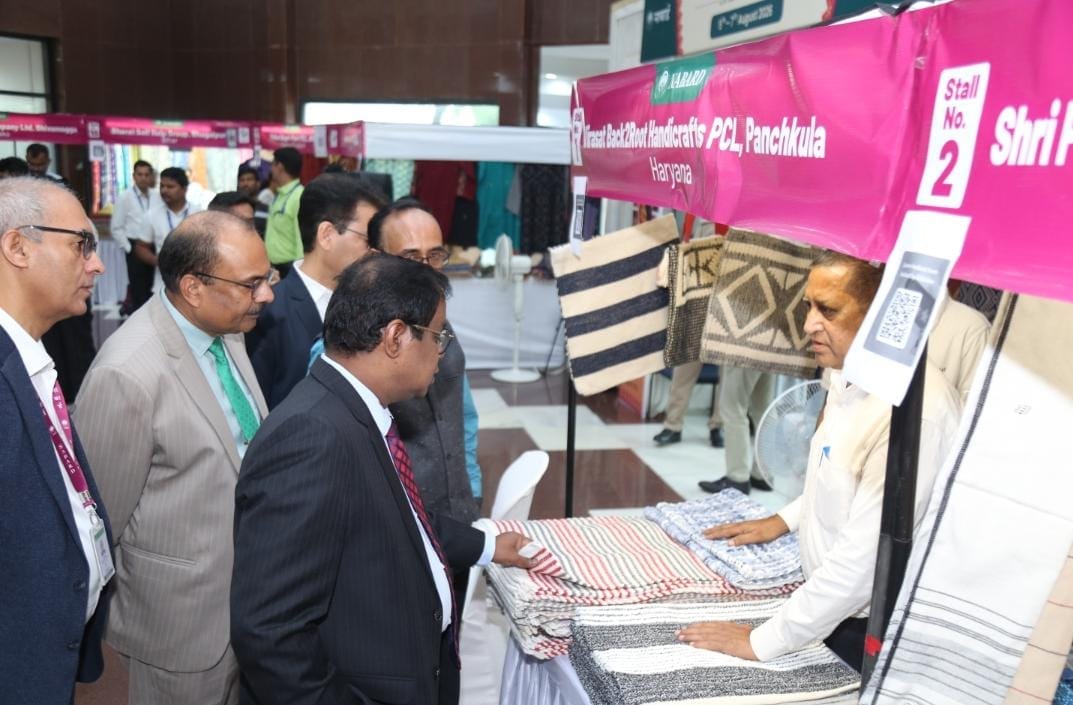
Mumbai (Anil Bedag): India’s rich handloom heritage took centre stage in Mumbai as the National Bank for Agriculture and Rural Development (NABARD) organised a three-day National Handloom Day Exhibition-cum-Sale. The initiative brought together products representing 15 renowned handloom traditions from different parts of the country, giving visitors an opportunity to experience the diversity of India’s traditional weaving crafts.
The exhibition was held from August 5 to 7 at NABARD’s Head Office in the Bandra-Kurla Complex, Mumbai. The event was organised with the aim of connecting India’s handloom heritage with markets while also supporting and empowering weavers and producers.
The exhibition brought together a wide range of traditional handloom products. These represented weaving traditions from different regions of India and highlighted the distinctive craftsmanship associated with each tradition.
Among the crafts showcased at the exhibition were Maharashtra’s Paithani, Telangana’s Pochampally Ikat, Rajasthan’s Kota Doria, Odisha’s Sambalpuri, Bihar’s Bhagalpur Silk and West Bengal’s Kantha Stitch. These traditional crafts attracted visitors during the three-day event.
The presence of these different weaving traditions provided visitors with an opportunity to see the variety of craftsmanship represented by India’s handloom sector. Each of the showcased traditions reflects a distinct regional craft identity, bringing together different forms of traditional weaving and textile craftsmanship under one exhibition.
The exhibition was not limited to displaying handloom products. It also provided visitors with an opportunity to purchase products directly from producers. This direct connection between producers and customers formed an important part of the initiative, allowing the showcased products to reach consumers directly.
Several of the products displayed at the exhibition are associated with Geographical Indication (GI) tags. These tags reinforce the authenticity and distinctive identity of such products. The presence of GI-tagged products also highlighted the regional identity associated with several of the traditional handloom crafts presented at the event.
According to NABARD, “Connecting producers directly with customers and markets is an important step towards creating better market opportunities for artisans and weavers.” The statement underlined the importance of establishing direct connections between those who create traditional handloom products and the customers and markets interested in them.
The exhibition also included a Buyer-Seller Meet held on August 6. The meeting was aimed at strengthening opportunities for new business partnerships and creating long-term market linkages.
The Buyer-Seller Meet brought together artisans, producer groups and institutional buyers. By creating an opportunity for these participants to connect, the event sought to strengthen potential business relationships and market opportunities for the producers and weavers involved.
The three-day exhibition therefore combined the showcasing of India’s traditional weaving heritage with opportunities for direct purchases and market connections. The participation of 15 renowned handloom traditions allowed visitors in Mumbai to see products representing different parts of the country while also creating an opportunity for producers to connect with customers and potential buyers.
The event was organised around National Handloom Day, which is observed every year on August 7. The occasion honours the skill and craftsmanship of India’s weavers and recognises the importance of the country’s handloom traditions.
The National Handloom Day Exhibition-cum-Sale also reinforced the importance of connecting traditional craftsmanship with market opportunities. Through the participation of artisans, producer groups and institutional buyers, the exhibition created a platform where handloom products could be showcased, purchased and connected with potential market opportunities.
The event also highlighted the wider significance of India’s handloom traditions. The craftsmanship represented by Paithani, Pochampally Ikat, Kota Doria, Sambalpuri, Bhagalpur Silk and Kantha Stitch formed part of the 15 handloom traditions showcased during the exhibition.
With the exhibition taking place at NABARD’s Head Office in Bandra-Kurla Complex, Mumbai, the city became a platform for bringing together handloom products from different parts of India. Visitors were able to explore the products and purchase them directly from producers during the three-day event.
The exhibition concluded on August 7, coinciding with National Handloom Day. The occasion not only honours the skills and craftsmanship of India’s weavers but also reinforces the spirit of Atmanirbhar Bharat and the importance of sustainable rural livelihoods.
Through its focus on traditional handloom products, direct producer-to-customer opportunities and the Buyer-Seller Meet, NABARD’s initiative sought to connect India’s rich weaving heritage with customers and markets. The exhibition brought 15 renowned handloom traditions together in Mumbai while providing artisans, weavers and producer groups with opportunities for greater market linkages.
Subscribe Deshwale on YouTube


