



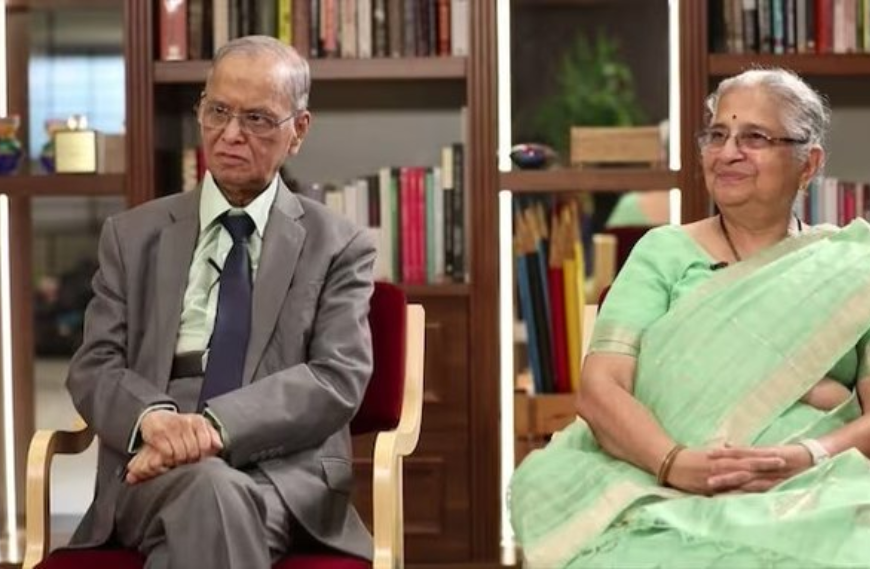
In a surprising move, Infosys founder Narayana Murthy and his wife Sudha Murthy have chosen not to participate in Karnataka’s ongoing caste census. Both are well-known public figures, admired for their contributions to business, education, and philanthropy. The couple stated that they consider themselves economically and socially advanced, and therefore, felt that their participation was not necessary.
The Karnataka caste census is aimed at collecting data on the social and economic status of various communities. The government has said that the information will be used to identify backward classes and ensure they receive the support and facilities they need. While the census focuses on people who may require government assistance, some prominent citizens like the Murthys have decided that their inclusion would not serve any practical purpose.
Their decision has sparked discussions across social media and public forums. Many people appreciate the couple’s honesty and clarity, while others are curious about the role of high-profile figures in such surveys. Some experts say that while it is voluntary, participation by prominent citizens could encourage wider public engagement. Others argue that it is entirely a personal choice, and individuals should not feel pressured to take part.
The Murthys’ stance also raises broader questions about caste-based surveys in modern India. Critics of caste enumeration often point out that such exercises must be handled carefully to avoid misuse or unnecessary publicity, while supporters believe it is essential for social justice and equitable resource distribution. By choosing to step aside, Narayana and Sudha Murthy have kept the focus on those who are truly in need of support and assistance.
This episode highlights how personal decisions of public figures can influence public perception, even in administrative processes like a census. It also reminds citizens that participation in surveys, while important, is ultimately a voluntary choice. For now, the Murthys continue their work in education, social welfare, and entrepreneurship, letting the focus of the caste census remain on communities that need it most.
