










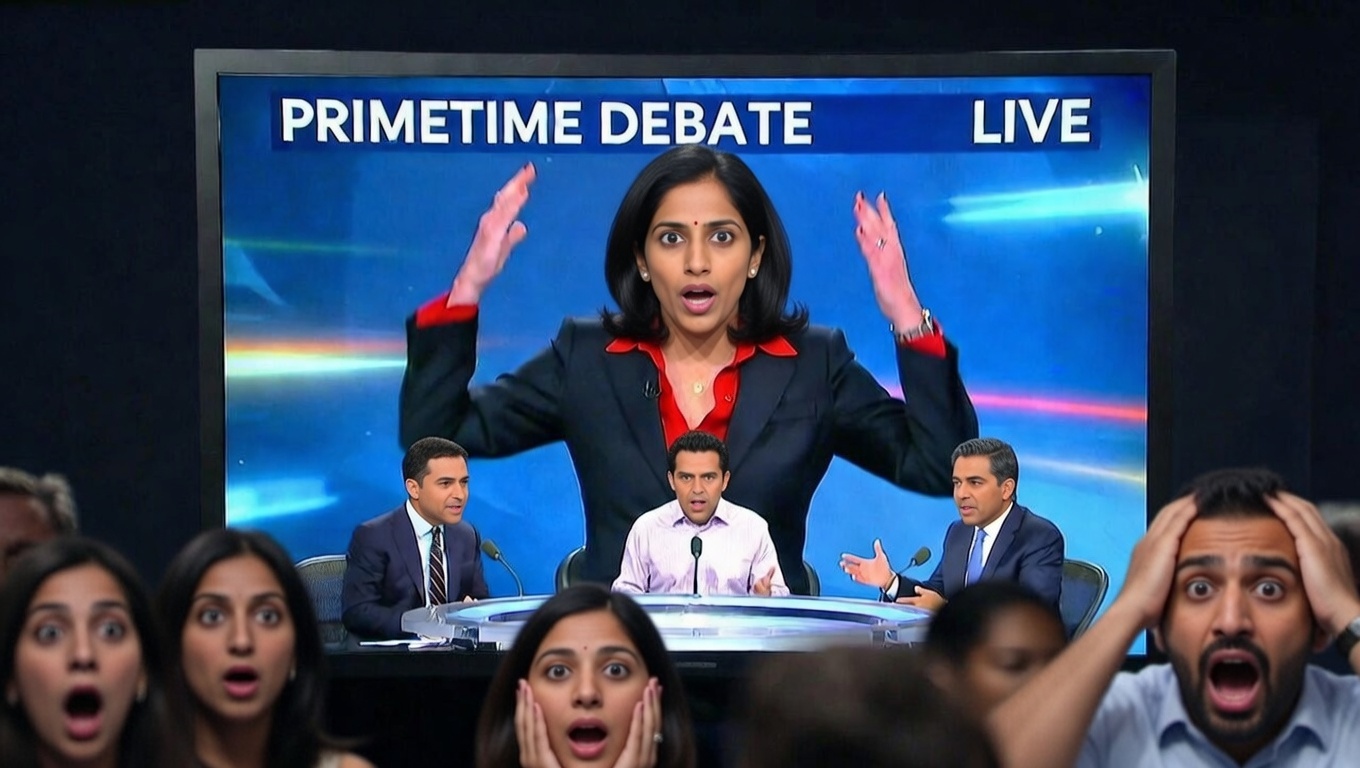
Indian television news debates were once known for sharp questions and measured exchanges. Today, many primetime shows resemble shouting contests. Panellists and spokespersons often speak over one another. Anchors and moderators sometimes allow the chaos to continue. The logic appears simple. Louder debates may deliver higher Television Rating Points. Higher ratings attract advertising revenue. Yet the cost of this model is credibility and public trust.
Viewers frequently complain that noisy debates provide little factual clarity. Instead of unpacking key developments, they amplify partisan talking points. Complex policy questions are reduced to slogans. Legal matters become personal confrontations. The result is confusion rather than understanding. Many households switch off the television because the atmosphere feels tense. News should inform. It should not disturb the peace of a home. While panellists are often invited as paid contributors or political representatives, few openly question the format of these confrontational programmes.
The contrast with earlier decades is noticeable. In the 1980s and 1990s, televised discussions were calmer and structured. Panellists waited for their turn. Moderators intervened firmly to maintain order. Viewers heard arguments presented in sequence. That format allowed citizens to evaluate competing viewpoints with clarity. Today, spectacle often overrides substance.
Audience behaviour reflects this shift. Data trends from the Broadcast Audience Research Council show that television news viewership surged during the pandemic in 2020 but declined as routines normalised. At the same time, digital news consumption has grown steadily. The Reuters Institute Digital News Report has consistently found that a majority of Indian internet users now access news online. Younger audiences rely heavily on smartphones for updates. For many, television is no longer the first source of information.
Industry estimates indicate that India has more than 450 million YouTube users. News organisations and independent commentators operate active channels there. Many viewers prefer short clips over hour-long debates. Others choose long-form discussions that are calmer and more analytical. Digital platforms give audiences control. They can pause, rewind, or switch content instantly. That flexibility contrasts sharply with the rigid format of primetime television.
Perceptions of bias also play a role. Critics argue that some television channels appear sympathetic to the government. Others seem more aligned with opposition narratives. Both sides claim neutrality. However, the framing of stories can reveal clear editorial leanings. This perception erodes trust. When viewers suspect that debates are designed to defend political positions rather than scrutinise them, they look elsewhere.
YouTube presents a different ecosystem. Many channels openly state their ideological perspective. Some lean conservative. Others lean liberal. Some focus strictly on policy analysis without overt partisanship. Their audiences choose accordingly. This transparency reduces the illusion of neutrality, though it also risks creating echo chambers. Even so, many viewers appreciate the calmer tone and detailed explanations found online.
Advertising patterns confirm the transition. Brands are steadily increasing digital ad spending. As advertisers follow audiences, television networks face mounting pressure to adapt. Some have introduced explainer segments and ground reports. Others continue to rely on confrontational formats to retain attention.
The broader issue concerns the health of public discourse. Democracies depend on informed citizens. Debate is essential. Yet constant shouting weakens reasoned discussion. It discourages domain experts from participating. It alienates younger viewers who seek clarity rather than conflict. When serious policy issues are treated as entertainment, public understanding suffers.
Television still commands reach, especially in rural areas and among older audiences. It remains influential. But its authority is no longer unquestioned. Digital platforms have transformed news distribution. The challenge across mediums is credibility. Whether on television or online, audiences value fairness, evidence, and composure.
If television news channels wish to retain relevance, a return to structured, fact-based debates may be necessary. Civil moderation and disciplined exchanges can rebuild trust. Otherwise, the migration toward digital platforms will continue. Viewers now have options. Increasingly, they are choosing spaces where information outweighs noise.
Subscribe Deshwale on YouTube


