









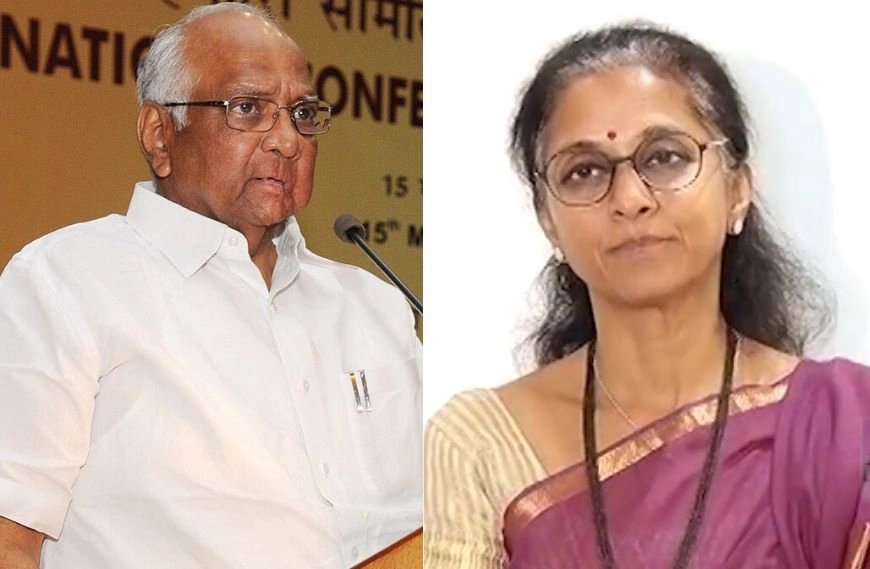
The Nationalist Congress Party (NCP) has been a dominant force in Maharashtra politics for decades, largely guided by the leadership of Sharad Pawar. As discussions of a potential merger between the two NCP factions gain momentum, the focus has shifted to the next generation of leadership within the Pawar family. This development highlights how political power in India can often pass through family lines, blending experience with legacy.
Sharad Pawar, a veteran leader with over five decades in politics, is nearing the end of his Rajya Sabha term in April 2026. While he remains influential, there are indications that he may step back from active politics after this term. In this scenario, Ajit Pawar, his nephew and current Deputy Chief Minister of Maharashtra, is expected to lead the party’s efforts in the state. Ajit Pawar has been a central figure in Maharashtra politics, and his leadership is seen as critical to consolidating the party’s base and preparing for future elections.
At the same time, Supriya Sule, Sharad Pawar’s daughter, is projected to manage the party’s national affairs from Delhi. Sule has already built a strong reputation as a Member of Parliament, known for her focus on legislative work and organisational skills. Assigning her to oversee national-level strategy reflects a deliberate effort to balance state and national leadership within the family framework.
This arrangement, if it comes to fruition, underscores the Pawar family’s political strategy: maintaining continuity while gradually transitioning responsibilities to the next generation. It also ensures that the party can leverage both Ajit Pawar’s grassroots experience in Maharashtra and Supriya Sule’s expertise in national politics.
Family-based political leadership is not unusual in India, and the NCP is one of the many examples where dynastic considerations influence party structure and succession planning. The Pawars’ approach shows a combination of trust, experience, and long-term planning, aiming to keep the party cohesive despite past splits and factional challenges.
For voters and party members, this strategy may be reassuring, as it promises stable leadership and a clear plan for the future. At the same time, it places responsibility on the younger generation to uphold the party’s legacy while addressing evolving political challenges.
The Pawar family’s central role in NCP politics illustrates how dynastic influence continues to shape the party’s decisions, leadership, and electoral strategies. By blending experience with the promise of the next generation, the NCP hopes to maintain its position as a key player in both Maharashtra and national politics.
Subscribe Deshwale on YouTube


