









By: Ananth Venkatesh
Pilgrimage in India rarely promises ease. Crowds, clamour, and discomfort are often embraced as part of the spiritual bargain. Yet even the most fervent devotee expects a measure of dignity when approaching the divine. My recent visit to the Shree Banke Bihari Temple in Vrindavan tested that threshold in unsettling ways.
Vrindavan is more than a town in Uttar Pradesh; it is a living embodiment of Krishna’s lore, etched in bhajans, rituals, and collective memory. At its heart stands the Shree Banke Bihari Temple, home to the graceful idol of Lord Krishna in tribhanga pose, an image that draws thousands daily in waves of intense devotion.
The approach, however, tells a different story.
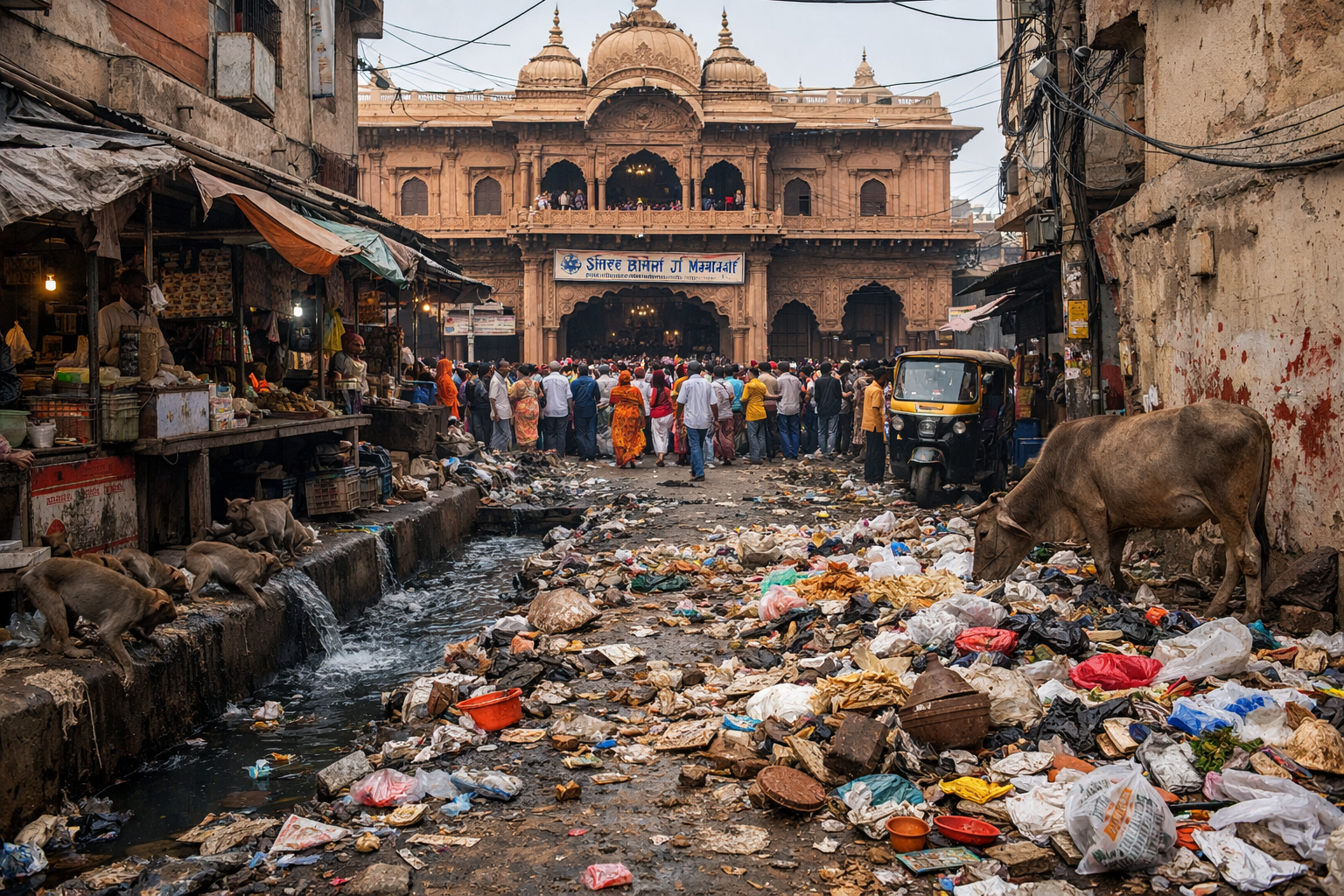
Some roads into Vrindavan remain passable. Near the temple, order dissolves into chaos. Hawkers encroach on the carriageway; beggars line every corner; electric rickshaws dart through alleys never designed for vehicles. Moments before alighting, our driver offered a casual caution: beware the monkeys.
The warning proved timely.
Barefoot in the narrow lanes, I faced a relentless sensory onslaught. Crumbling pathways ran beside overflowing drains; gutka-stained walls and pavements compounded the filth; a persistent stench hung in the humid air. Devotees surged in both directions with no apparent system of flow control.
The chaos peaked when a monkey snatched my maternal aunt’s spectacles in plain sight. Within seconds, local youths materialised, promising retrieval, for a fee. Their practised ease suggested routine. After negotiation, the spectacles were returned; my aunt paid ₹100.
Opportunism or organised racket? Hard to prove. What is clear is the vacuum: scant police presence, no visible temple volunteers, no civic oversight. Such incidents flourish in the absence of authority.
Anticipating further trouble, I shrouded my head and face completely. Locals may have found it amusing; for me, it underscored a deeper unease. These lanes lack basic crowd-management infrastructure – no barriers separating ingress and egress, no demarcated queues. In such confined spaces, a surge could prove fatal. A stampede during Janmashtami in August 2022 claimed two lives and injured several others, yet meaningful change remains elusive despite subsequent reforms: the Uttar Pradesh Shri Banke Bihariji Temple Trust Bill (2025), corridor redevelopment plans, steel railings installed in early 2026, and periodic advisories urging devotees to defer visits during peak rushes (as issued again around New Year 2026).
Inside the temple precinct, conditions improved markedly – cleaner, more orderly. But the damage was done. The gruelling, precarious approach had drained any sense of serenity. I glimpsed the deity from afar, offered hurried prayers, and departed without lingering to absorb the sanctity.
The true tragedy is normalisation. Regular pilgrims and residents seem to accept the squalor as inevitable. For first-time visitors, especially foreigners, the experience risks confirming stereotypes of neglect around India’s sacred spaces.
A tirtha does not commence at the sanctum; it begins at the threshold. The degraded path to Banke Bihari stands in stark contrast to the gentleness and grace embodied by Lord Krishna and Vrindavan’s devotional heritage. Reverence struggles to flourish amid neglect.
Recent initiatives offer hope: improved queue systems, separate entry/exit routes, and infrastructure upgrades. But I struggled to see a systematic implementation of these initiatives during my visit there. Until the journey mirrors the shrine’s sanctity, the disconnect persists—an unspoken blemish on one of India’s most cherished pilgrimage sites.
Subscribe Deshwale on YouTube


