



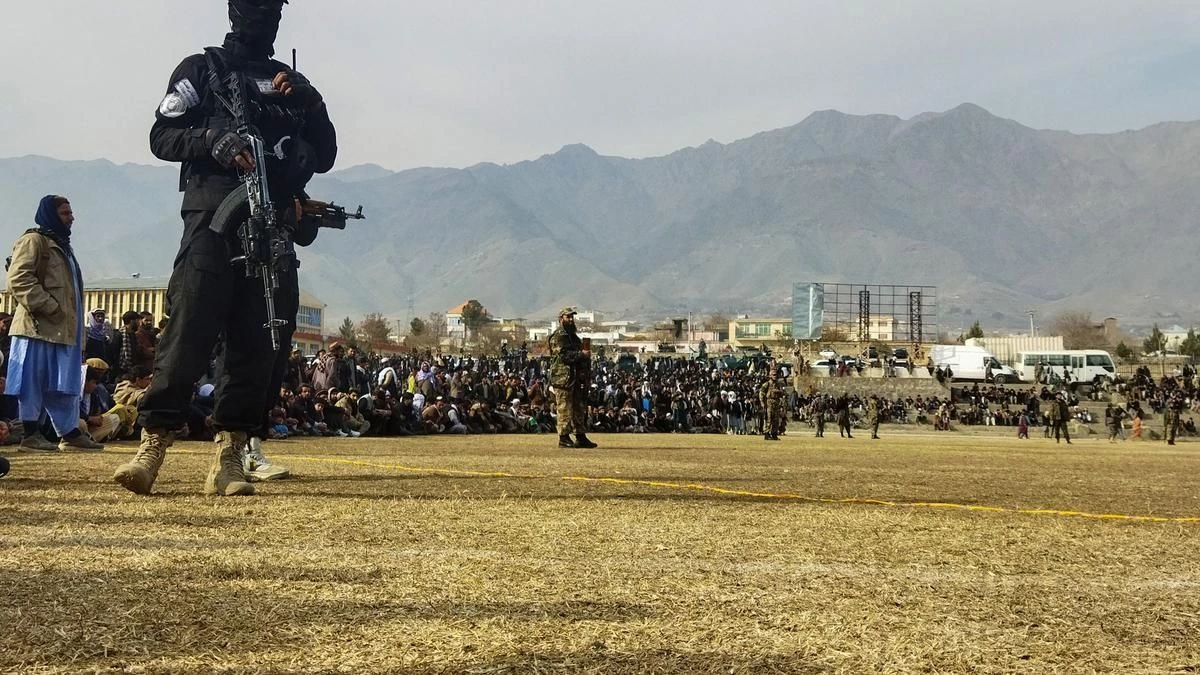
Afghanistan’s Public Executions Draw UN Fury
The Taliban’s harsh justice system is once again under fire. UN experts have called for an immediate end to public executions and flogging in Afghanistan. Their urgent appeal follows the execution of four men on 11 April in Badghis, Farah, and Nimroz provinces.
These executions, carried out under the Taliban’s interpretation of Qisas (retribution), bring the known total to at least 10 since the Taliban returned to power in August 2021.
The UN said turning executions into public events violates international law and human dignity. “It normalises brutality,” they warned, “and creates a climate of fear and intimidation.”
The experts condemned the trend as “a worrying increase” in Taliban violence. They demanded an immediate moratorium on the death penalty as a first step toward abolition.
Corporal Punishment on the Rise
Since the beginning of 2025, at least 213 individuals – 169 men and 44 women – have faced corporal punishment. These include lashings for so-called offences like sodomy, running away from home, or having ‘illicit relationships’.
Even more alarming, at least 19 people were flogged in the few days following the public executions. UN experts raised concerns that the punishments might have been applied to children or individuals with psychosocial or intellectual disabilities.
“No one under 18 or with serious disabilities should face the death penalty,” they said.
Justice in Question
The experts argue that the Taliban justice system does not meet minimum standards of fairness. With no constitution or clear legal framework in place, the process lacks transparency and accountability.
“Due process and fair trials are not guaranteed,” they added, especially for women, girls, and marginalised groups. The system’s lack of independence fuels ongoing human rights violations.
They also highlighted systemic issues, including the continued oppression of women and denial of legal rights.
Call for Immediate Action
The UN demanded an end to capital and corporal punishments in Afghanistan. “These practices amount to torture,” they said. “The Taliban must respect the rights and dignity of all detainees.”
As the international community watches closely, the Taliban faces mounting pressure to align its practices with global human rights standards.
