








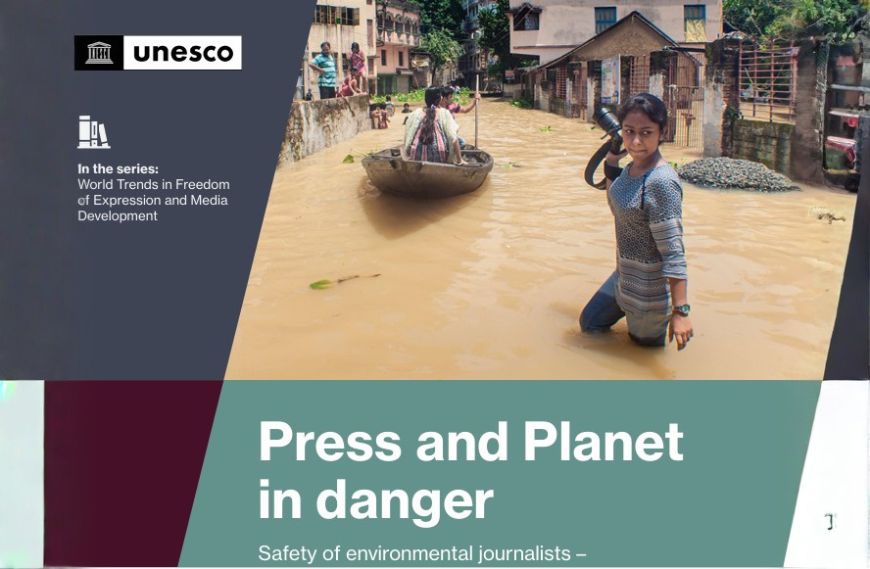
Journalists uncovering the world’s most critical climate and ecological crises are facing an unprecedented wave of violence, intimidation, and legal persecution. A damning report by UNESCO, titled Press and Planet in Danger, reveals that at least 749 journalists and news outlets reporting on environmental issues were attacked across 89 countries between 2009 and 2023.
The crisis has intensified sharply in recent years. More than 300 of these attacks occurred in the final five years of the study alone, representing a staggering 42 per cent surge in violence and harassment compared to the previous five-year period.
A Deadly Beat: Killings and Physical Assaults
The physical danger facing environmental chroniclers is stark. Over the 15-year period, 44 journalists lost their lives whilst investigating environmental stories across 15 different nations. The Asia and the Pacific region recorded the highest toll with 30 deaths, followed by Latin America and the Caribbean with 11.
Justice remains exceptionally rare. Out of the 44 killings, only five cases have resulted in convictions, leaving a culture of near-total impunity. Furthermore, governments frequently downplay the assassinations, falsely attributing them to “personal disputes” or dismissing the victims’ professional standing as journalists.
Outside of lethal violence, physical brutality is rampant. Experts logged 353 physical incidents, including:
83 physical assaults
42 arbitrary detentions
24 attempted murders
13 abductions
PHYSICAL ATTACKS OUTSIDE PROTESTS (Five-Year Trends)
2009–2013: █ 45
2014–2018: ███ 61
2019–2023: ███████ 111 (Attacks more than doubled)
State Forces Emerge as Primary Aggressors
In a disturbing trend, state actors—including police, military forces, and government officials—are the primary perpetrators of this violence. The data shows that for every ten documented attacks, state forces committed at least five. Private actors, such as extractive corporate industries and criminal syndicates, were responsible for at least a quarter. A significant portion of these state-led hostilities occurs during public demonstrations. At least 194 journalists were targeted whilst covering environmental protests, with police and military forces carrying out 89 of those assaults.
Lawsuits and Censorship Used to Silence Press
When physical violence is not deployed, powerful entities weaponise the judicial system. At least 204 journalists and news portals faced aggressive legal attacks between 2009 and 2023.
This severe climate of fear has triggered widespread psychological trauma and institutional rot:
.70% of surveyed reporters admit to facing threats, attacks, or workplace pressure
.85% experienced psychological pressure or intimidation
.45% admit to practicing self-censorship to protect their lives and preserve their sources
.33% were internally censored by editors due to corporate conflicts of interest with advertisers.
The survey, co-conducted with the International Federation of Journalists (IFJ), also highlighted distinct gender disparities: male journalists face higher rates of physical violence, whereas female journalists are disproportionately targeted by severe digital aggression and online harassment.
The Perilous Sectors
Journalists covering highly lucrative, often illegal economic operations are the most vulnerable. The sectors associated with the highest volume of attacks and threats include:
1.Environmental Protests & Mobilisations (196 cases)
2.Mining & Resource Extraction (142 cases) — accounts for 40% of all death threats
3.Land Conflicts & Corporate Land Grabs (115 cases)
4.Logging & Deforestation (83 cases)
Call to Action: Protecting the Truth
To counter this rapid erosion of press freedom, UNESCO has issued an urgent set of recommendations for global bodies:
For Governments: Abolish criminal defamation laws, systematically investigate all anti-journalist violence, and guarantee unconditional press access to public climate protests without requiring special state accreditation. For Media Houses: Provide hostile environment training, supply lifelines such as satellite communicators or trackers, and mandate robust legal defence funds for independent and freelance reporters.
“Without reliable scientific and independent information about the ongoing environmental crisis, we can never hope to overcome it,” warned UNESCO Director-General Audrey Azoulay . As the planet warms, protecting the frontline reporters exposing environmental vandalism has quite literally become a matter of global survival.
Subscribe Deshwale on YouTube


