








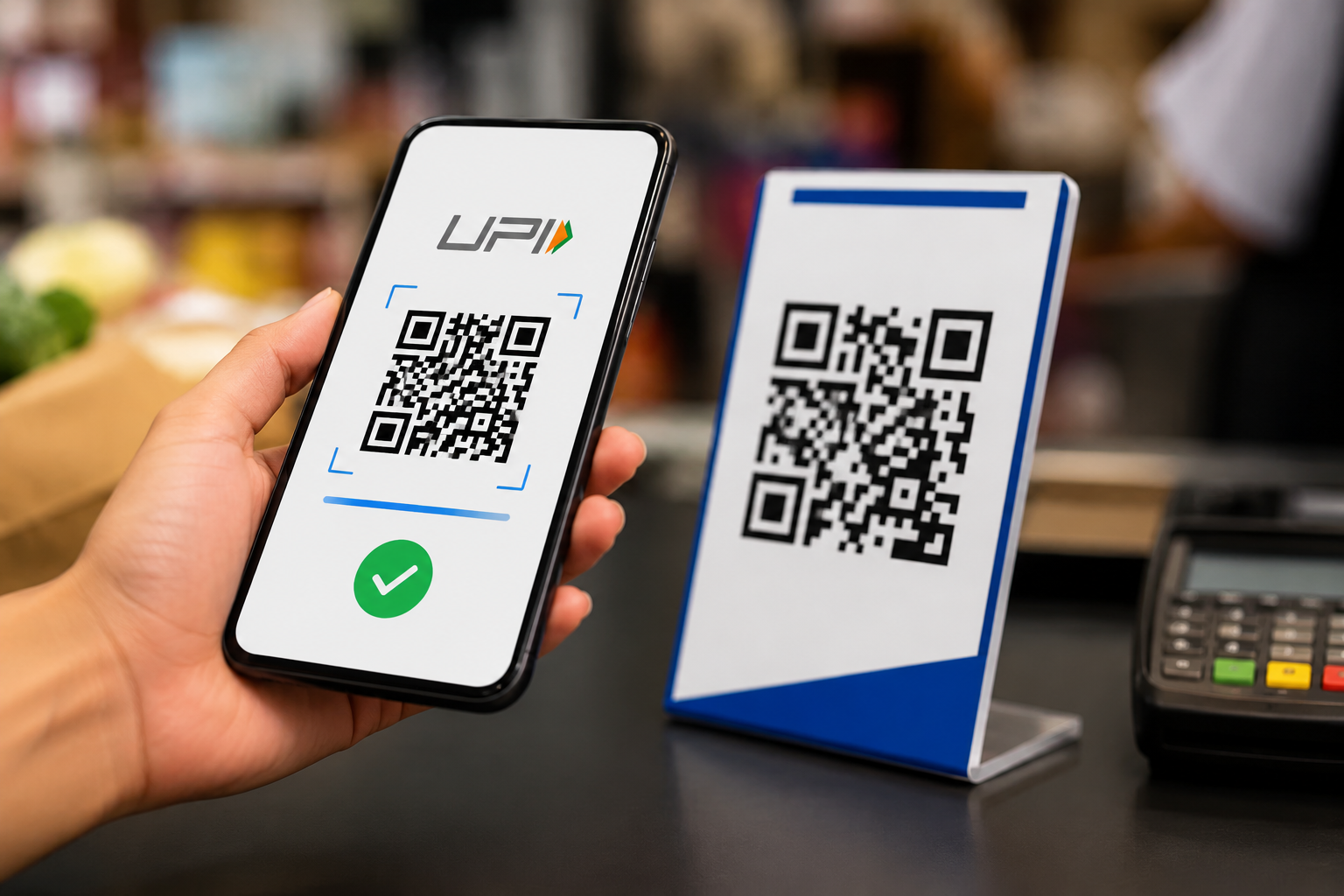
AI Generated image
The government is considering reintroducing a small merchant fee on UPI payments above ₹2,000. The proposal aims to help banks and payment service providers recover the costs of processing digital transactions while continuing to keep person-to-person transfers and most low-value UPI payments free.
At present, this is only a proposal. No final decision has been taken, and the government has not officially announced when or if the charges will be implemented.
The proposed change was introduced by Finance Minister Nirmala Sitharaman as part of amendments to the Payment and Settlement Systems Act and related taxation laws. If the bill is passed, it would give the government the authority to allow merchant charges on certain UPI transactions.
1. What is the proposed law for UPI?
The government has proposed amendments to the Payment and Settlement Systems Act and the Taxation and Other Laws (Amendment) Bill. These amendments would enable banks and payment service providers to charge a Merchant Discount Rate (MDR) on selected UPI transactions.
However, this does not mean UPI payments will become chargeable immediately. The proposal only creates a legal provision, allowing the government to introduce such charges in the future if it chooses to do so.
2. What could the UPI fee be?
The government is considering an MDR ranging from 0.3% to 0.5%. If implemented, it may apply only to merchant UPI payments above ₹2,000 and to businesses with an annual turnover of more than ₹1.5 crore.
Another option under discussion is to determine the fee based on a merchant’s annual turnover rather than the value of individual transactions. The government may also introduce a maximum limit on the amount that can be charged.
3. Why is this being proposed?
Banks and payment companies incur costs while processing UPI transactions. Since the MDR on UPI payments was removed in 2020, they have not earned revenue from merchant transactions.
According to the industry, this limits their ability to:
- Improve technology.
- Maintain payment infrastructure.
- Expand digital payment services.
The proposed MDR is intended to support the long-term sustainability of India’s digital payments ecosystem.
4. Who would pay this UPI fee?
The MDR would be paid by merchants to banks and payment service providers for processing digital payments. Customers are not expected to pay the fee directly.
The proposal mainly targets larger businesses rather than small shops or neighbourhood retailers. Merchant charges already exist for credit and debit card payments, making this a familiar practice in digital payments.
5. What does it mean for you?
If you use UPI to transfer money to friends or family, nothing changes. Most everyday payments, such as paying for groceries, food, or cab rides, are also unlikely to be affected.
Transactions above ₹2,000 account for only about 5% of all UPI transactions, but they represent nearly 65% of the total transaction value. This means the proposal would impact only a small portion of UPI transactions.
Even if the fee is introduced, most users are expected to continue using UPI without paying any direct charges. While some large businesses may absorb the additional cost, others could choose to pass on a part of it to customers, although there is no certainty that they will do so.
Subscribe Deshwale on YouTube


