



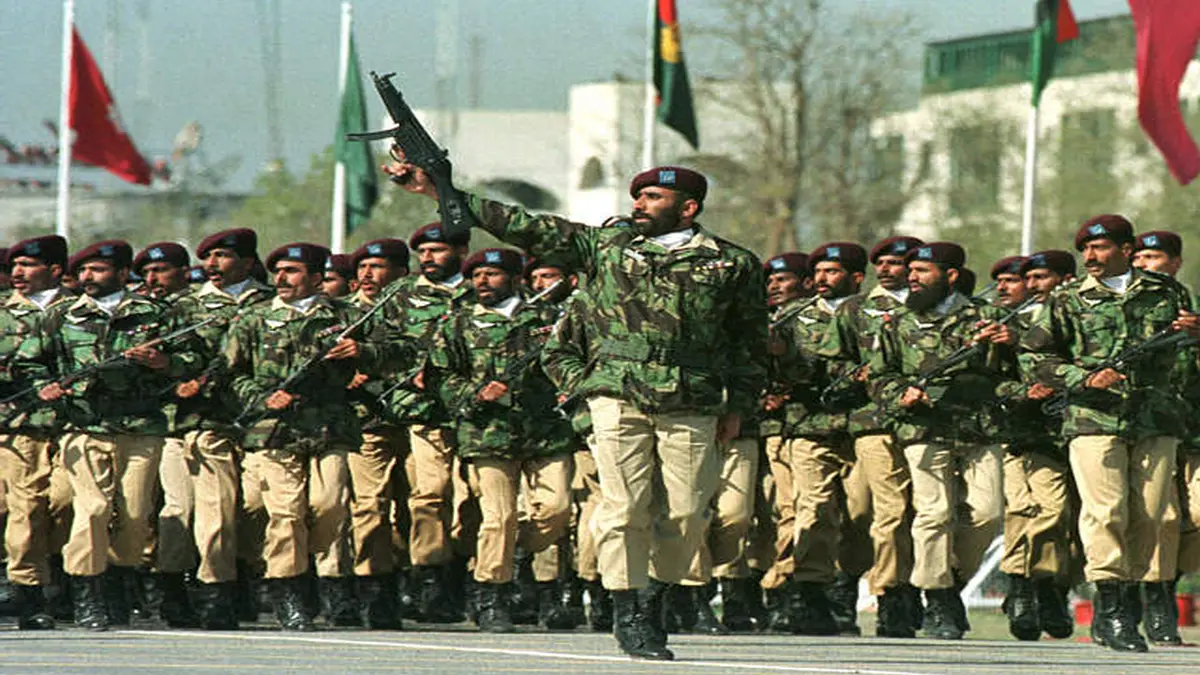
The structure of democracy in Pakistan has been under constant scrutiny due to the intervention of the military. Although governments are formed through general elections, the real power often lies with the military headquarters in Rawalpindi (GHQ). Over the past few decades, the Pakistani military’s influence in political, economic, and judicial systems has steadily increased, reducing democracy to a mere formal structure.
Military’s Interference in History
Pakistan’s history records three instances where the military openly staged coups, overthrowing democratic governments — Ayub Khan in 1958, Zia-ul-Haq in 1977, and Pervez Musharraf in 1999. These events are still remembered today. Additionally, there have been numerous occasions where the military, behind the scenes, has toppled, created, and controlled governments.
The Truth of ‘Hybrid Rule’
Currently, Pakistan is considered a country under ‘hybrid rule’, where the government is elected by the people, but the military holds sway in key areas such as policy-making, foreign policy, and internal security. In 2018, Imran Khan’s government was brought to power with the military’s support, but when his relationship with the army soured in 2022, he was ousted through a no-confidence motion in the parliament.
Military’s Influence on Judiciary and Media
Many independent reports suggest that the judiciary in Pakistan is also under the military’s influence. In 2023, the Pakistan Bar Council expressed concern that several judges were being indirectly pressured to make certain rulings. Media houses and journalists also avoid criticizing the army, as many journalists have been arrested, disappeared, or exiled.
For instance, the arrest and disappearance of journalist Syed Imran Riaz Khan raised alarms among human rights organizations both in Pakistan and abroad. Institutions like the International Press Institute and Reporters Without Borders have raised serious concerns about media freedom in Pakistan.
The Military’s Economic Empire
The Pakistani military is not limited to security and defense; it also controls major economic institutions in the country. Organizations such as Fauji Foundation, Army Welfare Trust (AWT), and Defence Housing Authority (DHA) are under military control, managing billions of dollars worth of assets in sectors like real estate, banking, fertilizers, schools, and hospitals.
The Eroding Credibility of Democracy
International reports and democracy indices show a steady decline in Pakistan’s democratic standing. According to the Economist Intelligence Unit, Pakistan remained in the “hybrid regime” category in 2024, which is below the status of full democracy or even flawed democracy.
International Concern and Consequences
International organizations like the United Nations, European Union, United States, and IMF have repeatedly expressed concern about the declining state of democratic processes and military interference in Pakistan. The IMF’s 2024 report also highlighted that policy instability and military involvement are significant risks for foreign investment.
Conclusion
The military’s influence in Pakistan extends beyond defense and emergency situations. It affects the formation of governments, policy-making, judicial decisions, and media freedom. This raises the crucial question: Does democracy truly exist in Pakistan, or is it just a democratic façade behind which puppet governments controlled by the military operate?
