



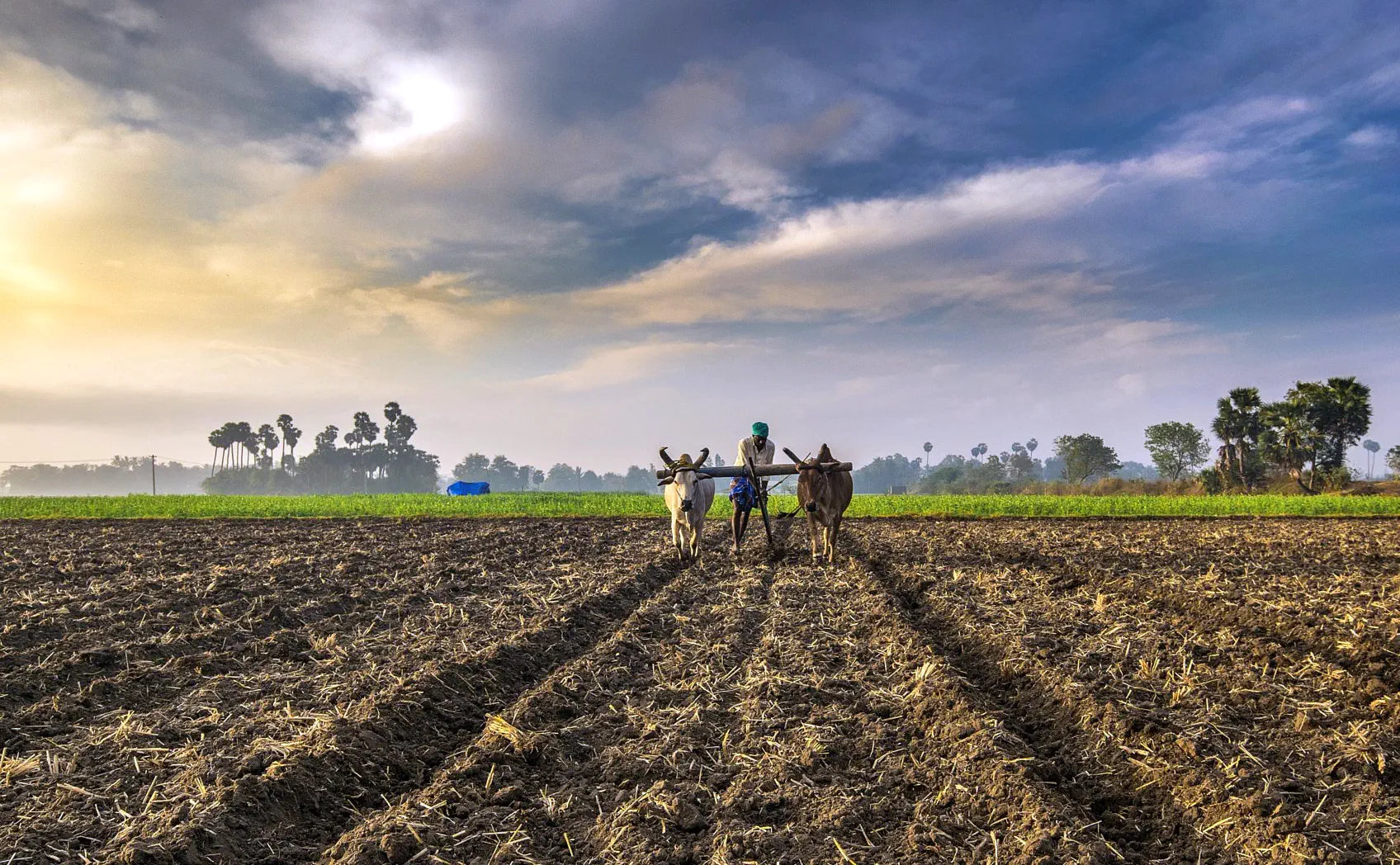
In a quiet village in Maharashtra, 19-year-old Aarav stands at the edge of his father’s parched field, the cracked earth bearing scars of drought and erratic rains. His father, a third-generation farmer, mends a broken plough with calloused hands, a testament to decades of toil. Aarav, fresh from earning a mechanical engineering diploma in Pune, dreams not of tractors or tilling but of machines, city life, and a steady paycheck. “Baba,” he says softly, “I don’t want to do this anymore.” His father nods, unsurprised. He’s heard this before—from neighbors’ sons, relatives, and even his own brother years ago. Farming, once the pride of rural India, now feels like a wounded legacy, respected but abandoned.
Across India, a seismic shift is underway. The Hindustan Times reports that agricultural employment has plummeted from 64.5% of the workforce in 1994-95 to 46.1% in 2023-24. The average age of farmers has risen to 43 years for men and 40 for women, compared to 36 and 37 for non-agricultural workers, a stark contrast to the near-identical ages of 34 and 33 for men and 32 for women in 1993-94. By 2019-20, the generational gap widened, with only 14.4% of 20- to 29-year-olds engaged in farming, down from 34% just 14 years earlier. Why are India’s youth shunning agriculture, and how does India’s farming sector compare to global leaders like Canada, the USA, China, and Israel? The reasons lie in a potent mix of economic risks, social perceptions, and structural challenges, amplified by global warming. Yet, amidst this exodus, stories of innovation offer hope for rekindling interest in the fields.
The Economic Gamble of Farming
Farming in India is a high-stakes gamble. Erratic monsoons, volatile market prices, and soaring costs of seeds and fertilizers make income unpredictable. The National Sample Survey Office (NSSO) reported in 2013 that the average monthly income of an agricultural household was just ₹6,426, with only ₹3,844 from farming itself. A single drought or flood can erase a season’s earnings, leaving farmers in debt or despair. A 2019 study noted that farmers’ children were 21.1 percentage points less likely to take up farming in 2012 than in 2005, with only 32.4% continuing the family trade. Young people like Aarav are drawn to urban sectors—construction, gig economy jobs, or tech services—where wages, though modest, are more reliable. As one Telangana youth remarked, “Even putting in 100% effort, sometimes our parents get nothing from the field.”
Small landholdings, averaging 1.08 hectares, exacerbate the problem. Over 80% of India’s farmers are small or marginal, lacking the scale to invest in modern equipment or diversify crops. Access to credit is limited, as many lack formal land titles, forcing reliance on moneylenders with exorbitant interest rates. Subsidies for power, fertilizers, and irrigation, while helpful, divert funds from research and extension services, which have withered due to chronic underfunding. Meanwhile, urban jobs offer immediate cash flow, even in the informal sector, making them a magnet for youth seeking financial security.
Social Shifts and the Stigma of Farming
Culturally, farming has lost its luster. Somewhere along the way, societal narratives—through movies, textbooks, and conversations—began glorifying white-collar jobs over the “muddy feet” of agriculture. Only 1.2% of 14- to 18-year-olds aspire to farm, despite 79% of rural youth working on family farms. A 2014 survey by the Centre for Study of Developing Societies found that 76% of farmers would prefer non-farm work, with 61% favoring urban jobs for better education, healthcare, and employment prospects. Farming is seen as backward, labor-intensive, and unglamorous. As one parent in Warangal put it, “A doctor’s child aspires to be a doctor, but a farmer’s child never wants to be a farmer.”
Education fuels this shift. Parents, even in remote villages, invest heavily in their children’s schooling, hoping for secure non-farm jobs. A B.Com graduate finds little use for their degree in a paddy field, pushing them toward cities. This aspiration gap is widened by gender dynamics—inheritance laws and social norms often marginalize young women from land ownership, further discouraging their participation in farming. Posts on X echo this sentiment, with one user noting, “Ask any girl if she’ll marry a farmer, and she’ll say no, even if her own father is a farmer. They want a man with a government job.”
Global Warming and Structural Woes
Global warming intensifies these challenges. India’s agriculture, with 60% of crops reliant on rain-fed systems, is vulnerable to erratic monsoons, droughts, and floods. The World Bank warns that climate change will hit rain-fed areas hardest, where poverty is already acute. Poorly maintained irrigation systems and inadequate extension services further hamper productivity. India’s wheat yields, at 3.5 tonnes per hectare, pale compared to 8.8 in the UK or 7.0 in Canada. Food wastage, due to poor cold storage and supply chains, claims 20% of fruits and vegetables annually, eroding profits.
Global Comparisons: Lessons from Abroad
India’s agricultural struggles contrast sharply with countries that have modernized farming. In the USA, less than 2% of the population feeds nearly 2 billion people, using large-scale, mechanized farms and precision agriculture. The average American farmer, aged 58.3, employs drones, genetically modified seeds, and data analytics. However, this model relies on vast landholdings, unlike India’s fragmented plots. Canada adapts similar technologies to smaller, diversified farms, leveraging AI and satellite imagery to boost yields while minimizing environmental impact. Its robust research ecosystem ensures farmers access cutting-edge practices, unlike India’s underfunded systems.
China’s “move out, move up” strategy reduced its agricultural workforce by encouraging urban migration while investing in mechanization and high-value crops. From 2002-03 to 2015-16, Chinese farmers shifted to non-farm income, with construction absorbing much labor. India, by contrast, resists migration, focusing on rural retention, which limits economic mobility. Israel, despite arid conditions, achieves 20 times India’s yield per acre in some crops through drip irrigation, hydroponics, and biotech, supported by government-private partnerships. Indian farmers importing Israeli seeds show similar potential, but high costs and knowledge gaps limit adoption.
A Path to Renewal
Yet, there is hope. In Aarav’s village, his cousin Meera, an agri-business graduate, returned to start an organic farm. Selling directly to urban consumers via an app, she earns a steady income while teaching sustainable practices. Her story shows that farming can be viable with the right support. To make agriculture “cool” again, India must act on multiple fronts:
- Policy Reforms: The Model Land Leasing Law could secure credit access for small farmers, while digital platforms like Kandawale reduce middlemen costs. The 2020 farm laws aimed to deregulate markets but sparked protests, highlighting the need for inclusive reforms.
- Technology and Training: Vocational programs in drones, vertical farming, and organic methods could attract tech-savvy youth. The Drone Didi initiative, praised by PM Modi, empowers women with modern tools.
- Climate Resilience: Investments in watershed management and climate-resilient crops, as suggested by the World Bank, can mitigate global warming risks.
- Cultural Rebranding: Documentaries and social media can highlight success stories of innovative farmers, reshaping agriculture’s image as a dynamic career.
- Agripreneurship: Subsidies for startups and training in high-value crops, like China’s model, could make farming lucrative.
India’s youth are not abandoning agriculture out of apathy but necessity. Economic risks, amplified by global warming, small landholdings, and outdated practices, clash with aspirations for stability and growth. While Canada, the USA, China, and Israel have transformed farming into a high-tech, profitable venture, India lags despite its agricultural heritage. With bold reforms, technological investment, and a cultural shift to celebrate farmers, India can retain its youth and secure its food future. Back in Maharashtra, Aarav gazes at the horizon, wondering if his machines could ease his father’s burden. The fields are calling—will India’s youth lead them into a new era?
Below are the SEO elements for the English and Hindi articles on “Why India’s Youth Are Turning Away from Farming: A Tale of Risk, Aspiration, and Opportunity.” The elements are provided in the specified order (Focus Keyphrase, Meta Title, Slug, Meta Description, Tags) for both languages, ensuring optimization for search engine visibility while aligning with the article’s themes of economic challenges, social shifts, global comparisons, and solutions. Each set is tailored to resonate with the respective audience (English and Hindi-speaking) and adheres to SEO best practices.
