



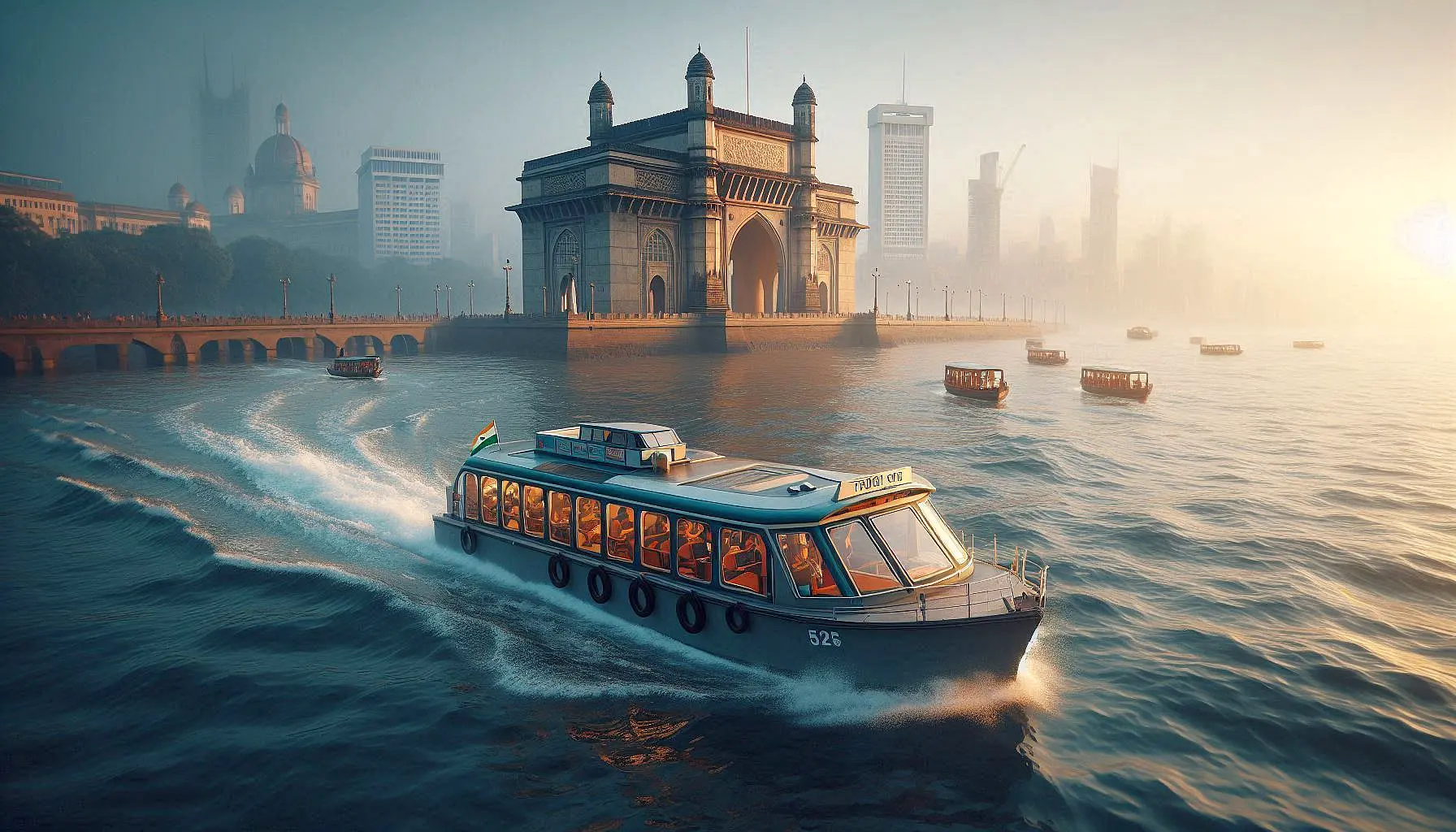
In the chaotic symphony of Mumbai’s streets, where honking autos, overcrowded locals, and endless traffic jams compose the daily raga, a new note is about to be struck—water taxis. Picture this: you are sipping cutting chai near the Gateway of India, and instead of battling the bumper to bumper crawl to Navi Mumbai, you hop on a sleek, electric boat that zips you across the Arabian Sea in under 40 minutes. No potholes, no road rage, just the sea breeze and a skyline fading into the horizon. This isn’t a scene from a Bollywood flick! It’s the promise of Mumbai’s ambitious water taxi project, a game changer for India’s financial capital and a glimpse into the country’s broader push to harness its coastal potential. But what’s the real tadka behind this initiative, and can it truly ease Mumbai’s transport tamasha while setting a precedent for India?
Mumbai’s Traffic Tamasha and the Watery Way Out
Mumbai, the city that never sleeps (because it’s stuck in traffic), is notorious for its gridlock. According to TomTom’s 2021 Traffic Index, Mumbai’s congestion level hit 53%, with commuters losing 121 hours annually to traffic snarls. The suburban railway, ferrying 75 lakh passengers daily, is packed tighter than a dabbawala’s lunchbox, with trains running at 2.6 times their capacity. A trip from South Mumbai to Navi Mumbai by road can take 90–100 minutes, sometimes ballooning to two hours during peak chaos. Enter water taxis—a desi solution to a modern mess, leveraging Mumbai’s 7,517 km coastline to bypass the road rukavat.
The idea isn’t entirely new. Back in 1983, the Maharashtra government floated the concept of waterways to ease commuter woes, but it languished in bureaucratic quicksand. Fast forward to February 2022, when India’s first water taxi service was launched, connecting Belapur in Navi Mumbai to South Mumbai’s Domestic Cruise Terminal (DCT), Elephanta Caves, and Jawaharlal Nehru Port Trust (JNPT). Built at a cost of ₹8.37 crore under the Centre’s Sagarmala programme, the Belapur Jetty project introduced speedboats (10–30 passengers) and a catamaran (56 passengers), slashing travel time to 30–45 minutes. The Ten state Chief Minister Uddhav Thackeray hailed it as a trendsetter, noting, “What happens in Mumbai spreads across the country.” By 2023, poor response led to its partial suspension. But Mumbai’s water taxi story didn’t end there. The Maharashtra government, learning from past hiccups, is doubling down with a bolder, eco-friendly vision.
The 2025 Water Taxi Dhamaka
In 2025, Mumbai’s water taxi project is getting a masala filled reboot. The Maharashtra Maritime Board (MMB), in partnership with the Centre, is crafting a Detailed Project Report (DPR) modeled on Kochi’s successful Water Metro. The plan? A network of electric water taxis and amphibious seaplanes connecting Mumbai to Navi Mumbai, Thane, Raigad, and Palghar. Key routes include Radio Jetty (near Gateway of India) to Navi Mumbai International Airport (40 minutes), Vasai to South Mumbai (40–50 minutes), and Kalyan to Vasai (35–45 minutes). The MMB has identified 21 jetty locations, with 15 to be built in phase one, covering eight routes like Narangi–Kharwadeswari and Belapur–Gateway–Mandwa.
What’s new this time? Sustainability and scale. The project leans heavily on electric boats, with 15 vessels from Sweden’s Candela Cruise set to arrive by August 2025. These 30-seater boats promise zero emission commutes, cutting fuel costs and pollution compared to the diesel ferries of 2022. A private operator, Infinity Harbour Services, is already testing two 24-seater e-taxis in Goa and two six-seaters in Kochi, with plans to scale up in Mumbai. Amphibious seaplanes, capable of landing on Thane’s lakes, are also in the works, making this the first Indian airport (Navi Mumbai International) with water taxi connectivity.
Now, the present Chief Minister Devendra Fadnavis and Ports Minister Nitesh Rane are pushing hard, with Rane directing jetty construction to begin in phases and the Airport Authority to secure approvals. Union Minister Nitin Gadkari’s vision of 10,000 water taxis—built with lightweight, durable fiber reinforced plastic (FRP)—hints at an ambitious scale, though feasibility remains under scrutiny. The goal is clear: slash travel times, decongest roads, and offer a greener alternative to Mumbai’s choked arteries.
India’s Coastal Sapna
Mumbai’s water taxi push is part of a broader Indian dream to tap its 7,517 km coastline for transport and trade. Kochi’s Water Metro, launched in 2021, set the template with 78 electric ferries across 15 routes, connecting 10 islands over 78 km. Goa’s ferry services, though limited, have shown the potential for coastal commuting. Nationally, the Sagarmala programme is driving 131 projects worth ₹1.05 lakh crore in Maharashtra alone, from port modernization to fisheries development. Mumbai’s water taxis, alongside plans for Ro-Ro services and water ambulances, align with this bada vision to boost connectivity, tourism, and jobs while easing urban strain.
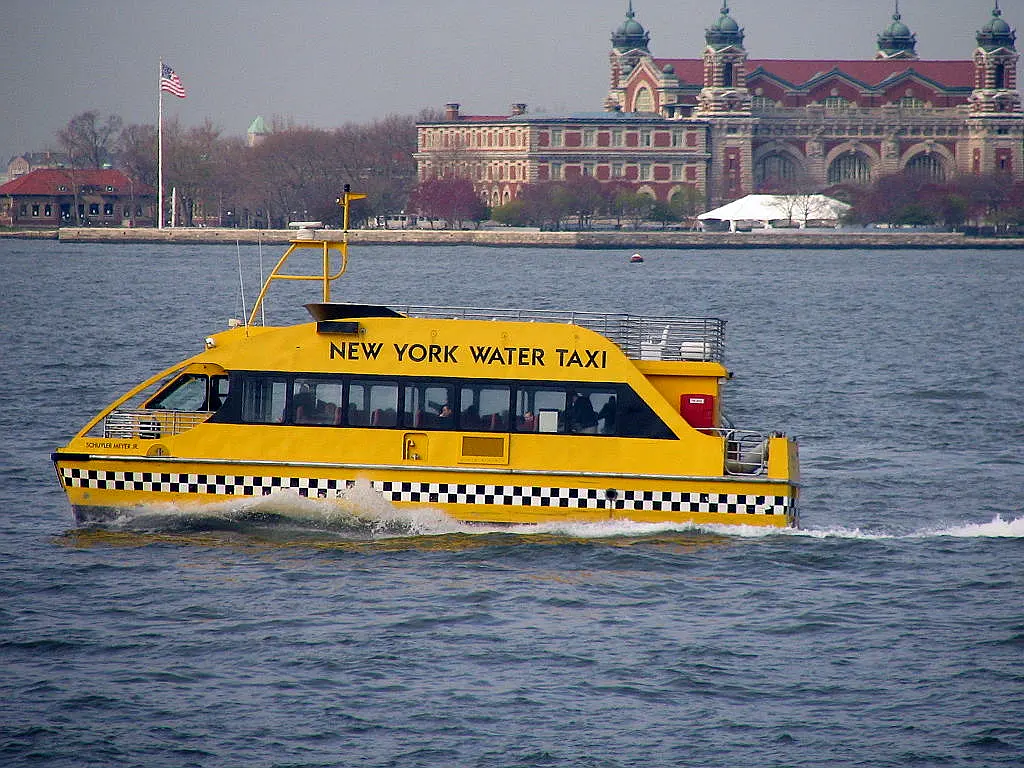
But it’s not just about Mumbai. Cities like Chennai, Kolkata, and Visakhapatnam could follow suit, inspired by global models like Venice’s taxi acquei or New York’s ferry networks. India’s inland waterways, though underutilized (0.1% of total inland traffic), hold untapped potential for freight and passenger transport. Mumbai’s experiment could spark a coastal kranti, turning waterways into lifelines for a nation where 96% of foreign trade by quantity flows through ports.
Challenges and the Sahi Path Forward
Yet, the nautanki isn’t without hurdles. The 2022 water taxis flopped due to steep fares and limited routes, alienating the aam aadmi. Monsoon disruptions, when the Arabian Sea turns choppy, limit operations to 330 days a year. Jetty construction, especially in crowded Mumbai, faces land and regulatory jhamelas. And while electric boats are eco-friendly, their hefty price tag demands a sustainable funding model, likely a 50-50 Centre-State split, as with Belapur Jetty.
To make this sapna a hit, affordability is key. Catamaran rides at ₹290 are a start, but monthly passes need to dip below ₹12,000 to woo the middle-class Mumbaikar. Integrating with Mumbai’s Metro and bus networks, as Fadnavis envisions, could create a seamless multi-modal system. Subsidies or public-private partnerships, like Infinity Harbour’s model, could keep fares sasta. And let’s not forget maintenance—ensuring jetties and boats don’t end up like neglected BMC roads.
The Dil se Promise
Mumbai’s water taxi revival isn’t just about beating traffic; it’s about reimagining how India moves. It’s the desi hustle meeting coastal hawa, promising a commute that’s fatafat, eco-friendly, and maybe even a bit mazedaar with that sea breeze. If done right, it could ease the darr of Mumbai’s roads, boost tourism to spots like Elephanta, and set a naya trend for coastal India. As one X user put it, “Mumbai’s water taxis could be a game changer, but only if they don’t burn our pockets!” Let’s hope this nayi shuruaat sails smoothly, turning Mumbai’s waterways into a dil se lifeline for the city that never stops dreaming.
