



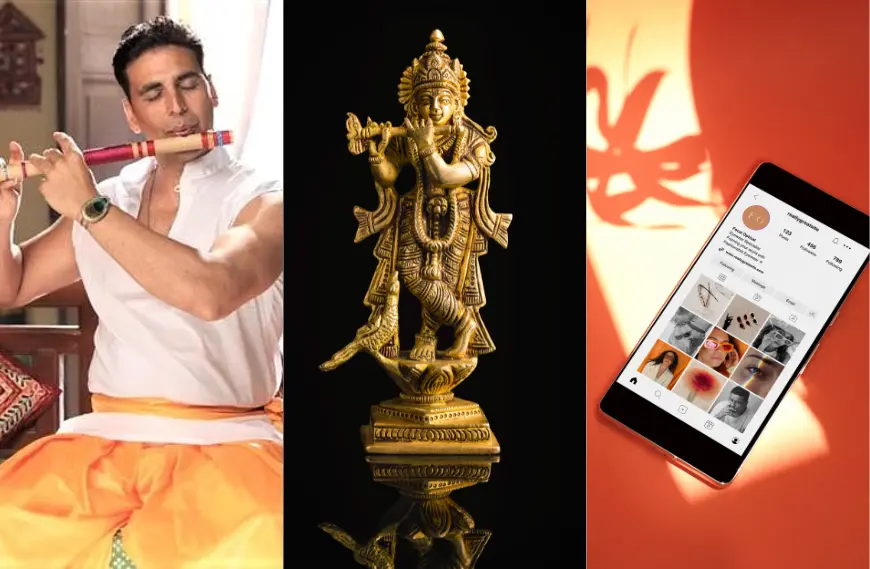
Take a quick scroll through your phone and ask yourself one thing… who do you really follow? A film star? A spiritual guru? Maybe a creator who promises divine blessings if you like their video?
In India today, what we choose to worship is no longer just about lighting a lamp in front of a deity. It’s also about double-tapping a reel of Krishna on Instagram or sharing a video that says, “Like this for khushkhabri.” Gods, celebrities, and influencers now sit side by side on our screens. The platforms may have changed, but the longing behind worship—the need for connection, meaning, and hope—still beats just as strong.
Temples Once Tied Us Together
There was a time when devotion meant something very grounded. Villages gathered around temples, families offered flowers, lit incense, and sang aartis. Whether it was Diwali puja or a morning chant at home, this wasn’t just ritual. It was community. It was purpose. Stories from scriptures gave people strength. The gods weren’t just worshipped—they were part of daily life.
Devotion in those days was a shared emotion. It connected people with something larger than themselves.
From Gods to Global Icons
But scroll forward to today, and you’ll see another kind of worship playing out. Now, celebrities have stepped into divine territory. Salman Khan’s fans chant his dialogues like mantras. One Instagram story from Alia Bhatt can drive a product to sell out. Rohit Sharma hits a six and suddenly his jersey is trending.
This isn’t casual admiration. It’s devotion… with time, money, emotions all poured in. Today’s followers worship not from a temple courtyard but from the comment section.
Stars feel both human and untouchable. Like the gods once did.
Social Media: The New Sacred Space
Platforms like YouTube and Instagram are the new shrines. You’ll find creators posting clips of Hanuman Chalisa or Quranic verses, followed by a familiar nudge: “Like, Share, Subscribe—for blessings.”
It’s devotion, digitised. A blend of faith and algorithm. People tap ‘like’ not just to support a post but to feel seen by the divine, to earn a promised reward… even if virtual.
Worship has gone instant. But in the rush of reels, its depth often gets lost.
Why the Shift?
So why did the bell of the temple get replaced by the buzz of a notification?
Access is part of it. Creators and stars are always there… on your phone, in your feed. You don’t need to wait for a festival or travel to a shrine. Unlike distant gods, influencers feel close, reachable. They reply. They react. They go live.
And in India’s growing cities, with youth chasing ambition and identity, these digital icons feel more relatable than mythological ones. They reflect dreams that feel achievable.
Where Faith Meets Fame
What makes India unique is how easily we blend the old with the new. Temples still flood with people on Diwali—but that same celebration might be captured in a reel sponsored by a brand. Ranveer Singh plays a god in a film, and suddenly, the actor and deity blur into one.
Spiritual leaders like Sadhguru now trend on YouTube, mixing ancient wisdom with modern hashtags. And creators aren’t just entertaining, they’re guiding faith too.
“Share this Ganpati video for prosperity,” says the caption. And people do.
The Emotional Core of Worship
Whether it’s God or a film star, what drives worship is emotion. We all need stories—of strength, sacrifice, love, redemption. Mythology once offered those. Now a viral motivational reel might do the same.
When a YouTuber says, “Like this video for blessings,” it tugs at something very human. It’s not the theology—it’s the reassurance. The idea that we’re seen, that something good might come our way.
But this comes with a catch.
When Devotion Turns Dark
In this new landscape, worship has its pitfalls.
Fan wars erupt online. Rival supporters sling insults like warriors of digital religion. When celebrities stumble into controversy, the same fans who worshipped them yesterday turn into critics overnight.
Worse, many creators prey on emotion… using “blessing bait” to chase views. The line between faith and manipulation blurs.
In a country where people treat their idols like gods, these moments feel like betrayal.
A Mirror of Our Values
In the end, what we choose to worship reflects us.
Some people still light diyas, offer namaz, or visit churches. But they also post it online. Devotion today is more individual than ever, tailored, private, sometimes performative. You choose your god, your influencer, your icon.
Yet something is missing… the shared spirit, the collective celebration, the warmth of gathering together.
We now follow faith like we follow content, personal, fast, sometimes forgettable.
What the Future Holds
What happens when worship meets technology?
Soon, AI may create virtual avatars of gods or gurus. We might attend digital darshans in virtual reality. And creators will keep blending faith with content… prompting us to “Like for prosperity” or “Subscribe for peace.”
But one thing won’t change. The human heart will always seek connection. Meaning. Reassurance. And India, with its vast soul… will keep weaving the ancient and the modern into something beautifully messy and alive.
One Last Question
Look again at your feed.
Who do you worship today?
A god? A star? A creator with a message and a mic?
Because what we choose to worship shapes not just our screens—but our beliefs, our stories, and our sense of self.
So next time you see a reel saying, ‘Share for blessings,’pause and ask yourself:
Who is your god today?
Also Read: ग्रैंड ट्रंक रोड: प्राचीन व्यापार मार्ग से यूनेस्को की धरोहर तक
