



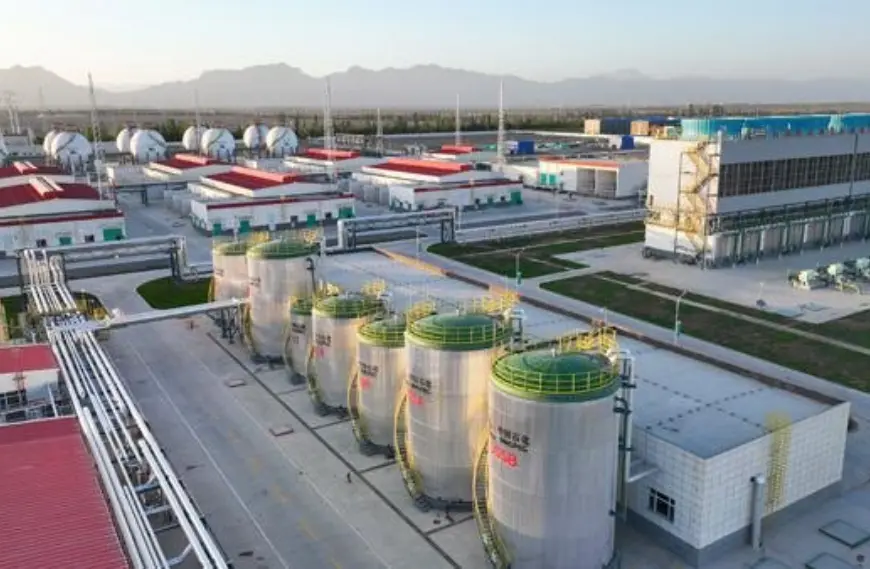
India is igniting a green revolution. The National Green Hydrogen Mission, launched in 2023 and gaining momentum in 2025, aims to produce 5 million metric tonnes of green hydrogen annually by 2030. With projects like NTPC’s hub in Andhra Pradesh and Adani’s 5 MW pilot in Gujarat, India is racing towards its net-zero goal by 2070.This is a story of innovation, sustainability, and India’s bid to lead the global energy transition.
The Green Hydrogen Promise
Green hydrogen is a game-changer. Produced using renewable energy, it’s a clean fuel for industries like steel, cement, and transport. India’s mission, backed by ₹19,744 crore, targets 10% of global production. It’s a bold move. Climate change displaces 5.4 million Indians annually through floods and droughts. Green hydrogen could decarbonise heavy industries, cutting emissions by 20% by 2035.
Recent milestones are promising. Adani’s Kutch plant, powered by solar and battery storage, went live in June 2025. NTPC’s Andhra hub aims to produce 1,200 tonnes daily by 2027. Reliance Industries plans a 1 GW facility in Jamnagar. These projects showcase India’s renewable strengths: 150 GW of solar and wind capacity.
Why Green Hydrogen Matters
India’s energy mix is coal-heavy. It accounts for 55% of power generation, contributing to 2.7 billion tonnes of CO2 emissions yearly. Green hydrogen offers an alternative. It can power trucks, ships, and factories without emissions. The mission aligns with India’s Paris Agreement commitments, earning global praise. As X user @GreenIndiaNow says, “This is India’s moonshot for a cleaner planet!”
Economically, the mission is transformative. It could create 6 lakh jobs by 2030, from engineers to technicians. Exports to Europe and Japan, where hydrogen demand is surging, could add ₹50,000 crore to GDP. This positions India as a renewable energy leader, rivaling Saudi Arabia’s hydrogen ambitions.
Key Players and Innovations
Adani New Industries Ltd (ANIL) is a frontrunner. Its off-grid Kutch plant uses next-generation electrolyzers. NTPC’s hub integrates with India’s 500 GW renewable target. Toyota and Ohmium are collaborating on microgrid solutions, blending fuel cell and electrolyzer tech. The government’s ₹15,000 crore incentive package supports R&D and production.
Innovation is key. IIT Madras is developing low-cost electrolyzers. Startups like Greenko are scaling modular systems. These efforts reduce production costs, currently ₹300/kg, to a target of ₹100/kg by 2030. As X user @EcoTechIndia notes, “India’s tech brains are making hydrogen affordable.”
Challenges Ahead
The mission faces hurdles. High production costs deter adoption. Electrolyzers rely on rare earths, and China’s export curbs complicate supply chains. Water scarcity in states like Gujarat is a concern. Infrastructure, like pipelines and storage, lags behind. X user @CleanEnergyFan warns, “Great plan, but where’s the execution?”
The government is responding. The Ministry of New and Renewable Energy is funding 50 pilot projects. Public-private partnerships are building hydrogen valleys in Odisha and Karnataka. International collaborations, like with Germany’s H2Global, ensure knowledge transfer.
Cultural and Social Impact
Green hydrogen resonates with India’s ethos. Ancient texts like the Atharvaveda praise nature’s balance. The mission echoes this, blending tradition with modernity. It’s a story of pride. Rural communities benefit from job creation, with training programmes targeting women and tribal groups. As X user @GreenVillager says, “Hydrogen isn’t just fuel, it’s hope for our villages.”
The mission also empowers youth. Engineering colleges are launching hydrogen-focused courses. Innovators like 25-year-old Priya Sharma, who developed a solar-powered electrolyzer, are inspiring a generation, this showcases India’s blend of innovation and inclusivity.
Global Lessons and Future Outlook
India’s mission offers lessons. The UK, aiming for 10 GW of hydrogen by 2030, could learn from India’s scalable model. Globally, hydrogen demand will hit 150 million tonnes by 2030. India’s low-cost production could capture 15% of this market. By 2040, green hydrogen could power 20% of India’s heavy industries.
The mission is a stepping stone to net-zero. If successful, India could lead the Global South in clean energy. As PM Modi said, “Green hydrogen is our gift to the world”. This is a narrative of a nation powering a sustainable future.
