



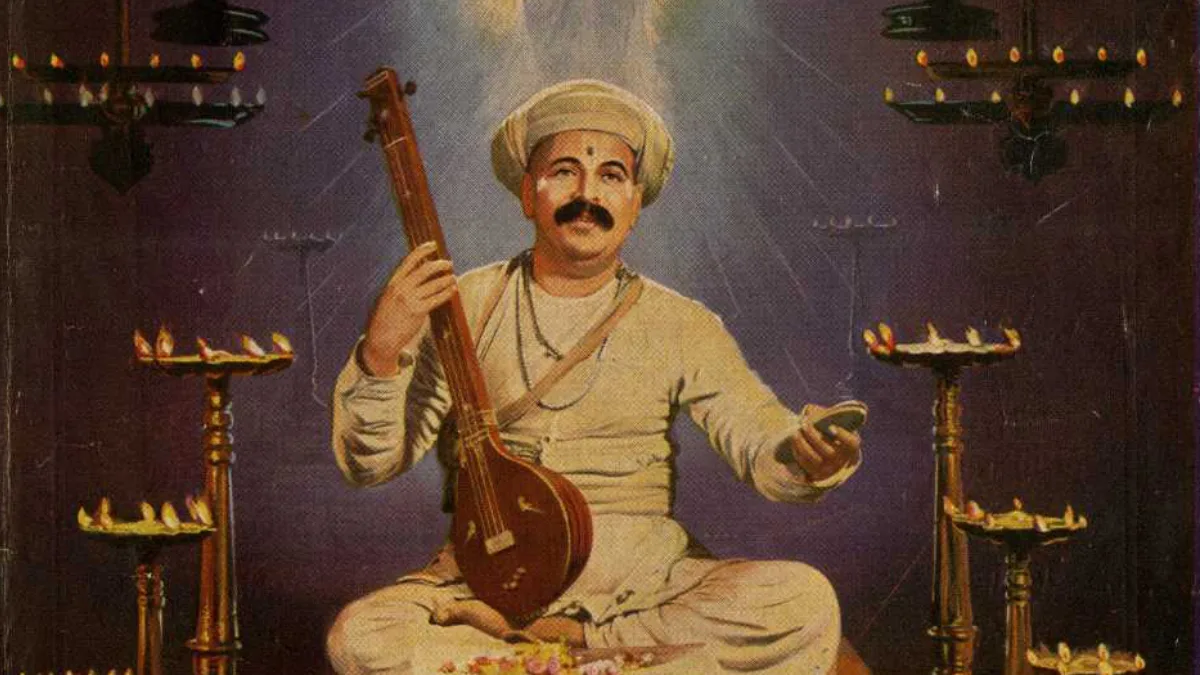
As the rhythmic chants of “Vitthal Vitthal” echo across Maharashtra and lakhs of Varkaris march toward Pandharpur in the sacred wari, memories of saints who shaped this spiritual tradition come alive. With Ashadhi Ekadashi around the corner, the devotion in the air feels almost timeless. Among the many revered figures whose lives continue to inspire this grand pilgrimage, none shines brighter than Saint Tukaram of Dehu. Through his piercing abhangs, fearless stand for justice, and deep, unshakable love for Vitthala, he brought bhakti into the hands of ordinary people. Tukaram was not only a mystic but also a voice of protest and poetry, a saint who walked with the people and spoke their truth.
Early Life: From Merchant to Saint
Tukaram was born in 1608 CE in Dehu, near Pune, into a grocer’s family belonging to the Kunbi-Maratha caste. His full name was Tukaram Bolhoba Ambile. Raised by his parents, Bolhoba and Kanakai, in deep devotion to Vithoba (Vitthala), his early life was marked by pain and loss. A severe famine and the death of his first wife shook him deeply.
According to the Bhaktalilamrit and oral traditions, these events turned his gaze inward. Gradually, he turned away from trade, choosing instead a life of contemplation and complete surrender to Vitthala.
Abhangs: Songs of Protest and Love
Tukaram’s legacy lives in his abhangs, over 4,500 verses that speak as freshly today as they did then. In these poems, he wrote not from a pedestal but from the ground he shared with common people. He sang of:
- The emptiness of ego and greed
- The hypocrisy of hollow rituals
- The injustice of caste and poverty
- The sweetness of God’s name
- The intimacy between soul and the divine
He chose to write in the simple, earthy Marathi of farmers and villagers, ensuring that his message reached the hearts it was meant for. His abhangs were not sermons; they were soul-cries.
Vitthala through Saint Tukaram’s Eye
Among his many verses, one particular abhanga stands out as a devotional picture painted in words. Here, Tukaram describes his beloved Vitthala, not in abstract ideas, but as a living, vibrant presence:
“Sundar te dhyan ubhe vitewari,
Kar katewari thewuniya.
Tulasi haar gala, kaase pitambar,
Aawde nirantar hechi dhyan.
Makarkundale talapati shravani,
Kanthi kaustubhmani virajit.
Tuka mhane maze hechi sarv sukh,
Paahin Shrimukh aawadine.”
He sees Vitthala standing gently on a brick, hands on waist, wearing a tulsi garland and a yellow silk cloth. Fish-shaped earrings glitter in his ears, the Kaustubha gem shines on his chest. Tukaram says this vision is his everything. To gaze upon the divine face again and again is his greatest joy.
The Indrayani Episode: Words That Could Not Drown
One of the most moving episodes from the Bhaktalilamrit tells how jealous Brahmins, threatened by Tukaram’s popularity, declared his poetry meaningless and ordered his manuscripts to be thrown into the Indrayani River.
Tukaram fasted and prayed by the riverside for thirteen days. Then, in what devotees consider a miracle, the manuscripts floated back intact. Whether literal or symbolic, the message is clear. Truth may be suppressed, but it always rises.
A Blend of Bhakti and Inner Realisation
Tukaram stood firmly in the Varkari tradition, walking the same spiritual road as Dnyaneshwar and Eknath. But he was also influenced by Nath yogis, who valued personal experience over ritual. His poetry reflects the merging of two streams: the Advaita Vedanta’s message of oneness and the devotional warmth of bhakti.
Breaking Barriers: A Saint for All
In a time of deep social divisions, Tukaram declared that the path to God is open to everyone. He welcomed the marginalized, Dalits, women, and the poor – into his gatherings and encouraged them to join the wari pilgrimage to Pandharpur.
In one bold abhanga, he wrote:
“Kahi janma shudra upaje,
Tari bhakti nahi tya laage?”
Even if born a Shudra,
Shouldn’t one have the right to devotion?
His words were not just poetry. They were resistance, compassion and revolution.
A Humble Life with Deep Struggles
Despite growing fame, Tukaram never sought power or wealth. He worked on his small farm, shared food with beggars, and lived with humility. His wife Jijai, often frustrated by his detachment from family duties, is frequently mentioned in his poems. Their honest, sometimes strained relationship offers a rare glimpse into the human side of sainthood.
Reviving the Wari Tradition
Tukaram helped breathe life into the great wari tradition, where lakhs of pilgrims journey from Dehu to Pandharpur every Ashadhi Ekadashi. The palkhis carrying the sandals of Tukaram and Dnyaneshwar move to the sound of abhangas and drums, creating one of the world’s largest and most peaceful spiritual gatherings.
Sanlive Samadhi: A Departing Saint
In 1649 CE, Tukaram is believed to have taken sanlive jeevan samadhi, a yogic departure from life, on Bhandara Hill in Dehu. Devotees believe he ascended bodily to Vaikuntha, the abode of Vitthala. Whether literal or spiritual, his memory remains alive in the samadhi shrine, which draws pilgrims every year.
A Cultural and Social Legacy
Tukaram’s presence is woven into the cultural soul of Maharashtra. His abhangas are sung in homes, fields and temples. He inspired India’s first Marathi talkie film Sant Tukaram (1936), which was honoured at the Venice Film Festival. His verses were quoted by reformers like Jyotiba Phule in the battle against caste injustice.
Reflections from Scholars
Dr R. D. Ranade called him the people’s poet. Historian Eleanor Zelliot said he was a rebel before his time. Christian Lee Novetzke observed that Tukaram’s real gift was making the sacred personal, democratic and immediate.
Why Tukaram Still Matters
Tukaram’s voice reaches across time because it speaks directly to the heart. In his words, we find the courage to question, the strength to love, and the hope to keep walking the path, however hard it may be.
In a world still divided by ego, caste, wealth and ritual, his teachings feel like a healing balm.
Humility is strength.
Love is sacred.
God is not far, but within.
Tukaram reminds us that devotion is not in grand gestures, but in the honest seeking of a heart that longs for truth. His life, both flawed and luminous, shows us that sainthood is not perfection. It is presence.
