



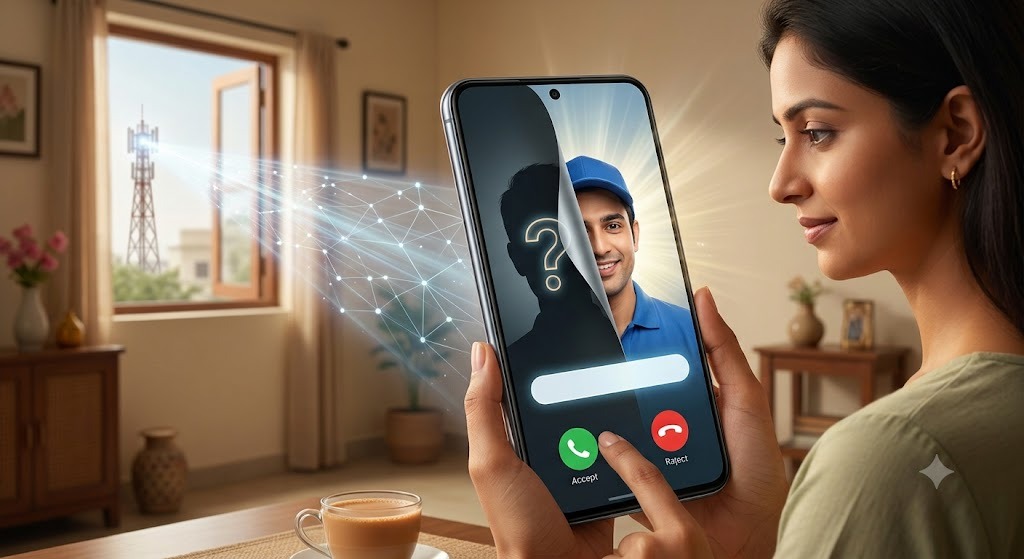
An unfamiliar phone number can leave people wondering whether to answer or let the call ring. It could be a delivery agent, a hospital, a job recruiter or someone trying to sell a product. From November 1, 2026, a new telecom feature is expected to make that decision easier by displaying the caller’s name alongside their phone number on supported mobile networks.
The Department of Telecommunications (DoT) has directed telecom service providers to introduce Calling Name Presentation (CNAP) across all service areas from that date. According to a circular dated October 13, the service must be provided by default, without requiring users to submit a request.
The change could make an everyday activity, answering a phone call, a little less uncertain for millions of mobile users.
A name behind the number
Today, people often depend on saved contacts, caller identification applications or online searches to identify unfamiliar numbers. CNAP aims to simplify this process by displaying the caller’s name recorded in the database of their telecom operator.
If the recipient has saved the number, the name stored in their phone’s contacts will take priority. If the number is not saved, a domestic call will display the name recorded by the caller’s telecom operator. For international calls, the screen will show the words “International Call”.
The feature will initially cover wireless networks using 4G and newer technologies. The introduction of CNAP on 2G and 3G networks, as well as landline connections, will be considered separately.
For people waiting for a medical update, a delivery or a response to a job application, recognising an unfamiliar caller could be useful. It may also help older people and those who find third-party caller identification applications difficult to use.
Could it help people avoid fraud?
Unwanted calls have become a common source of frustration. When an unfamiliar number appears on the screen, people may hesitate because they cannot tell whether the call is important or unwanted.
Displaying a registered name could give users more information before they answer. However, a displayed name is not a guarantee that a call is genuine or safe. CNAP shows the name associated with a number in the telecom operator’s records; it does not independently verify the caller’s intentions.
Users should therefore remain cautious about sharing banking details, one-time passwords or other sensitive information over the phone, even when a familiar-looking name appears on the screen.
How will the system work?
Under the DoT’s instructions, each telecom operator must maintain a database linking subscribers’ names with their phone numbers. When a call arrives, the receiving operator will retrieve the caller’s name from the originating operator’s database and display it to the recipient.
The circular also requires a security-by-design approach. The system must ensure that the caller’s name is not retained through the query-and-response process after the call ends.
Users who have opted for Calling Line Identification Restriction (CLIR) will not have their names displayed.
Business and bulk connection holders may be allowed to display a preferred name instead of the name in their subscriber records. The preferred name must qualify as a registered trademark or a trade name registered on the Goods and Services Tax (GST) portal. Telecom operators must verify the supporting documents before allowing the name to be displayed.
Operators must also establish a mechanism to receive, record and resolve complaints about the CNAP service within a specified timeframe.
A small change with everyday value
CNAP will not eliminate every uncertainty surrounding an unknown call. However, showing a name alongside a number could give people an additional piece of information when deciding whether to answer.
The real value of the service will depend on the accuracy of subscriber records, the reliability of its implementation and how responsibly people use the information displayed. For now, it offers a practical change to a familiar part of daily life: knowing a little more about who may be calling before picking up the phone.
Subscribe Deshwale on YouTube
