



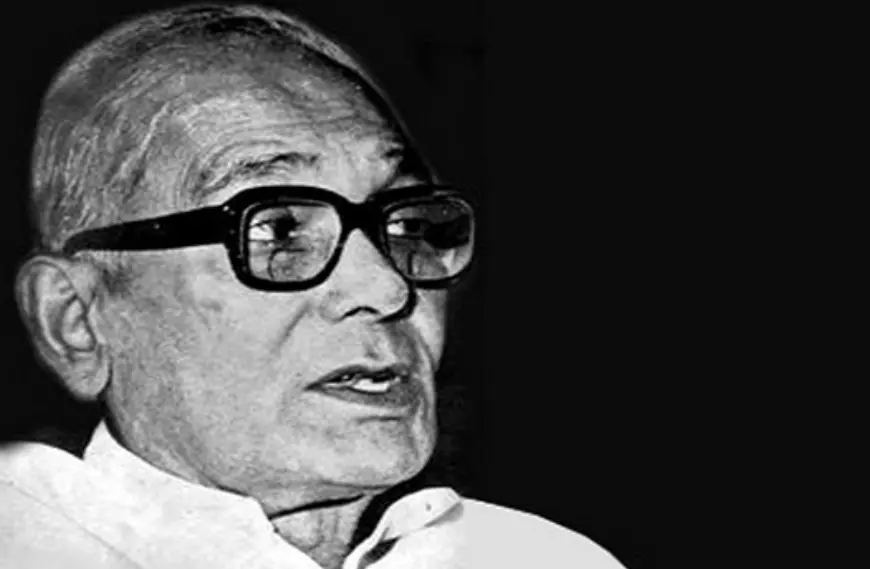
Jayaprakash Narayan, popularly known as JP, was one of India’s most influential leaders and a true champion of democracy. Born on October 11, 1902, in Sitabdiara, Bihar, he grew up in a time when India was under British rule. From an early age, JP showed an interest in social issues and justice, which later became the foundation of his lifelong work for the country.
JP’s academic journey took him abroad, where he studied in the United States and the United Kingdom. He earned degrees in political science and economics, gaining exposure to global ideas of governance, social justice, and political reform. Early in his career, he was influenced by Marxist ideology, but later, under the guidance of Mahatma Gandhi’s teachings, he embraced non-violence, ethical leadership, and Gandhian principles. This combination of global learning and moral values shaped JP into a leader with both intellectual depth and ethical commitment.
On returning to India, JP became deeply involved in movements for social reform and political accountability. He focused on Bihar, addressing local issues such as corruption, poverty, and poor governance. His efforts gradually expanded into a larger national vision, emphasizing that democracy is not only about elections but also about ethical leadership and citizen participation.
JP is perhaps best remembered for the Bihar Movement of 1974, a mass protest demanding better governance and an end to political corruption. The movement highlighted the failures of local and national leadership, creating a momentum for broader political change. His leadership during this period was marked by courage, discipline, and moral authority, which inspired citizens across the country to actively participate in democratic processes.
During the Emergency imposed by Prime Minister Indira Gandhi in 1975, JP became the guiding voice of opposition. He called for a ‘Sampoorna Kranti’ or Total Revolution, which was a vision for comprehensive reform covering political, social, and economic aspects of India. Under his guidance, opposition parties came together, and the country eventually witnessed the restoration of democratic governance. JP’s ability to unite people across party lines and his unwavering dedication to truth and justice made him a symbol of moral courage.
Despite his influence, JP never sought formal political power. He believed that true change comes from principles, integrity, and the collective action of citizens. His ideas continue to inspire generations of social activists, political leaders, and ordinary citizens to fight corruption, uphold democracy, and contribute positively to society.
Today, on his birth anniversary, India remembers Jayaprakash Narayan not only for his political leadership but also for his commitment to justice, morality, and the empowerment of people. He remains a timeless example of courage, vision, and the belief that democracy thrives when citizens are aware, active, and ethical. Honouring JP is a tribute to a life dedicated to creating a stronger, fairer, and more democratic India.
Also Read: Lesser-Known Facts About Jayaprakash Narayan
Subscribe Deshwale on YouTube
