



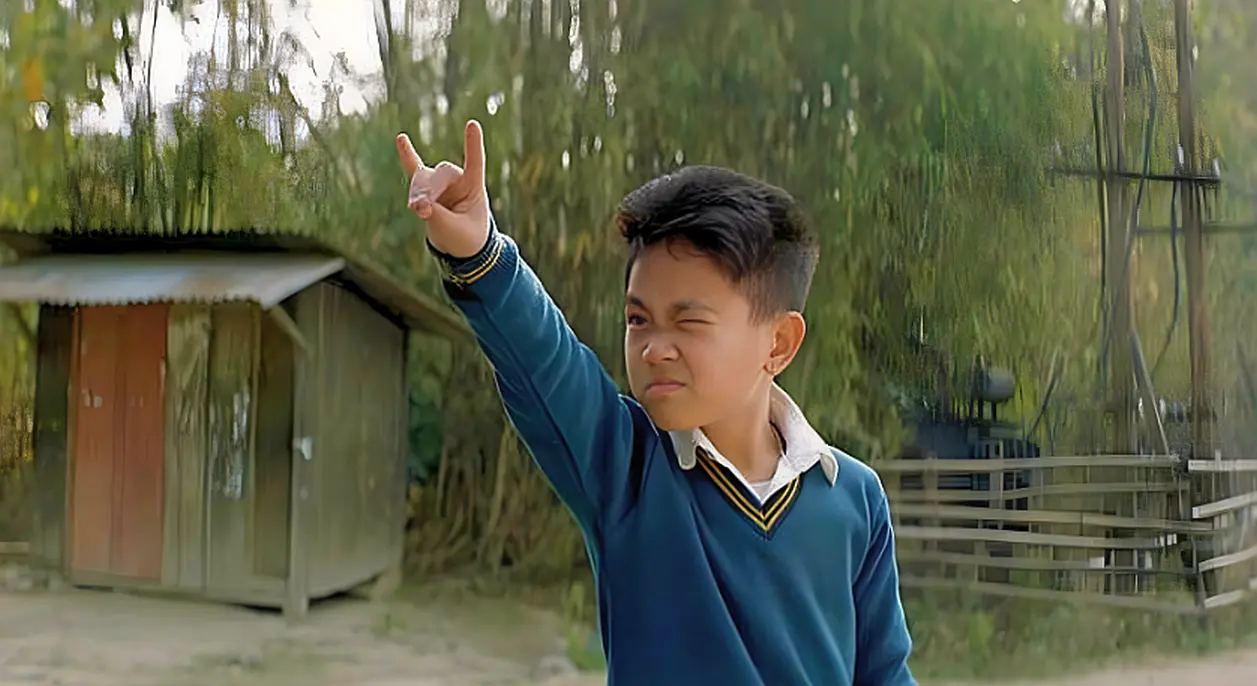
Against Disney giants and Hollywood franchises, a quiet Manipuri children’s film did the unthinkable — and won a BAFTA. And he movie is Boong
On the evening of Sunday, 22 February 2026, inside London’s Royal Festival Hall, with the Prince and Princess of Wales in the audience, a first-time Manipuri director walked to the stage to accept a BAFTA, presented to her by a bear holding a jar of marmalade. It was, by any measure, one of the most extraordinary moments in the 79th EE BAFTA Film Awards. Most importantly, it belonged entirely to India!
Boong, a quiet, deeply human Manipuri language coming of age film, won the Best Children’s & Family Film award at BAFTA 2026, becoming the first Indian film ever to win in this category. It beat three formidable international rivals: Disney’s Zootopia 2 (Zootropolis 2, also that night’s Best Animated Film winner), Dean Fleischer Camp’s Lilo & Stitch, and the Oscar nominated French animation Arco. In a media room where almost no one had heard of the film minutes before the announcement, the win landed like a thunderclap.
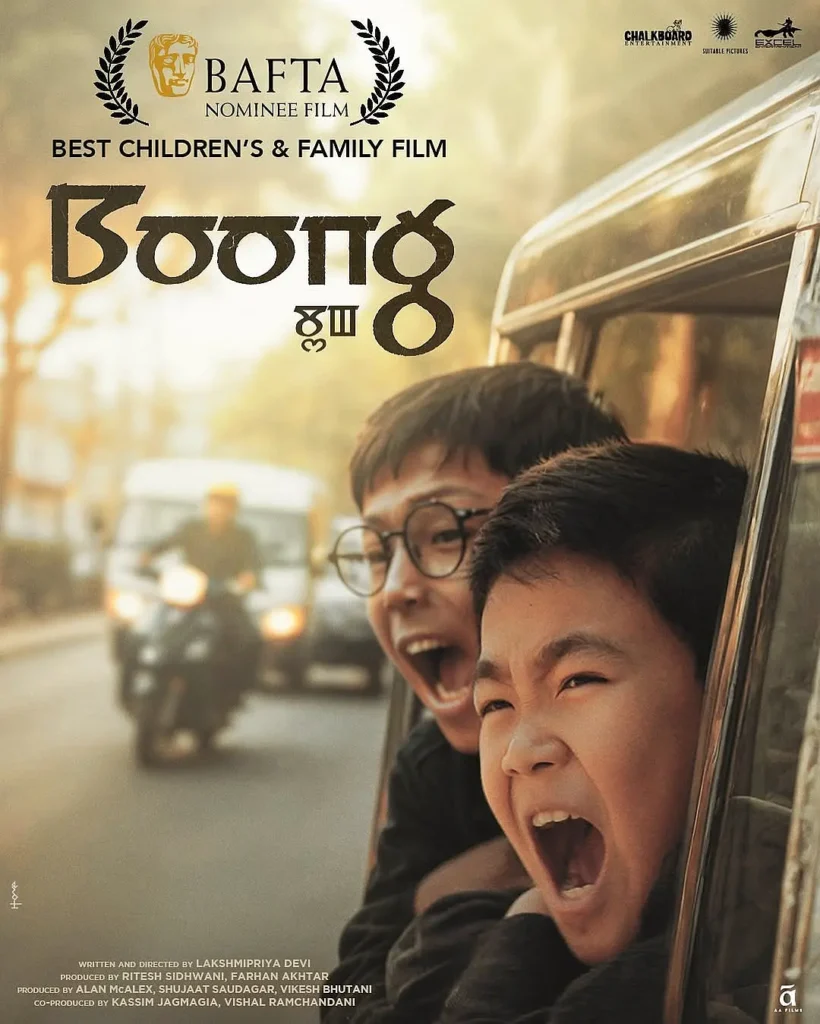
The Underdog of Underdogs
To understand why this win matters, you need to understand the scale of the odds. Zootopia 2 and Arco entered the night as Oscar nominees; Zootopia 2 alone had accumulated 72 award nominations going into the ceremony. Boong had one prior international nomination, from the Asia Pacific Screen Awards 2024, where it had already won. It was India’s sole film nominated at BAFTA 2026, in any category. When the film won, many in the media room turned to each other with a quizzical look, few had even heard of the film, let alone knew anything about it.
That invisibility was almost the point. Boong is set in one of India’s most troubled and underrepresented states, made in a language most Indians don’t speak, directed by a woman making her feature debut, and produced on a budget that would barely register as a rounding error in Disney’s annual reports. It is, by every metric, the definition of an underdog… and it won.
A Story That Crosses Borders, Literally
The film follows a young boy named Boong (played by Gugun Kipgen) who embarks on a journey from the hills of Manipur to the border town of Moreh and into Myanmar to reunite his estranged father with his mother.
The full story is richer and more politically layered than a simple synopsis suggests. Boong’s father, Joykumar (Hamom Sadananda), has left the family’s valley home for the border city of Moreh in search of work and has stopped all communication. Rumours begin to reach the family that he may have died, and local politicians seem strangely eager to declare him dead. Boong refuses to accept the grim possibility. In the innocent conviction of a child, Boong doesn’t see long distances and state borders as significant obstacles, at least not when it comes to giving his mother the best surprise gift ever: bringing his father home.
Teaming up with his best friend Raju (Angom Sanamatum), a cheerful outsider from Rajasthan who has relocated to Manipur, Boong navigates ethnic tensions, political fault lines, and the militarised eastern border of India, all while retaining the boundless optimism of childhood. The film opens with an epigraph: “To love, friendship and peace in Manipur.” That dedication carries the full weight of the film’s context. Boong paints a portrait of modern Manipur, the isolated Indian state neighbouring Myanmar, at a time when violent eruption feels all but inevitable.
Notably, the director has revealed in interviews that some of the locations where she shot were burnt down the very next day. At a Bengaluru screening, she noted that the film brought both Meitei and Kuki audience members together in the same hall, a small but symbolic miracle from a region torn apart by communal conflict.
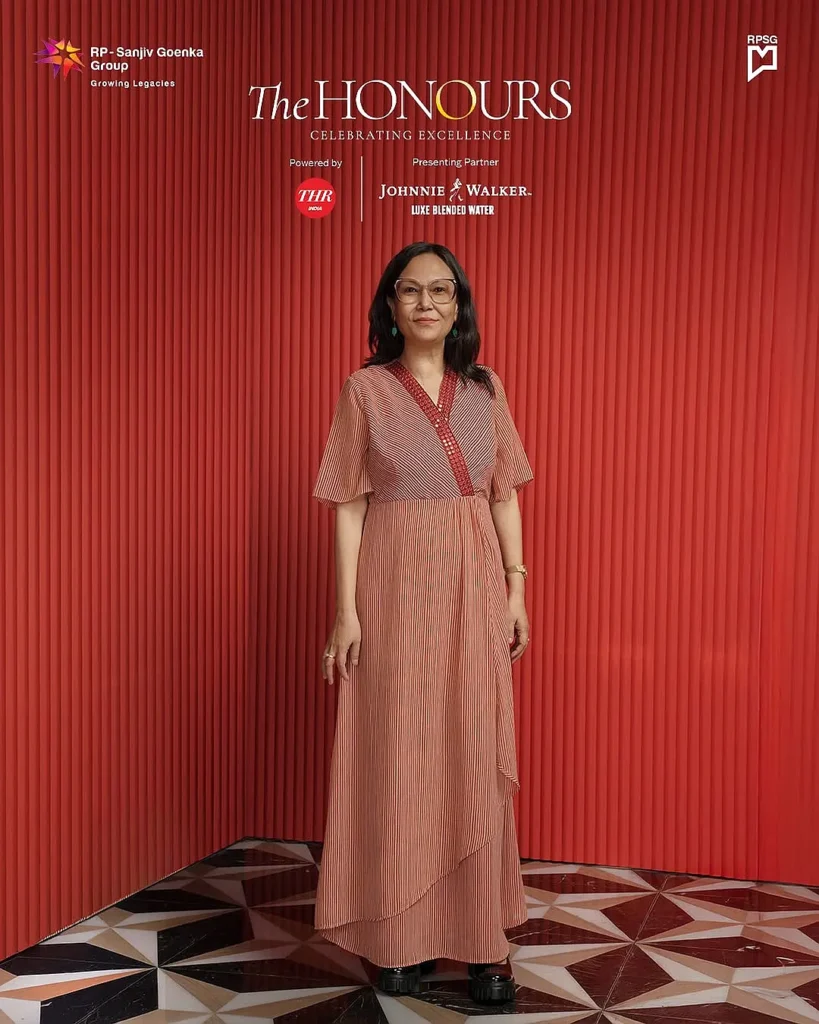
The Director: Two Decades in the Making
Lakshmipriya Devi spent years working as an assistant director on major Hindi productions such as Lakshya, Swades, Rang De Basanti, Dunki, and PK, building craft quietly behind the camera on some of Indian cinema’s most beloved films. Boong is her feature directorial debut, and it is the kind of debut that silences a room.
As critic Nikhil Akhil wrote, “Director Lakshmipriya Devi’s debut offers a heartfelt perspective on acceptance and transformation, presenting a 360-degree view of Manipur through the eyes of a curious child.” Taylor Gates of Collider called it “a rich coming-of-age tale that touches on important issues without ever losing its playful tone or big heart.”
At the BAFTA ceremony, Lakshmipriya Devi began her acceptance speech with the Manipuri greeting khurumjari, before delivering words that silenced the room. She described Boong as a film “rooted in a place which is very troubled, very much ignored and very unrepresented in India,” and concluded: “We pray for peace to return to Manipur. We pray that all the internally displaced children including the child actors in the film regain their joy and innocence once again. We pray that no conflict is ever formidable enough to destroy the one superpower that all of us have as human beings, which is forgiveness.”
Paddington Hands Over the Trophy
The award was presented by none other than Paddington Bear, marking the first time in BAFTA history that a bear has presented an award. True to form, Paddington quipped from the stage: “I am the first ever bear to present an award, and also the first presenter to get marmalade over a BAFTA.” The iconic photo of the evening, already travelling across social media worldwide, shows Lakshmipriya Devi beaming alongside Paddington Bear, Farhan Akhtar, Ritesh Sidhwani, and producer Alan McAlex, all holding the BAFTA trophy.
In a night of glamour attended by Leonardo DiCaprio, Timothée Chalamet, Alia Bhatt (who attended as a presenter), and the Prince and Princess of Wales, a moment involving a Manipuri filmmaker and a fictional Peruvian bear became the most-shared image of the evening.
Farhan Akhtar: Backing What Felt Right
Excel Entertainment’s decision to produce Boong is itself a story worth telling. Farhan Akhtar and Ritesh Sidhwani, better known for producing high-octane films like Dil Dhadakne Do, Fukrey, and Don, backed a debut director on a micro budget Manipuri film with no stars, no songs, and no commercial certainty.
Speaking to Deadline after the win, Farhan explained: “Lakshmipriya Devi and I have known each other for about 20 years. This film is set in a region of India from which we rarely get to watch films. It was nice to support that as well, and it’s a very heartwarming story. So, it just felt right.” Those twenty years of trust between a producer who could have backed anything and a filmmaker who had spent two decades waiting for her moment, produced one of Indian cinema’s most unlikely global victories.
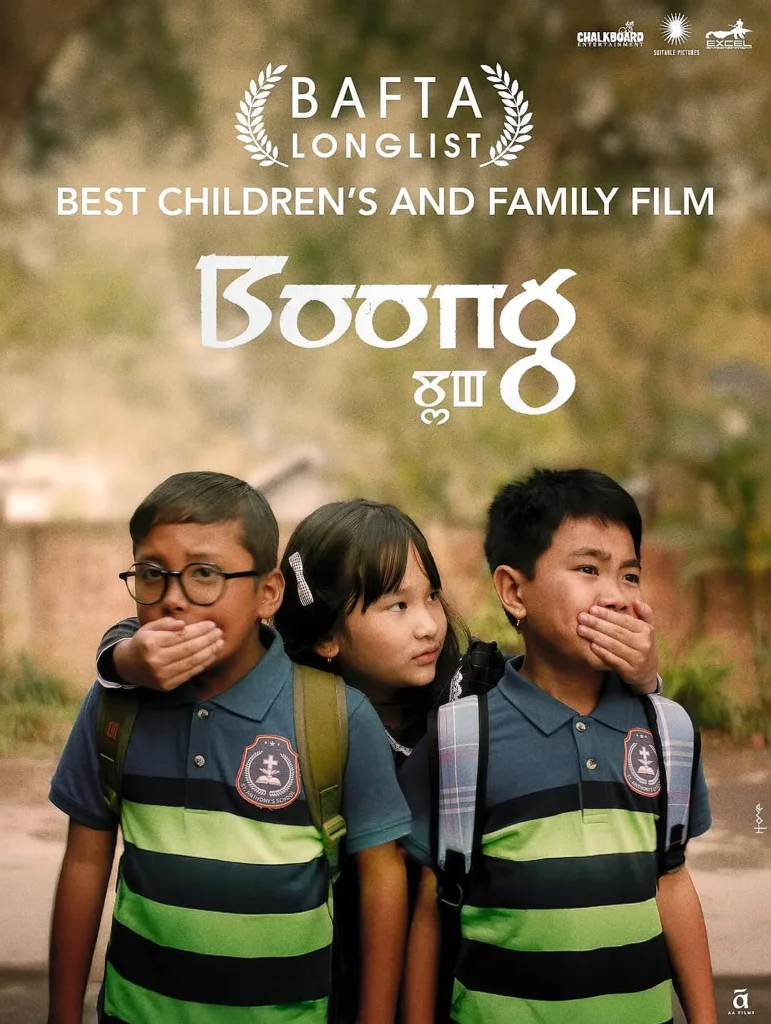
From TIFF to the World Stage
Boong premiered in the Discovery section of the 2024 Toronto International Film Festival on 5 September 2024, where it earned immediate critical praise. TIFF described it simply and perfectly: “Schoolboy Boong doesn’t see long distances and state borders as significant obstacles.” It went on to screen at the Warsaw International Film Festival, MAMI Mumbai Film Festival 2024, the Indian Film Festival of Melbourne 2025, IFFI, and the Dharamshala International Film Festival, quietly building a devoted audience at every stop.
It won at the Asia Pacific Screen Awards 2024 and the International South Asian Film Festival 2024. It was released theatrically in India on 19 September 2025, at select PVR INOX cinemas, certified U by the CBFC. It had, by BAFTA night, done everything right, and almost no one knew.
Why This Win Is Bigger Than a Trophy
This is not merely a proud moment for Indian cinema. It is a statement about what stories deserve to be told, and by whom. For Manipuri cinema, celebrated domestically for decades but rarely visible internationally, Boong becomes a landmark. For India’s Northeast, a region whose complex realities are routinely reduced to footnotes in the national narrative, this is an act of radical visibility. The child actors in the film are themselves displaced by ethnic conflict. Their faces, now on BAFTA’s stage, carry a weight that no Hollywood blockbuster could replicate.
And for Lakshmipriya Devi, who spent twenty years assisting other directors before getting the chance to make her own film, this is proof that great cinema cannot be suppressed indefinitely, that the stories waiting the longest sometimes arrive with the most force.
Major Credits
Film: Boong (2024)
Language: Manipuri
Certificate: U (CBFC)
India Theatrical Release: 19 September 2025
Direction & Screenplay: Lakshmipriya Devi
Cinematography: Tanay Satam
Editing: Shreyas Beltangdy
Music: Akhu Chingangbam & Zubin Balaporia
Production Companies: Excel Entertainment, Chalkboard Entertainment, Suitable Pictures
Producers: Farhan Akhtar, Ritesh Sidhwani, Vikesh Bhutani, Alan McAlex, Shujaat Saudagar
Cast:
- Gugun Kipgen as Brojendro / Boong
- Bala Hijam Ningthoujam as Mandakini (mother)
- Angom Sanamatum as Raju Agarwal (best friend)
- Hamom Sadananda as L. Joykumar (father)
- Vikram Kochhar as Sudhir Agarwal
- Nemetia Ngangbam as Juliana
- Jenny Khurai as Singer JJ
- Modhubala Thoudam as Chaobi
- R. K. Sorojini as Sakhi
World Premiere: Discovery Section, Toronto International Film Festival, 5 September 2024
Award: BAFTA 2026 – Best Children’s & Family Film (79th British Academy Film Awards)
