



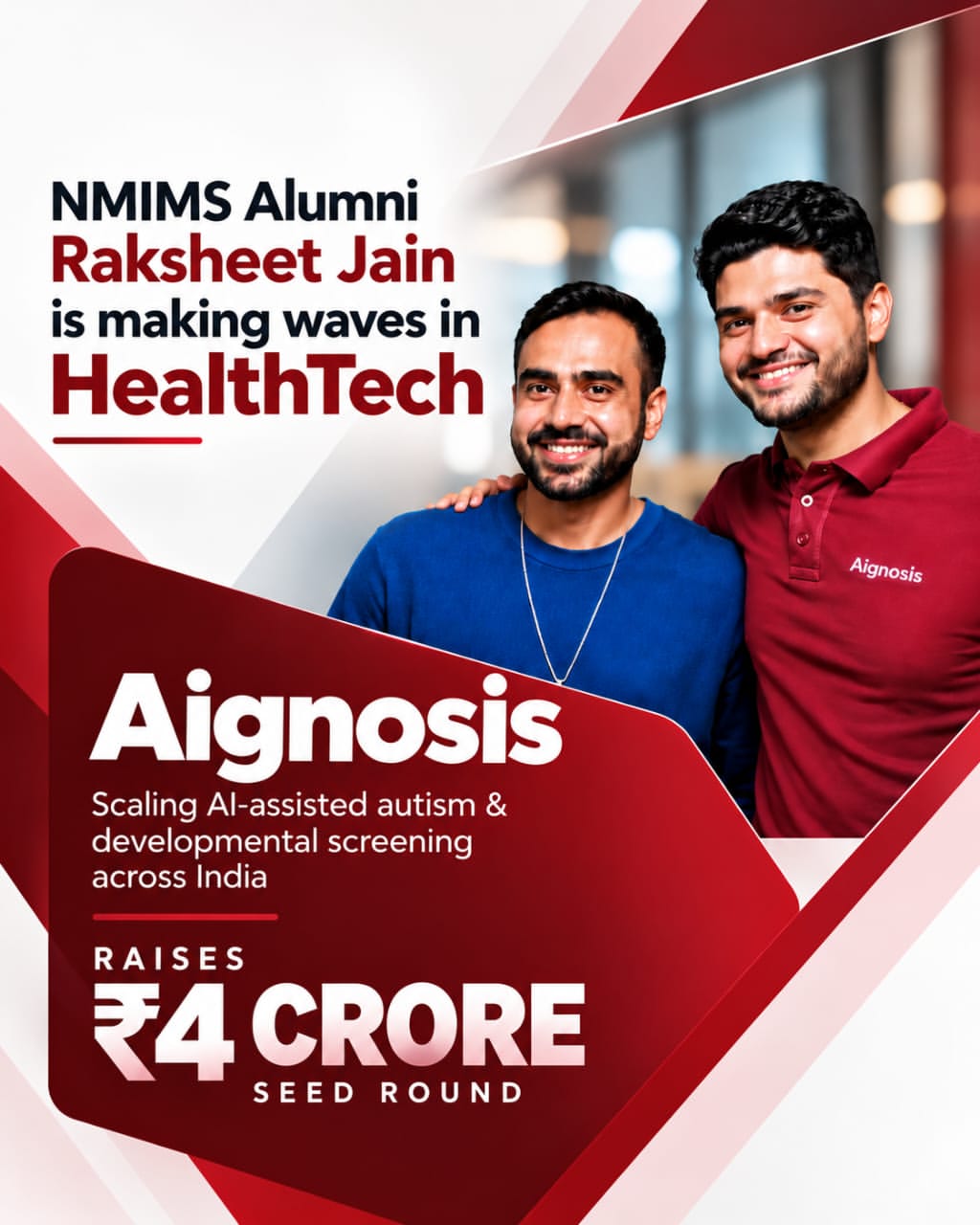
A technology developed using a laptop and webcam could help make early developmental screening more accessible to children and families. Jaipur-based healthtech startup Aignosis, co-founded by Raksheet Jain, an alumnus of SVKM’s NMIMS Mukesh Patel School of Technology Management & Engineering (MPSTME), has raised ₹4 crore in seed funding to expand its work in early screening for autism and developmental delays.
Jain studied Artificial Intelligence at NMIMS MPSTME between 2020 and 2024. He co-founded Aignosis with Divyansh Mangal to use artificial intelligence (AI) to support the early screening of children who may need further developmental assessment.
The funding marks a new step for the startup as it looks to extend its reach across India and make screening services available to more families.
Funding to Support Expansion Across India
Aignosis has raised ₹4 crore in a seed funding round led by Antler and Nikhil Kamath. The round also saw participation from Varun Dua, IIMA Ventures and other angel investors.
The company plans to use the funds to expand its presence in several states and regions, including Maharashtra, Karnataka, Tamil Nadu, Punjab, Haryana, Jharkhand and the National Capital Region.
The expansion could help the startup reach communities where access to developmental screening and specialist services may be limited. However, screening is only an early step in identifying children who may need further evaluation and support.
How Aignosis Uses Artificial Intelligence
Aignosis has developed a screening platform that uses a laptop and webcam. According to the information provided by the company, the platform is designed for children aged 16 months to nine years and supports screening for autism spectrum disorder (ASD) and developmental delays.
Autism is a developmental condition that can affect communication, social interaction and behaviour. Developmental delays occur when a child takes longer than expected to reach certain milestones, such as speaking, moving or interacting with others.
Recognising possible developmental concerns early can help families seek appropriate professional guidance. AI-based tools may offer another way to support the screening process, particularly where access to specialists is difficult.
It is important, however, to distinguish screening from diagnosis. A screening tool can help identify signs that may warrant further assessment, but it does not replace a comprehensive evaluation by qualified healthcare professionals.
From Pilot Use to Wider Reach
Aignosis reports that it has completed more than 8,000 screenings and deployed its platform across over 20 government primary health centres in Rajasthan.
The company has also partnered with Mankind Pharma and Apollo Shines. These deployments and partnerships indicate that the startup is working to extend its reach beyond a technology demonstration.
As it expands, important questions will include how consistently the platform performs across different settings, how children’s information is protected and how families are connected with qualified professionals when screening suggests that further assessment may be needed.
These considerations matter because developmental screening involves children and sensitive information. Technology can support the process, but its value also depends on responsible implementation and appropriate follow-up.
An Application of Classroom Learning
For NMIMS MPSTME, Jain’s journey represents an example of how technical education can lead to entrepreneurship focused on a real-world challenge.
Dr Koteswararao, Dean of MPSTME, NMIMS, said the institution was encouraged to see its alumni apply technical knowledge to practical problems. He added that Jain’s work with Aignosis showed how technology and entrepreneurship could come together to create a meaningful impact in healthcare.
The startup’s work brings together artificial intelligence and child development, two areas where technology may support existing services when used carefully.
The Road Ahead
Aignosis now aims to expand its screening platform to more parts of India. Reaching more families could be an important step, particularly if expansion is accompanied by reliable screening, professional follow-up and safeguards for children’s data.
The larger challenge is not simply to introduce AI into healthcare, but to make useful services accessible and ensure that technology supports the people who need it.
For Aignosis, the ₹4 crore seed funding provides an opportunity to pursue that goal. Its long-term impact will depend on how effectively it turns technological innovation into accessible, responsible support for children and their families.
Subscribe Deshwale on YouTube
