



Think about the last time you had a full hour that was truly yours. Not an hour spent half-watching something while replying to a message, but an hour with no errand waiting at the end of it. If that took you a while to recall, you are not alone. A day has 1,440 minutes, and on paper most of them are ours. In practice, a surprising number are claimed by commutes, chores, queues and a phone that never quite lets us leave work.
India’s own data gives a rough starting point. The National Statistical Office’s Time Use Survey 2024 asked people to account for a full day, and found that self-care and maintenance, which covers sleep, eating and personal care, takes about 708 minutes, nearly 12 hours. Culture, leisure, mass media and sports together take about 11 per cent of the day, up from 9.9 per cent in 2019. That works out to roughly two and a half hours. But this is an average across everyone aged six and above, including children and retirees. For a working adult in a city, the real figure is likely smaller, and it includes time spent on television and other media, which does not always feel like rest.
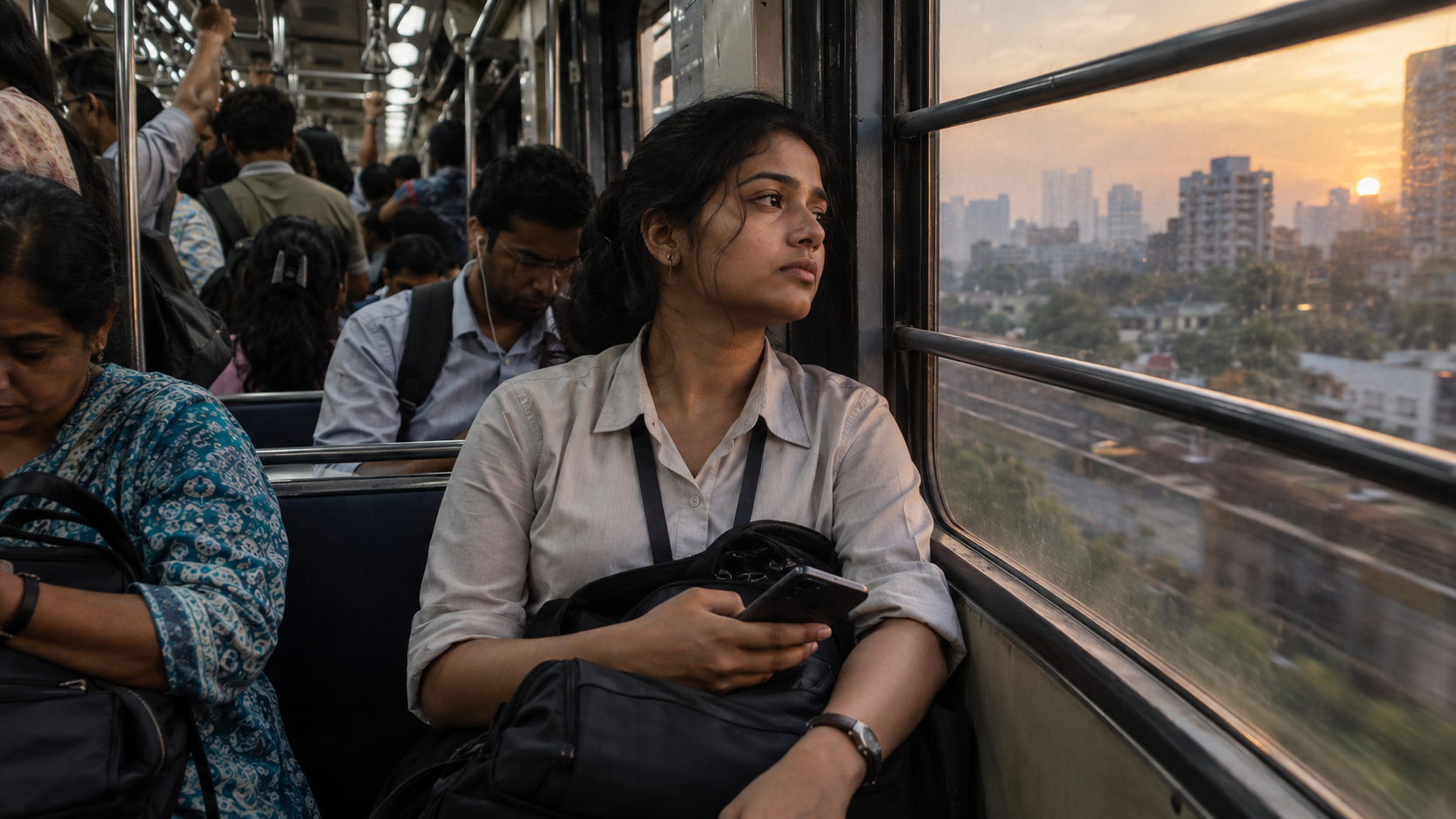
Commuting is the most visible thief. The TomTom Traffic Index found that a 10-kilometre trip in Bengaluru took an average of 34 minutes in 2024, and ranked the city third-slowest in the world among those it tracked. A research study of Bengaluru commuters put the average one-way trip to work at about 42 minutes. Do the arithmetic: that is close to 85 minutes a day and, over roughly 250 working days, about 350 hours a year. That is two full weeks of clock time, spent sitting in traffic or standing in a train. Bengaluru is an extreme case, and other cities will differ, but a long daily tax on time will feel familiar to many city workers.
Then there is the work that begins when the office day ends. Official figures show how unevenly it is shared. Among everyone aged six and above, 81.5 per cent of females did unpaid household work on an average day, against 27.1 per cent of males. Those who did it spent far more time if they were women: 289 minutes, compared to 88 for men. Among women aged 15 to 59 who do such work, the daily average is 305 minutes, a little over five hours, down from 315 in 2019. Caregiving adds more: 41 per cent of women in that age group care for family members, against 21.4 per cent of men, and those who do spend about 140 minutes a day, compared with 74 for men. So “how much of my day is mine?” has a very different answer depending on who is asking.
The hardest costs to count are the small ones, because no survey records them neatly: the twenty minutes waiting for a delivery or a plumber, the bank queue, the quick reply to a work message at ten at night, the errand that turns into an hour. None of these looks like much alone. Together, though, they do something worse than eating minutes. They break the day into pieces too short to use. Ten spare minutes cannot hold a book or a slow meal, so they quietly vanish into the phone. A person can have two free hours in total and still feel they have none.
Try a rough audit, and treat the numbers below as an illustration, not data. Suppose you spend 85 minutes commuting, 30 minutes on work messages after hours, an hour on errands and waiting, and three hours on household tasks. That is nearly six hours. Add a nine-hour work day and seven hours of sleep, and you are at 22 hours, with two left for eating, bathing and everything else you call life. Seen this way, the survey’s average of two and a half hours of leisure stops looking low. It starts looking generous.
None of this is only a personal failing, so the fixes are not only personal either. Better public transport and more flexible hours give back time to thousands of people at once. Within a home, sharing chores more evenly is not a favour but a way to give someone their evening back. For individual days, a few small habits can help: bundle errands into one trip, fix a time after which work messages wait until morning, and protect one hour that nobody, including your phone, is allowed to claim. These changes are small, but they add up faster than any big resolution.
Free time rarely arrives on its own. In a busy city life, it is whatever you refuse to give away. So count your day for a week, honestly, minute by minute. You may find that the question is not why you feel so tired, but how little of the day was ever yours to begin with.
Subscribe Deshwale on YouTube
