










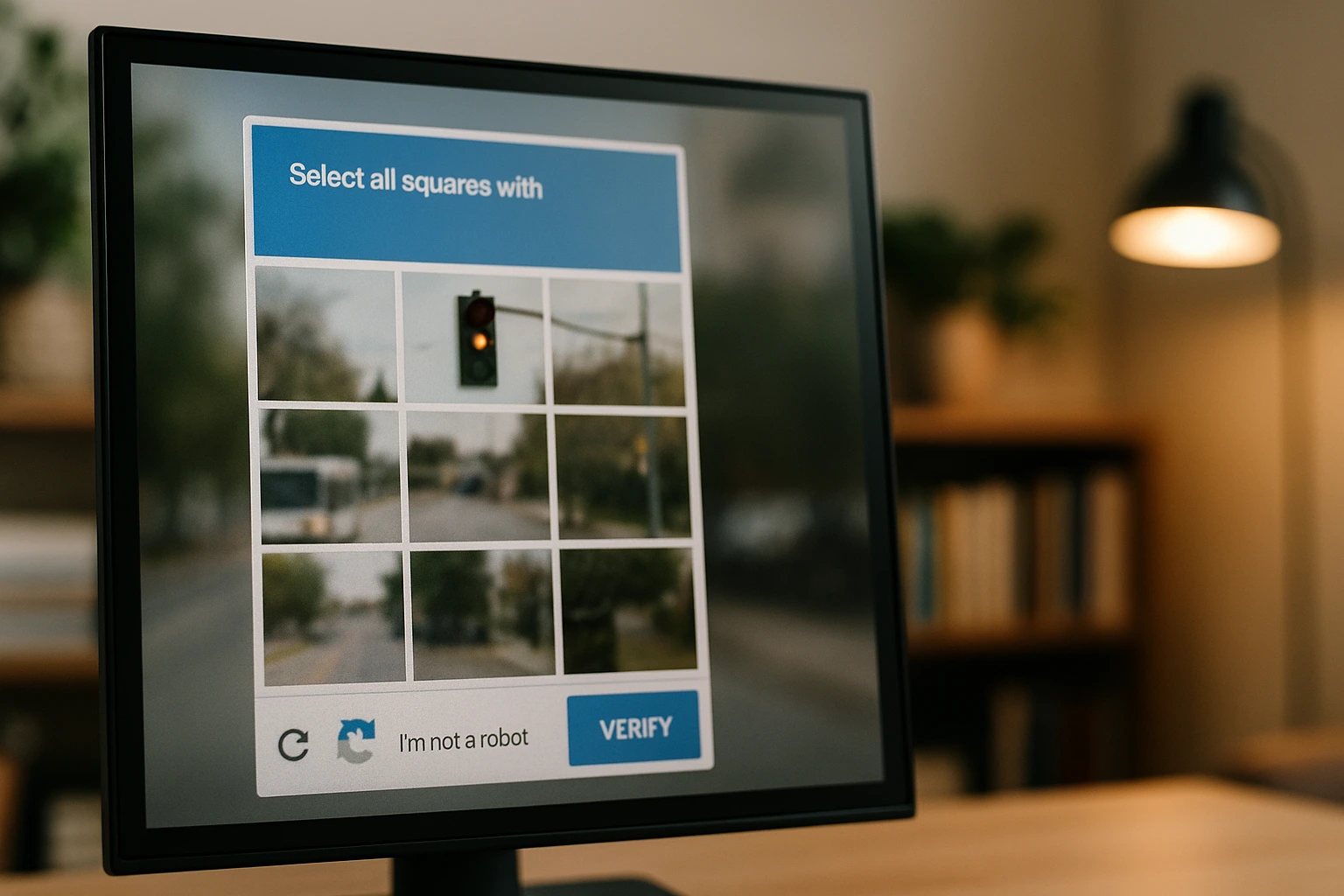
Ever wondered why you still have to click on blurry pictures of traffic lights or squint at squiggly letters before logging in somewhere? It feels a bit silly, right? But believe it or not, those little tests are still smarter than the most powerful AI systems.
In a world where AI can drive cars, write books, and even create deepfake videos, it’s kind of surprising that it still gets stumped by a box asking you to find all the buses or fire hydrants.
So why is that tiny box still unbeatable for machines? Let’s break it down.
CAPTCHA stands for “Completely Automated Public Turing test to tell Computers and Humans Apart.” Sounds fancy, but the job is basic – spot the human, block the bot. Simple, but super effective.
See, CAPTCHA isn’t just random pictures and puzzles. It’s a carefully built trap for bots. It plays on how the human brain works, and how machines don’t.
Take image CAPTCHAs, for example. You’re shown nine blurry photos and asked to find all the traffic lights. Now, you and I might find it annoying, but we still get it right most of the time. Machines, on the other hand, struggle with the grey areas. Half a sign in a corner, confusing angles, or weird lighting – all that throws AI off more than you’d expect.
Same thing with those weird, wobbly texts. Letters are stretched and twisted on purpose. Sometimes even humans fail them. But the way we try to make sense of it is different from how bots process patterns – and that difference makes all the difference.
Now here’s the thing , AI has improved massively. Some bots can now break through the older versions of CAPTCHA pretty easily. But it’s not a fixed test. Developers keep tweaking and updating it to stay one step ahead.
Some modern CAPTCHA systems don’t even ask you anything directly. They just watch how your mouse moves, how you scroll, or how quickly you react. These are the invisible ones. They check your behaviour, not just your answers.
And guess what? AI can’t copy that kind of natural human movement yet. Sure, it can try to mimic clicks and scrolls, but it still feels robotic to the system.
So if you’re wondering why CAPTCHA hasn’t gone away yet, it’s because it still works. It’s one of the few things online that keeps bots out and lets real people in. From stopping fake sign-ups to blocking brute-force attacks, CAPTCHA is like a little doorman for the internet.
AI will probably get better with time. Maybe one day it’ll fool even the smartest CAPTCHA out there. But for now, it’s still stuck guessing what a stop sign looks like when half of it is hidden behind a tree.
Until then, it’s you, me, and a few more rounds of “spot the crosswalk”.
Next time you’re asked to solve one, don’t curse it. Just know you passed a test that even the smartest machines still fail.


