










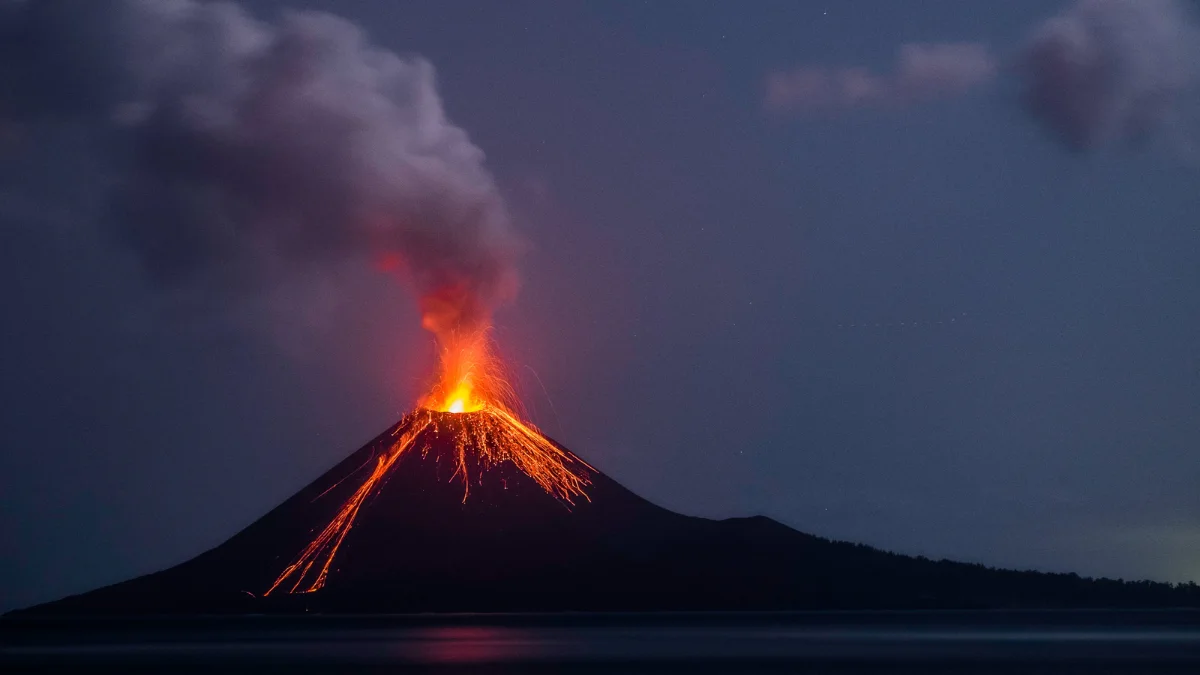
When Barren Island, India’s only active volcano, erupted twice in September after an earthquake in the Andaman Sea, many dismissed it as a remote geological event. Yet the incident carries far greater significance. It highlights how natural hazards in one corner of the country can ripple through national security, economy, and public safety. More importantly, it raises a crucial question. If a stronger volcanic eruption were to strike in the future, how ready is India to face its consequences?
Why This Eruption Matters
Barren Island lies about 135 kilometres northeast of Port Blair. No one lives there, yet its activity should not be brushed aside. Scientists point out that the Andaman region sits on fragile tectonic plates where earthquakes, tsunamis, and volcanic eruptions are often linked. A single event can set off a chain reaction.
The recent eruption was small, but it showed how vulnerable the islands are. If a stronger blast were to happen, it would not just affect a lonely island but the lives, economy, and security of an entire nation.
These seas are not empty. Every day, ships carrying oil, gas, and goods pass through the Bay of Bengal and the Andaman Sea. A larger eruption could send ash into the sky, forcing vessels to reroute, delaying supplies, and driving up costs. Flights too could be affected, as the world saw in 2010 when an Icelandic volcano grounded planes across Europe for days.
Closer to home, the Andaman and Nicobar Islands are more than tourist spots. They are vital for India’s Navy, home to fragile coral reefs, and a lifeline for fishing communities. An eruption could disrupt defence operations, damage marine life, and hurt families who depend on the sea.
Learning from the World
The world has seen what volcanoes can do. In 1991, Mount Pinatubo in the Philippines erupted with devastating force. More than 20,000 people had to be evacuated. 847 people died, 10,000 were left homeless, and the surrounding land was scarred for years. The eruption was so powerful that it cooled global temperatures for months.
Even smaller eruptions can have outsized impacts. In 2010, when Iceland’s Eyjafjallajökull volcano erupted, it threw so much ash into the air that flights across Europe were cancelled, stranding millions and costing billions. These events are stark reminders that volcanic eruptions are not just local incidents. They can change the course of lives, economies, and even climates.
How Ready is India
Since the 2004 tsunami, India has built strong early warning systems for earthquakes and tsunamis. But volcanoes have received far less attention. Barren Island is monitored mostly through satellites and occasional expeditions. For many Indians, the word “volcano” feels distant, something found in geography books, not in their own country.
Preparedness, however, cannot be optional. India needs better ground sensors, real-time data sharing, and evacuation drills in the Andaman and Nicobar Islands. Ships and airlines need clear safety guidelines for volcanic activity. Most importantly, people need to know that while Barren Island may feel far away, its risks are not.
Nature has a way of catching us off guard. The recent eruption caused no harm, but it was a warning. It showed us how quickly the calm of the sea can turn into chaos. If India waits for a disaster to act, the cost will be too high.
Preparedness is not about fear; it is about respect for nature’s power. By planning ahead, strengthening monitoring, and spreading awareness, India can ensure that the next eruption, whenever it comes, does not find us unready.


