










A social media trend known as “Chinamaxxing” has recently gained traction across Western platforms, with influencers and internet users showcasing aspects of contemporary Chinese culture and lifestyle. Videos featuring morning routines, urban scenes, public transport efficiency and wellness practices have drawn millions of views. While some content is playful and aesthetic, the trend reflects deeper shifts in global perceptions of power, prosperity and cultural influence.
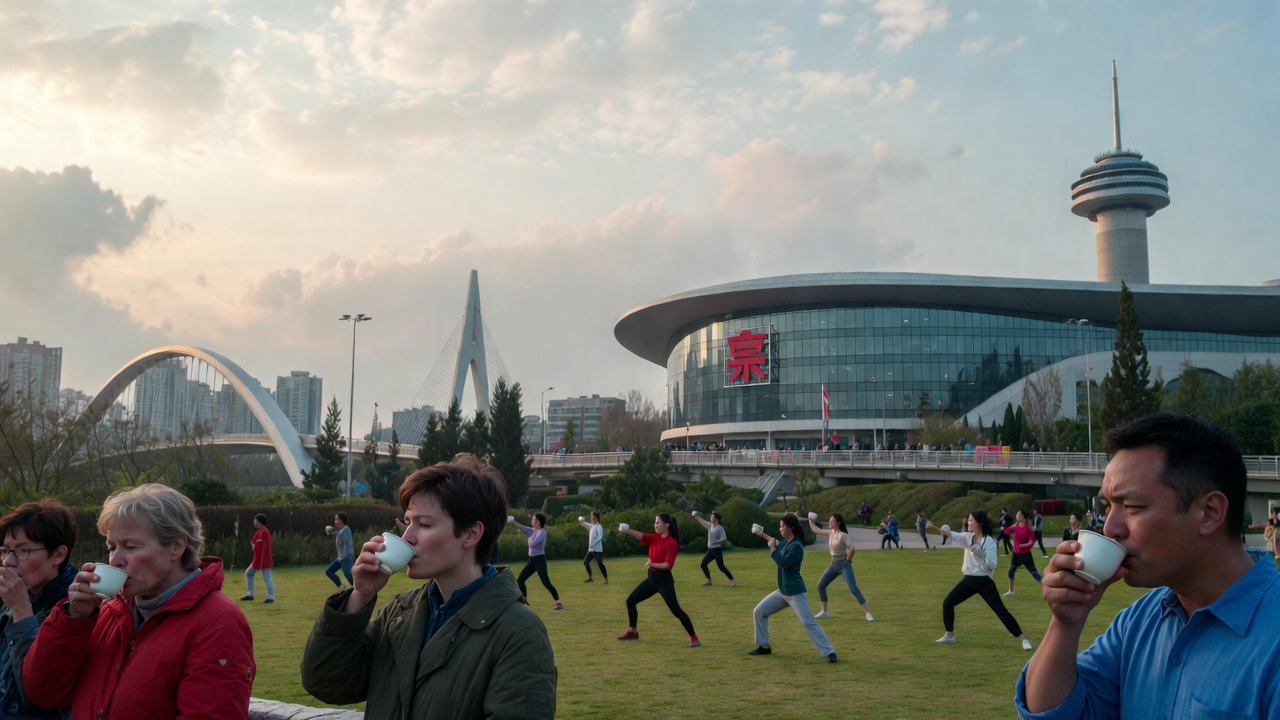
The term combines “China” with “maxxing,” implying the idea of improving one’s life by adopting certain traits associated with modern China. Participants often highlight habits such as drinking warm water, practising tai chi, or showcasing sleek infrastructure in major Chinese cities. Beyond humour, the trend signals curiosity and, in some cases, admiration for China’s rapid transformation.
Since economic reforms began in the late 1970s, China has undergone one of the most dramatic socioeconomic transformations in modern history. From a largely agrarian economy, it has emerged as the world’s second largest economy by nominal GDP and now contributes roughly 18 percent of global GDP. Over the past two decades, it has accounted for a significant share of global growth, often contributing more annual expansion than any other single country. Massive investment in infrastructure, manufacturing, technology and urban development has reshaped its global image. High speed rail networks, advanced digital payment systems and expanding technology firms have projected an image of efficiency and forward momentum.
China’s growing sociocultural influence has accompanied its economic rise. Chinese brands, digital platforms and cultural exports have gained global visibility. International tourism to and from China has expanded, and foreign students, entrepreneurs and creators increasingly engage with Chinese society. As a result, younger Western audiences are exposed not only to geopolitical narratives but also to everyday life in Chinese cities that appears modern, orderly and technologically integrated.
Some analysts argue that Chinamaxxing reflects broader anxieties in parts of the West. Younger generations in several Western countries face rising living costs, housing shortages, political polarisation and economic uncertainty. Against this backdrop, curated depictions of Chinese urban development can appear stable and aspirational. For some Western creators, the trend may represent fascination with an alternative model of governance and growth rather than simple cultural imitation.
However, admiration online does not erase complexity. China faces its own structural challenges, including demographic pressures, youth unemployment and economic transitions away from property driven growth. Political constraints and differing governance structures also shape domestic realities that social media clips rarely capture. Therefore, Chinamaxxing should not be interpreted as wholesale endorsement of China’s political system, but rather as a reflection of shifting global curiosity.
The phenomenon also highlights how perceptions differ across countries. While China is increasingly portrayed online as technologically advanced and infrastructurally efficient, India is frequently discussed in Western forums through a different lens. Criticism often centres on civic issues, sanitation challenges and unevenly maintained public infrastructure. These portrayals, sometimes exaggerated, shape contrasting narratives. China is viewed through the prism of state led development and system level transformation, whereas India’s image is often tied to governance gaps and public service delivery concerns, despite its own economic growth and technological achievements.
Whether China will become the sole superpower in the coming decades remains uncertain. The global order is increasingly multipolar, with the United States retaining military and financial dominance, and India, the European Union and other actors playing significant roles. China’s economic scale and geopolitical ambition position it as a central pillar of global power, but long term supremacy depends on demographic stability, innovation capacity and diplomatic strategy.
Chinamaxxing, though rooted in internet culture, captures a serious undercurrent. It reflects evolving global perceptions of influence and modernity. In a world where power is measured not only by military strength but also by infrastructure, technology and lifestyle appeal, the conversation about China’s rise is no longer confined to policymakers. It is playing out on social media feeds, where global narratives are being reshaped in real time.
Subscribe Deshwale on YouTube


