 Deshwale
Decoding your train ticket: the story behind every code
In brief · AI summary The article explains that the codes on a train ticket, including station codes, train numbers, class and quota letters, and the PNR, each carry a history or purpose. Station codes often keep old names, such as MAS for Madras, which became Chennai in 1996, and since 20 December 2010 the first of the five digits in a train number shows the type of train. The ten-digit PNR's first three digits identify the reservation system where the ticket was booked, and one PNR can cover up to six passengers travelling together.
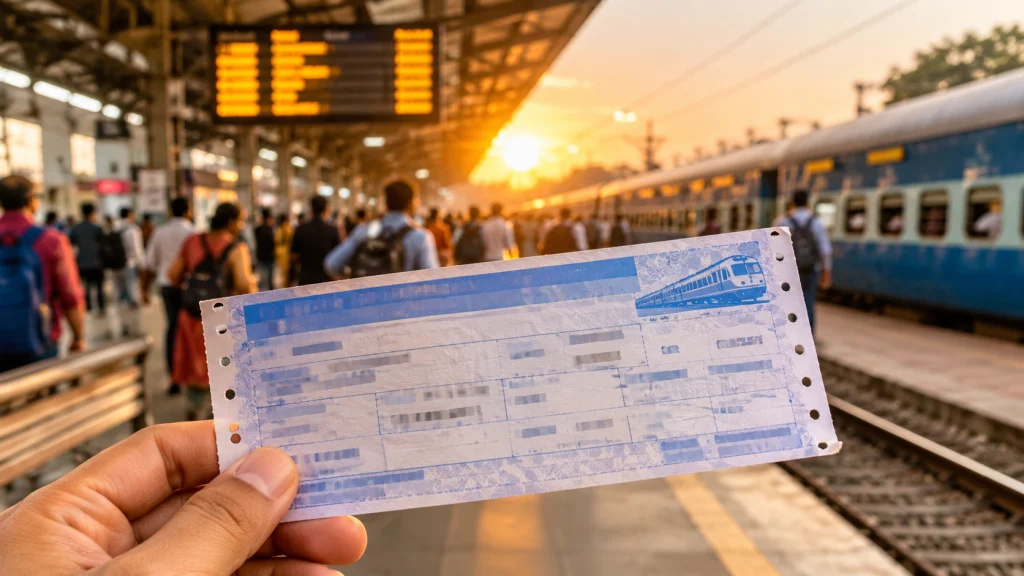
The codes on your ticket look like a puzzle. Each one is a small story.
Madras became Chennai in 1996. The railway station there has changed its name since too, and in 2019 it was renamed after M. G. Ramachandran. But look at its station code on your ticket and you will still find MAS, short for Madras.
Nobody forgot to update it. The code simply stayed, like a nickname that outlived the name it came from.
Once you spot that, your whole ticket starts to look different. NDLS. 3A. GN. A five-digit train number. A ten-digit PNR. Each one is a small story, and most of us have been carrying them in our pockets without reading them.
Start with the station codes. Some are easy to guess, like AGC for Agra Cantonment or CDG for Chandigarh. Others hide the past. Vijayawada is BZA, from its old name Bezawada. Kanpur is CNB, because the British spelled it Cawnpore. Patna Junction is PNBE, linked to the old name Bankipore.
Codes also change when names do. In February 2020, Allahabad Junction became Prayagraj Junction, and its code moved from ALD to PRYJ. And a few codes are very short. Gondia and Raipur get just a single letter each, G and R.
Now look at the train number. Take 12903, the Golden Temple Mail, which runs between Mumbai and Amritsar. It looks random, but it is not. Since 20 December 2010, Indian Railways has used five digits, and the first one tells you the kind of train. A “0” means a special train, a “1” means a long-distance train, and a “5” is an ordinary passenger train.
Train numbers used to be much messier. Before 1989, every zone numbered its trains from 1. So 31 Down on Western Railway was the Kutch Express, while 31 Down on Central Railway was the Hyderabad Express. Imagine asking a clerk for “train 31” in those days.
Then come the letters that decide your comfort. SL is Sleeper, without air conditioning. 3A is a three-tier AC sleeper, 2A is two-tier AC, and 1A is First AC with private lockable cabins. For daytime travel, CC is an AC chair car, EC is the executive chair car, and 2S is simple second sitting. 3E is AC three-tier economy.
The berth codes get playful too. LB, MB and UB mean Lower, Middle and Upper Berth, while SL and SU mean Side Lower and Side Upper. Yes, SL shows up again with a different meaning. Same letters, new job.
Next to your class you will often see GN, the General Quota. Indian Railways does not hand out every seat in one go. It divides seats into groups so different kinds of travellers get a fair chance. TQ is Tatkal, for last-minute plans, and Premium Tatkal has a fare that moves with demand. LD is the Ladies quota, and there are other quotas too, including ones for defence personnel and foreign tourists.
Finally, there is the PNR, short for Passenger Name Record. It is a ten-digit number that every booking gets, and it is the key to your status, seats and journey details. The first three digits point to the Passenger Reservation System where the ticket was booked, and the other seven are generated randomly. One PNR can cover up to six passengers travelling together.
So next time you board a train, take a moment before you fold that ticket away. Old city names, clever planning and decades of habit are packed into those few letters and numbers. The codes have been telling you a story all along. All it asks is that you notice.
Subscribe Deshwale on YouTube