



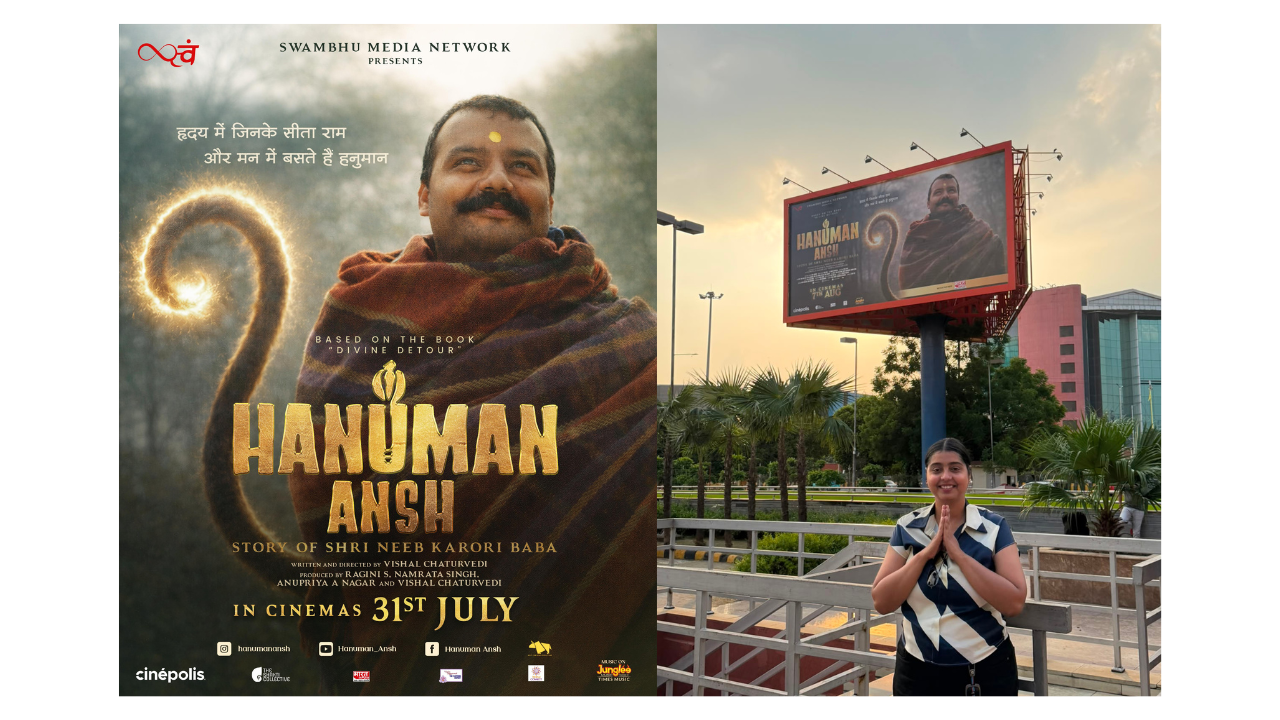
Indian literature continues to find new avenues of expression through cinema, and one such example is Divine Detour, the book authored by Dr. Vishal Chaturvedi and published by Truth and Social Publication. The spiritual work has now been adapted into the feature film Hanuman Ansh, inspired by the life, teachings and enduring legacy of the revered saint Neem Karoli Baba.
The transition from book to film marks a significant milestone for both the author and the publishing house, highlighting how meaningful Indian stories can move beyond the written word to reach wider audiences through cinema. Produced as a spiritual drama, Hanuman Ansh has been released across India and is being distributed by Cinépolis.
Originally launched in Lucknow in the presence of distinguished guests and media representatives, Divine Detour explores themes of devotion, spiritual transformation and inner awakening inspired by the philosophy of Neem Karoli Baba. Rather than focusing solely on miraculous events associated with the saint, the book delves into values such as compassion, humility, selfless service and unconditional love.
These same values form the emotional core of Hanuman Ansh. The film presents spirituality not merely as religious belief but as a way of life rooted in kindness, empathy and service to humanity. By bringing these ideas to the silver screen, the makers hope to connect with audiences seeking stories that offer reflection, hope and purpose.
At a time when discussions around mental well-being, mindfulness and meaningful living are becoming increasingly relevant, Hanuman Ansh aims to remind audiences of timeless Indian values that encourage gratitude, compassion and inner peace. The film seeks to make these teachings accessible to younger generations through a cinematic narrative while staying true to the spiritual essence of the original book.
Truth and Social Publication believes the journey of Divine Detour demonstrates the growing potential of Indian books to evolve into larger cultural conversations across multiple creative platforms. The publishing house views the adaptation as an example of how literature can inspire cinema while preserving India’s rich spiritual and cultural heritage.
Neem Karoli Baba’s teachings have long inspired devotees across India and abroad. Over the years, his philosophy has also gained international attention through popular accounts linking global personalities such as Steve Jobs and Mark Zuckerberg with his spiritual influence. His emphasis on simplicity, devotion and selfless service continues to resonate with people navigating the complexities of modern life.
For co-founder of Truth and Social Publication, Tusharika Sharma, Divine Detour has always been far more than a publishing project. A devoted follower of Neem Karoli Baba, she played an active role in shaping the manuscript to ensure every story reflected the authenticity and spiritual depth associated with the saint’s legacy.
Speaking about the book’s journey to cinema, Sharma said that Divine Detour had been a deeply personal spiritual experience and that watching it evolve into a feature film was both emotional and fulfilling. She expressed hope that both the book and Hanuman Ansh would inspire readers and viewers to understand that true devotion lies in compassion, service and humanity.
Many portions of Hanuman Ansh were filmed in Uttar Pradesh, adding authenticity to the narrative and strengthening its connection to the locations that inspired the story. The film blends storytelling with philosophical ideas while presenting spirituality as something that extends beyond rituals into everyday life.
For Dr. Vishal Chaturvedi and Truth and Social Publication, the adaptation represents more than the success of a single book. It reflects the evolving role of Indian publishing, where literary works can become part of broader cultural conversations through cinema and other creative mediums. As Divine Detour finds new life on the big screen through Hanuman Ansh, the story continues its journey—bringing India’s spiritual heritage to audiences through both literature and film.
Subscribe Deshwale on YouTube
